DeepSeek's Harness team has published dsh-superagent, an MIT-licensed prototype coding agent that picks up work from a team's Feishu chat and GitHub repository.
The code is available on GitHub as dsh-superagent under an MIT licence, which lets anyone read, modify or run it. On Saturday, the team behind DeepSeek's agent tools described the design in a WeChat post.
DeepSeek calls the release a research prototype and says it is "not an official DeepSeek product". The disclaimer separates it from the company's shipped tools, including the agent app DeepSeek put into public preview in August.
What the agent does when someone asks for work
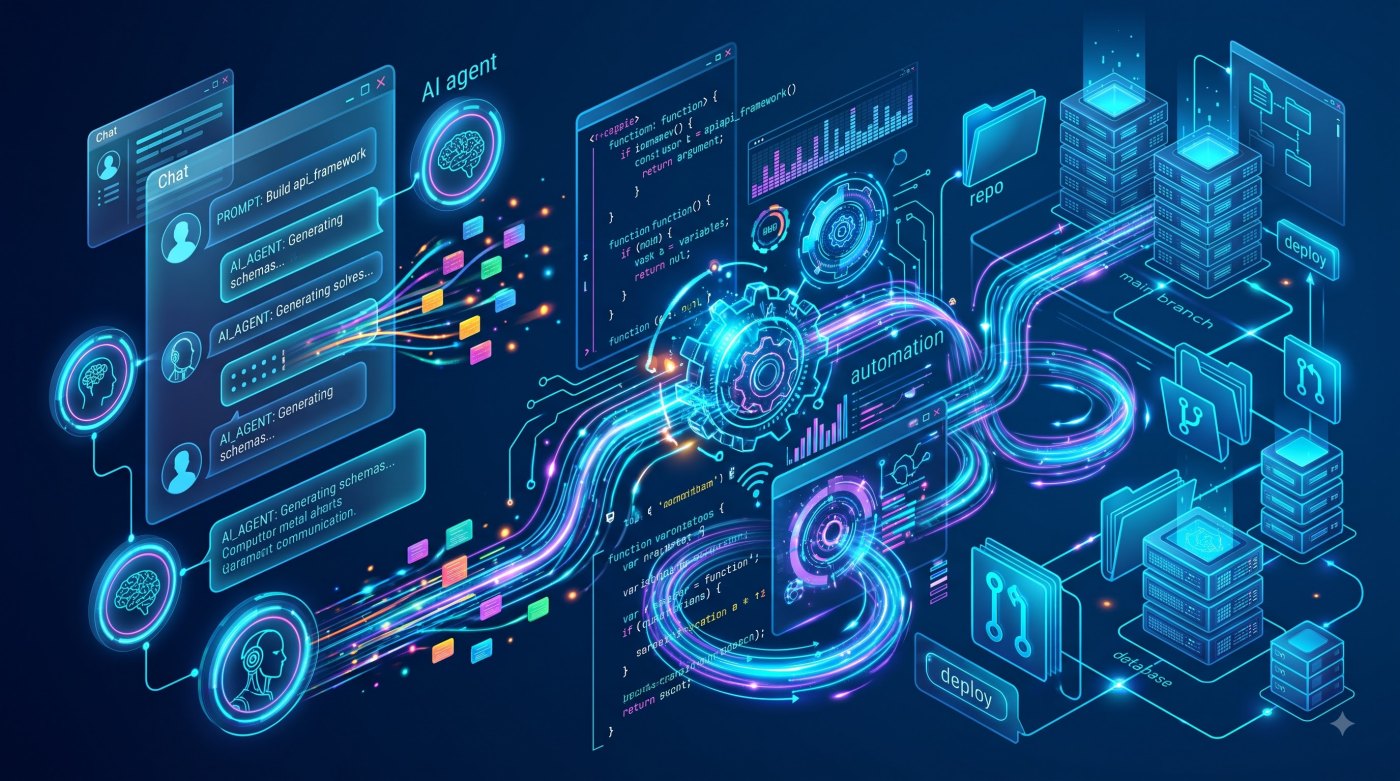
The agent covers a single GitHub repository, and it can also take in messages from Feishu, the workplace chat app owned by ByteDance. An approved person who asks it for work gets a job created, which it handles in a session of its own. It then answers in the same thread, often by raising a pull request.
Each work item, which the team calls a Ticket, gets its own session and directory. Beneath that are two layers: a long-running Router that takes in interaction and dispatches work, and isolated Worker sessions that do the actual work. In the prototype, the main session uses the dsh-superagent-router preset with a reduced set of tools, while each Worker runs dsh-superagent-worker.
Silence is part of the design. The agent confirms once, stays quiet while it works, then writes again only with a result, a question or a failure. A local web panel lists only what needs a person.
Take as little human attention as possible, and give as much value as possible.
Why the team counts sessions, not models
DeepSeek says mainstream agents make a single session the basic unit of work. It estimates people can keep track of only 3 to 5 sessions at a time, so human attention, rather than model capability, limits multitasking.
The installation includes the guardrails. The authorization document sets out 3 accept modes: off, observe and auto. Observe is the default. In this mode, the agent logs what it would accept without acting on it. The project's philosophy document says the agent responds to direct requests or follows a rule set by the team. Shell commands move to the background after 5 seconds, so Workers keep receiving messages.

What DeepSeek tested, and what the numbers don't settle
DeepSeek evaluated the design using simulated group chats and GitHub CI streams. Each run included about 300 messages, with about 20 genuine work requests; the team repeated each scheme 5 times. In one ablation, removing direct event pass-through led to about 30% more Router decisions and a roughly 37% increase in cache-read tokens, from 23.23M to 31.77M.
DeepSeek's figures are self-reported and reach readers through secondary accounts of its report. It's unclear whether they apply beyond the simulated streams. The public code differs from the internal version, and the README notes that some ideas described in the article haven't been implemented.
The research team says further work could include an external Watchdog, separating storage from compute and an asynchronous ReAct loop. The schedule for these additions remains undecided.
Self-reported gains against independent evidence
DeepSeek's own tests
Simulated chat and CI streams
- About 300 messages per run, about 20 real requests
- 5 runs per scheme
- Removing direct event pass-through raised Router decisions about 30%
- Figures self-reported by DeepSeek
CooperBench
Independent study, January
- Coding agents did worse as a team
- Success rates on average 30% lower than solo agents
- DeepSeek's agent was not tested
Where the release sits
The goal, DeepSeek's research team says, is to reduce the burden of coordinating multiple AI agents and monitoring their progress. Debby Wu reported for Bloomberg that DeepSeek is positioning the agent against Anthropic's Claude Code. It can monitor developers' group chats for coding problems and offer solutions without being prompted, she reported. Ben Jiang reported for the South China Morning Post that the team described this goal in its article.
DeepSeek cautions that an agent working on behalf of an entire team could consume everyone's attention. That warning sits alongside reports of agents monitoring group chats without being prompted. The philosophy document, meanwhile, says the agent responds to requests or follows a team rule.
Bloomberg reported that DeepSeek formed its Harness team this year to compete with coding tools from US labs. In August, the company introduced a preview of its own agent app, a rival to Claude Code. Now in public preview, the app can work on coding, documents and spreadsheets. At GitHub Universe on Wednesday, GitHub demonstrated a Copilot app that runs agent tasks across multiple repositories in parallel sessions.
The target and the prototype
Claude Code
Anthropic
- The stated target of DeepSeek's effort, per Bloomberg
dsh-superagent
DeepSeek Harness, MIT licence
- Watches Feishu chat and one GitHub repository
- Runs each Ticket in its own session and directory
- Public code differs from DeepSeek's internal version
- This yearHarness team formed
DeepSeek sets up the team to take on coding tools from US labs, Bloomberg reported.
- JanuaryCooperBench results
Researchers find coding agents did worse as a team, with success rates on average 30% lower than when each agent worked alone.
- AugustAgent app preview
DeepSeek releases a preview of its own Claude Code rival, now in public preview.
- SaturdayDesign published
The Harness team sets out the design in a WeChat post.
- WednesdayGitHub shows parallel sessions
At GitHub Universe, GitHub shows a Copilot app running agent work across several repositories in parallel sessions.
In January, researchers conducting the CooperBench study found that coding agents working together had average success rates 30% below those of agents working alone. Their study didn't examine DeepSeek's agent, so it offers no evidence about this prototype's results. It does raise the question of whether adding agent sessions leads to more completed work.
What we know
- The code is on GitHub as dsh-superagent under an MIT licence.
- The default accept mode is observe, in which the agent only records what it would have accepted.
- Each Ticket runs in its own session and directory.
- The prototype listens to Feishu and works on one GitHub repository.
Still unclear
- Whether the reported test results hold outside DeepSeek's simulated chat and CI streams.
- When or whether the external Watchdog, storage and compute separation and asynchronous ReAct loop will be built.
- Whether reading group chats without being summoned is DeepSeek's own design goal or the reporters' characterisation.
DeepSeek tells users to review and adapt the code before they run it.
The release lands against a wider backdrop for Chinese readers. Civilian federal agencies in the US were told to remove DeepSeek last month.