On 5 November, the FAA said it will retire four air traffic information systems dating from the 1980s and replace them at 435 sites by the end of 2028.
The announcement is the visible part of a much larger modernisation bill: Congress has funded part of it, the FAA wants a great deal more, and the government’s own auditor found dozens of air traffic systems the agency can’t sustain. Whether a new display layer counts as progress turns on money that hasn’t been voted.
Four systems, one screen
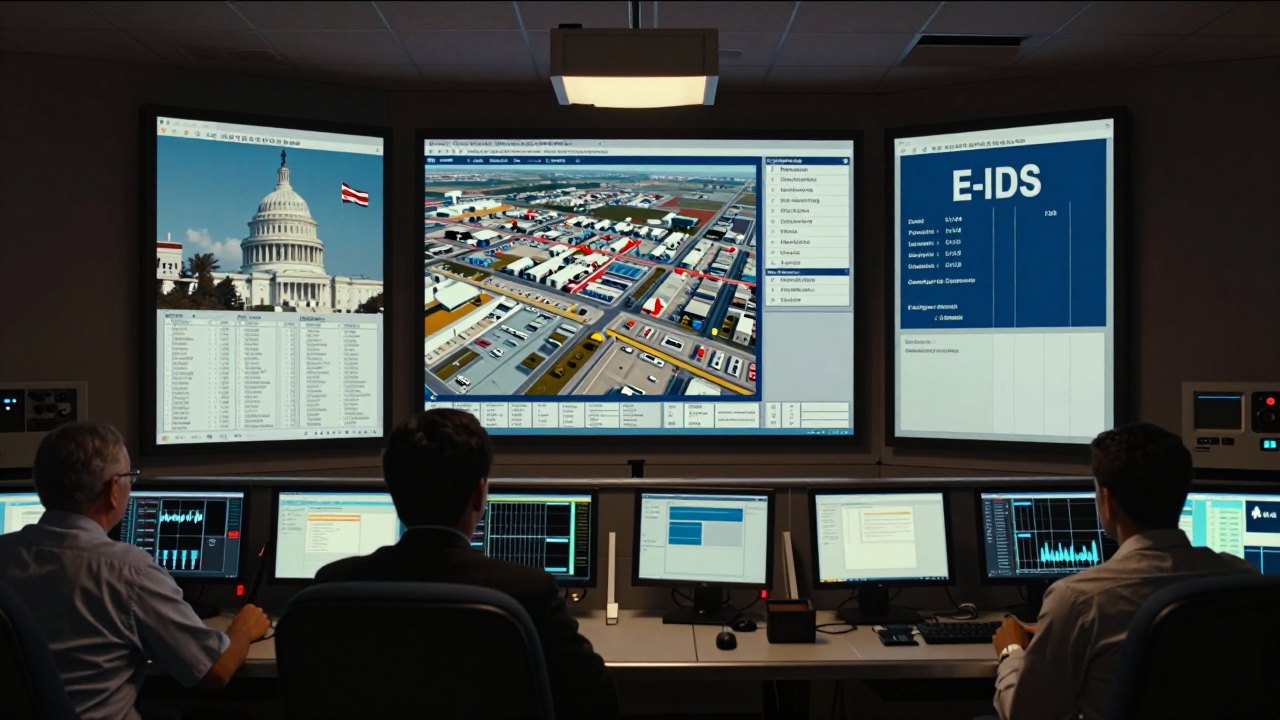
Called the Enterprise Information Display System, or E-IDS, the replacement platform is designed to take over from four separate systems dating back to the 1980s:
- Information Display System 4
- Automated Surface Observing System Controller Equipment Information Display System
- NAS Information Display System
- En Route Information Display System (ERIDS)
The FAA said installation will run to 435 sites by the end of 2028, with the first slots going to Atlantic City International Airport, Nashville International Airport and Greater Rochester International Airport, alongside FAA data processing hubs in Atlanta and Salt Lake City.
| Item | Detail |
|---|---|
| Platform | Enterprise Information Display System (E-IDS) |
| Systems retired | Four, dating from the 1980s |
| Sites | 435 by the end of 2028 |
| Deadline | End of 2028 |
We’re moving away from outdated, manual processes and replacing technology that once relied on floppy disks with a modern system that allows controllers to instantly share critical flight alerts, restricted airspace schedules and pilot reports
Transportation Secretary Sean Duffy put the same point shorter in the FAA's announcement.
Good news America: floppy disks are out, 21st century tech is in
What controllers get is a single view. Weather reports, flight alerts, restricted airspace schedules, pilot reports, equipment problems and aviation advisories land in one place, and the FAA says the new platform changes how Pilot Reports and Notices to Airmen (NOTAMs) are gathered and passed on.
Bedford has also described the underlying problem as structural, not cosmetic. Separate systems make information sharing difficult.
every facility is a silo
Reuters reporting cited by the outlets says the FAA still uses decades-old Compaq computers and has purchased replacement parts on eBay. The hardware underneath is old enough to be a story in itself.
In 2024, the GAO put a number on the wider fleet, finding 51 of the FAA's 138 air traffic control systems unsustainable for want of parts and the funding to sustain or replace them.
The money is still missing
Money has moved. Congress approved $12.5 billion for air traffic control improvements in 2025.
The FAA spokesperson said E-IDS is one part of that work. Duffy and Bedford want Congress to go further, too.
To continue modernizing our air traffic control facility, Secretary Duffy and FAA Administrator Bedford are calling on Congress to pass the Modern Skies Act
The Act asks for $30 billion to complete the modernisation, the spokesperson told The Register, and Duffy is seeking that further $30 billion for additional upgrades.
Money approved against money requested
Approved
Congress, 2025
$12.5bn
- Air traffic control improvements
Requested
Modern Skies Act
$30bn
- Sought by Duffy and Bedford
- Would complete ATC modernisation
The GAO's September 2026 assessment looked past that ask: a second phase of upgrades needs a further $10.2 billion, it said, and has no completion date.
Two published figures describe different things. The Register reported that the FAA said in December 2025 it needed an additional $20 billion, while the GAO's September 2026 tally put the second-phase gap at $10.2 billion.
Two outages that forced the issue
The announcement follows a difficult stretch for the network. In mid-October 2026, construction work outside George Bush Intercontinental Airport damaged a cable, interrupting data services linking FAA facilities and prompting a ground stop.
In September, broken equipment at a Philadelphia control centre and a severed fibre-optic line in New Jersey disrupted thousands of flights across the Northeast, Dexerto reported.
Last month, the FAA sent airports a memo about multiple recent outages linked to fiber optic cable cuts. Such incidents can lead to delays, diversions and cancellations.
- 2023NOTAM file deleted
A file accidentally deleted from the NOTAM system temporarily halted domestic flight departures nationwide, according to The Register.
- September 2026Northeast disruption
A circuit failure at a Philadelphia air traffic facility and in New Jersey delayed or cancelled thousands of flights.
- Mid-October 2026Cable cut in Houston
A construction-related cable cut outside George Bush Intercontinental Airport forced a ground stop.
- 5 November 2026FAA announces retirement
The agency says the four legacy systems will be replaced by E-IDS.
- End of 2028Target date
E-IDS due at 435 sites.
The Register reported that a file accidentally deleted from the NOTAM system temporarily halted domestic departures nationwide in 2023. Single points of failure have bitten before.
What 2028 does and does not fix
Read closely, E-IDS consolidates a display layer. It changes what controllers see, gathering weather, alerts and notices into one place; it does not replace the Compaq-era hardware underneath, and it does not close the gap the GAO describes in the second phase of upgrades.
Controllers also track aircraft movements on paper flight strips. The FAA began moving away from that practice in 2022, and 27 major airports have completed the shift [D4]. Finishing the work across all 49 airports in the programme is expected to take until at least 2028 [D4]. The Register noted that the deadline echoes a three-year timetable Duffy laid out last year [D2].
Reports differ on how far the rollout might reach. Tom's Hardware wrote that the new platform could eventually serve 453 locations before 2028 ends [D1].
The FAA's stated target is E-IDS at 435 sites by the end of 2028. Congress hasn’t yet taken up the Modern Skies Act, and the GAO's phase-two upgrades still have no completion date.