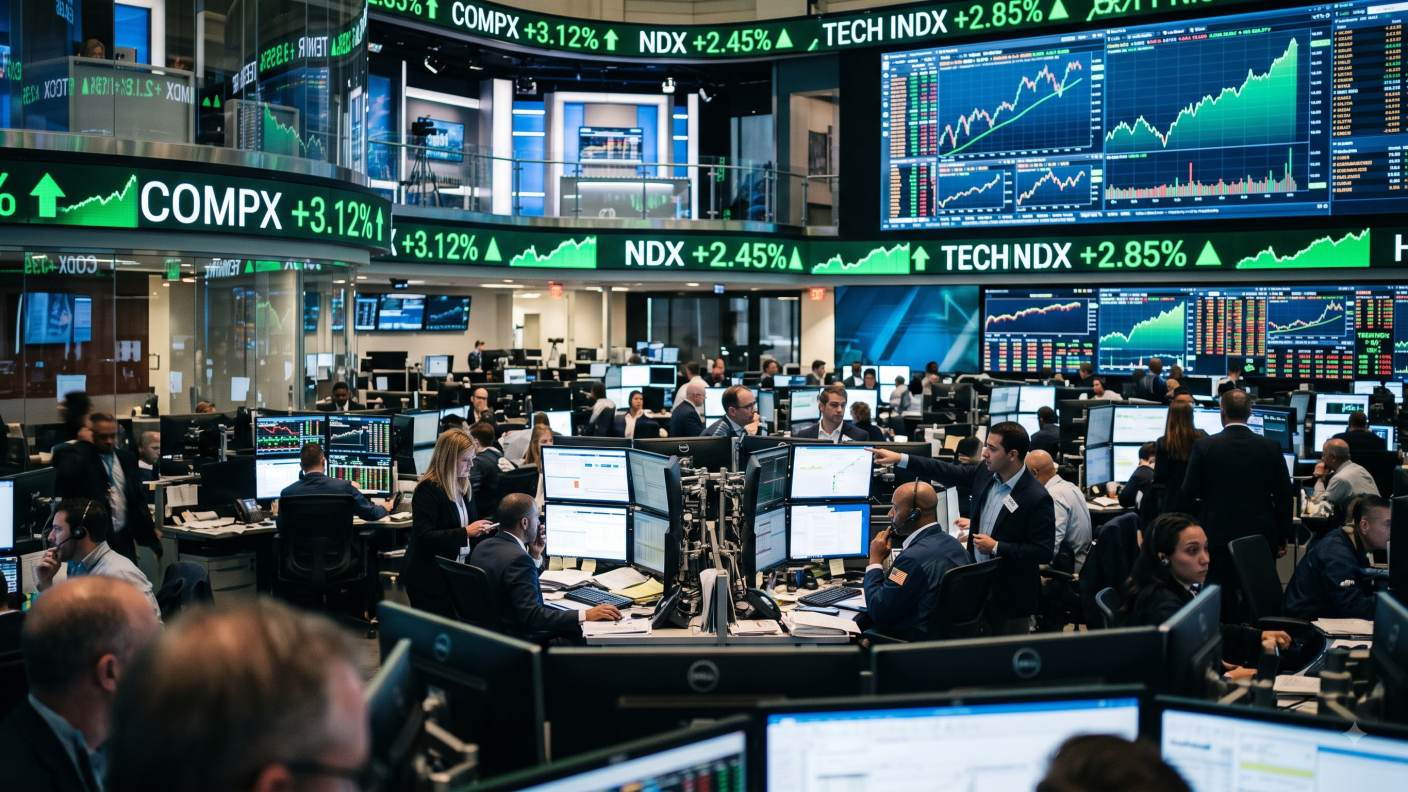
US stocks rose on AI momentum and easing geopolitical tensions, while global investors brace for a critical week of earnings and inflation data that could dictate market direction.
Wall Street ended higher on Oct 9, with all three major US stock indexes advancing on the day and logging weekly gains. The Dow Jones Industrial Average climbed to 51,654.95, a rise of 423.31 points or 0.83%. The S&P 500 added 46.15 points, or 0.59%, reaching 7,811.51. Meanwhile, the Nasdaq Composite increased by 172.83 points, or 0.64%, to finish at 27,366.17.
The small-cap Russell 2000 ended lower than Oct 2's close. While Benchmark Treasury yields moved up, they stayed under the 24-year peak seen on Oct 7.
AI Momentum Drives US Gains
As the US bull market approaches its four-year mark, driven largely by the AI boom, momentum stocks linked to artificial intelligence generally rose. The Roundhill Magnificent Seven ETF gained 1%. Michael Monaghan, portfolio manager at Founder ETFs in Dallas, said chips have been this year's story, describing a multi-decade technological shift that is only starting rather than concluding.
Crude prices initially retreated after President Donald Trump said the US will not launch any attacks on Iran before the midterm elections, adding that talks between Washington and Tehran aimed at ending the market-rattling Iran war were "productive." Front-month West Texas Intermediate oil and Brent crude both settled up 0.4%.
Ross Mayfield, investment strategy analyst at Baird in Louisville, Kentucky, said it is the kind of back-and-forth market we've been in where we have the reversal of sentiment around Iran, and with conflicting headlines coming out of the White House and parties in the Middle East, there's just no edge there. "That's why it's a fairly tepid rally," he said.
LSEG data shows analysts project aggregate annual earnings growth of 30.6% for the S&P 500 in the July-September period. Energy and technology sectors are forecast to lead with year-on-year earnings increases of 123% and 66.5%, respectively.
University of Michigan data indicates that consumer sentiment in the US, which drives roughly 70% of the economy, weakened this month. Near-term expectations dropped to a record low.
Apple slid 1.1% after a media report that the iPhone maker has told some suppliers to cut production of components for its newly launched iPhone 18 Pro and iPhone 18 Pro Max, as soaring memory chip costs and price increases dampen consumer demand. In other news, Elon Musk's SpaceX agreed to buy a nationwide low-band spectrum portfolio, challenging US wireless carriers. This caused Telecom firms T-Mobile US, AT&T, and Verizon to drop between 8.8% and 13.3%. Humana jumped 11.6% after US government data showed 95% of the health insurer's members were in Medicare Advantage plans rated four stars or higher for 2027.
Advancing issues outnumbered decliners by a 1.65-to-1 ratio on the NYSE, with 141 new highs and 183 new lows. On the Nasdaq, advancers beat decliners by 1.38-to-1, with 2,756 stocks rising and 1,997 falling. The S&P 500 saw 14 new 52-week highs and five new lows, while the Nasdaq Composite logged 41 new highs and 209 new lows. Volume on US exchanges was 14.37 billion shares, compared with the 17.76 billion average for the full session over the last 20 trading days.
Indian Markets Break Decline Streak
Last week, the BSE benchmark Sensex rose 562.63 points, or 0.78 per cent, while the NSE Nifty added 98.5 points, or 0.43 per cent. The Nifty-50 posted a 0.4 per cent gain last week, hinting at stabilization at lower levels after eight straight weeks of declines.
TCS reported better-than-expected September quarter results, rallying over 4 per cent and helping IT stocks drive the market's sharp recovery on Friday. Indian IT companies largely dismissed concerns about the US suspending eight firms, including TCS, Infosys, Wipro, Cognizant and Microsoft, from a green card application programme. TCS stated on Friday that it does not expect the US action on the green card programme to affect its workforce strategy or customer engagements, citing its single-digit applications under the programme over the past two years and its focus on local hiring.
US vs Indian Market Performance
US Markets
Weekly Performance
- Dow up 0.83%
- S&P 500 up 0.59%
- Nasdaq up 0.64%
Indian Markets
Weekly Performance
- Sensex up 0.78%
- Nifty up 0.43%
- Ended 8-week decline
Hariselvan Radhakrishnan, Founder & CEO of HST Wealth, said, "The IT sector will remain in focus as HCL Technologies, Wipro and Tech Mahindra report their September quarter results. The sector staged a sharp rebound on Friday following TCS's better-than-expected earnings, but whether the recovery gains traction will depend on the performance of its peers and their outlook for the coming quarters."
Siddhartha Khemka, Head of Research, Wealth Management, Motilal Oswal Financial Services Ltd, said markets will likely balance strong domestic earnings against high global risks, leading Indian equities to consolidate this week. He noted Brent crude above USD 100 per barrel and sustained FII selling weigh on sentiment. FPIs pulled out ₹44,166 crore from equities so far in October, with 2026 outflows crossing ₹3 lakh crore.
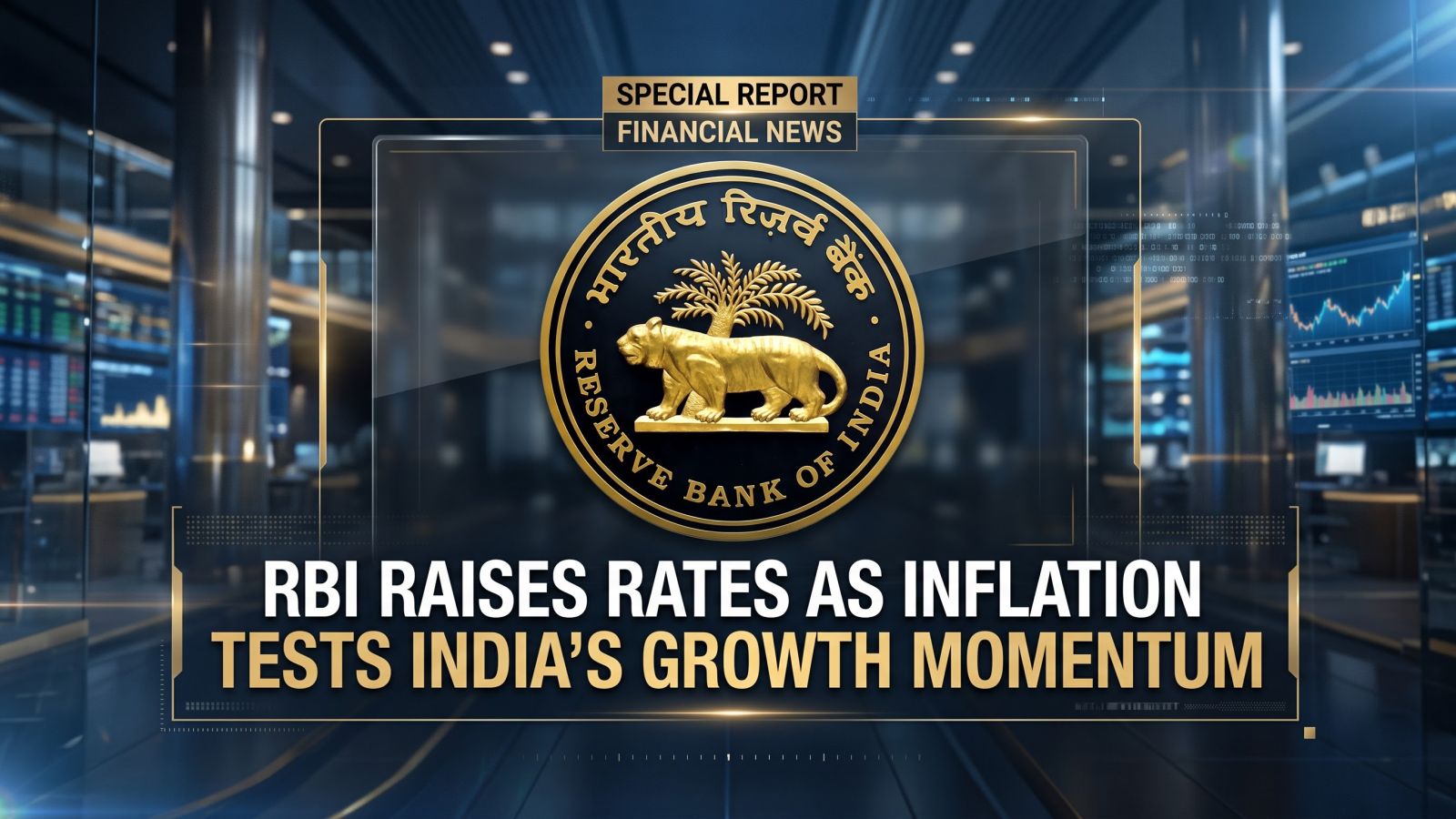
Hariselvan Radhakrishnan said, "September CPI inflation will be the first major domestic test this week. A stronger-than-expected reading could revive concerns over further RBI tightening, putting rate-sensitive sectors such as banking, automobiles and real estate under pressure while raising the risk of a broader drag on consumer demand." He added, "A softer print could ease concerns over the eventual peak in interest rates, but any relief may prove short-lived if Brent crude remains above USD 100 a barrel. Wholesale price inflation data will offer a further indication of how elevated energy and logistics costs are filtering through to producer prices."
Ponmudi R, CEO of Enrich Money, said, "Corporate earnings will increasingly influence sector-level performance as the September quarter results season gathers pace. TCS's results helped trigger a rebound across IT stocks, supporting the broader indices on Friday. Crude oil remains the biggest macroeconomic risk. Uncertainty over Iran, the Strait of Hormuz and regional energy infrastructure continues to leave global supply vulnerable to disruption."