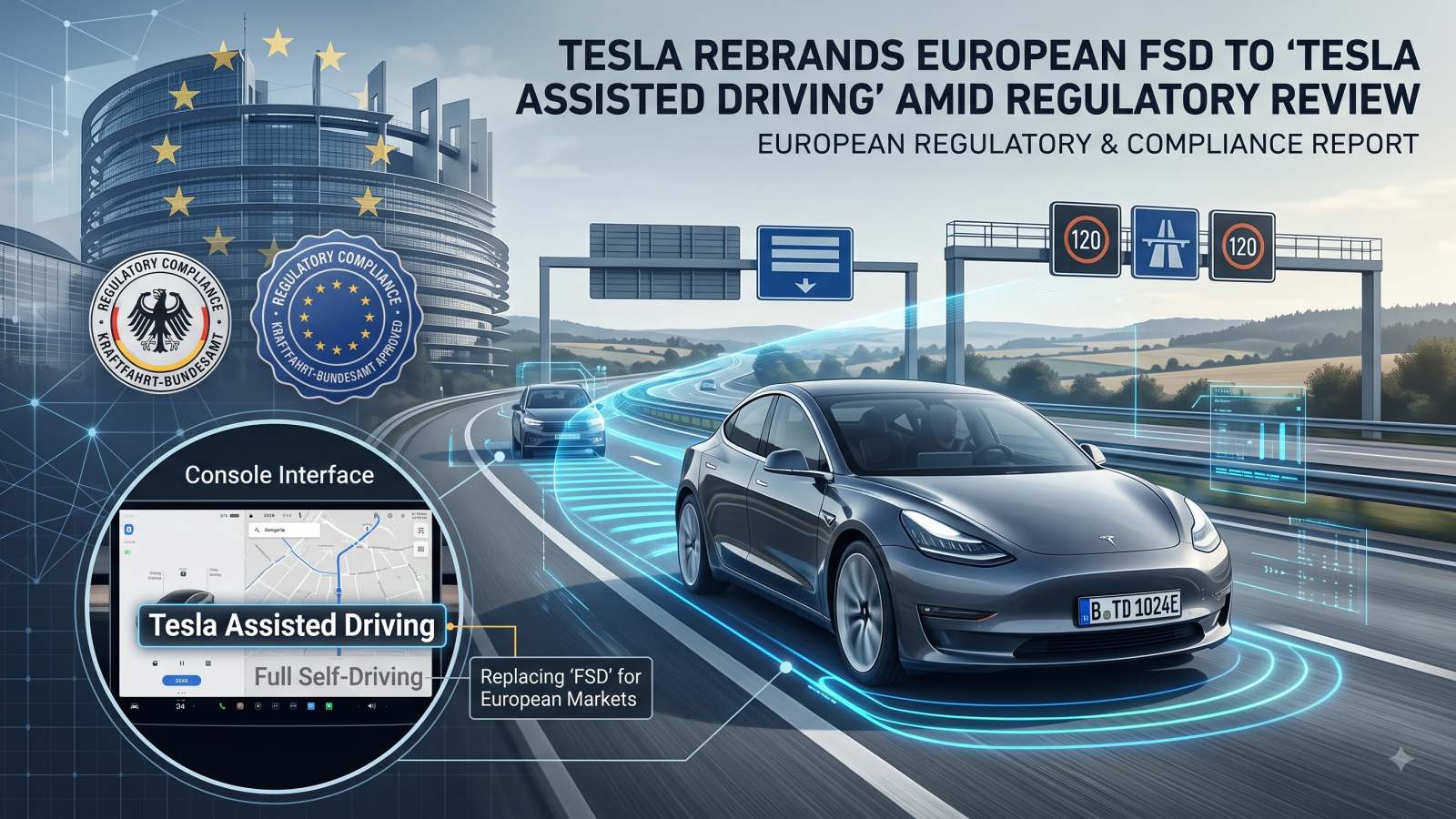
Tesla has begun calling its European feature Tesla Assisted Driving after Germany said the former FSD name was misleading.
Tesla changed the name of its advanced driver-assistance feature from Full Self-Driving (Supervised) to Tesla Assisted Driving, also known as TAD, in Europe.
The company began using the new wording on its European sales website on Friday. Its German website has also removed references to Full Self-Driving, while the previous web address now directs visitors to a Tesla Assisted Driving page.
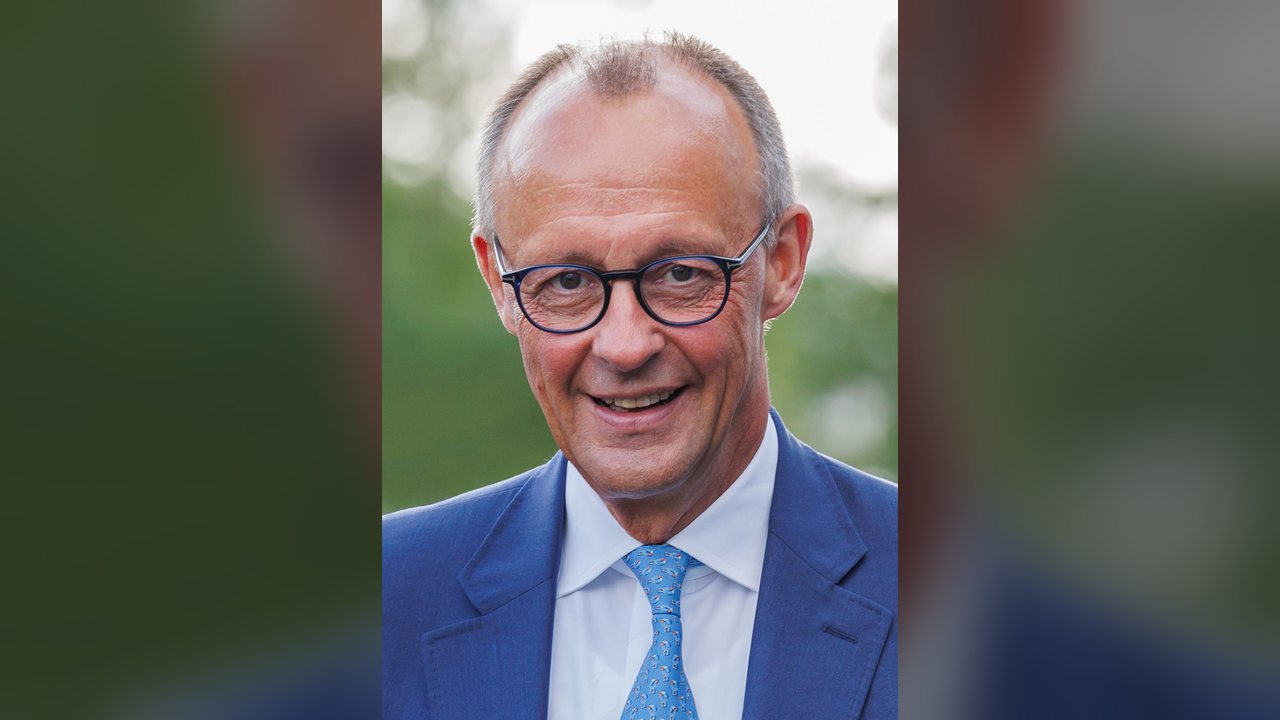
The change followed discussions in September between Tesla and German Transport Minister Steffen Bilger. Germany's Federal Ministry of Transport said the company offered to alter the branding during those talks.
The ministry said the old FSD name was "somewhat misleading" and that Bilger would now support efforts by European regulators to approve the feature "as quickly as possible".
What we know
- Tesla describes the European feature as Tesla Assisted Driving.
- The system still requires the driver to remain attentive.
Still unclear
- Whether the European Union will approve the feature across Europe.
- Whether changing the name will be enough to support broad release safely.
Germany's transport ministry said the product should be understood as assistance rather than autonomous driving. "It is not a system that takes over the entire driving task. Rather, it is a driver assistance system that can support certain driving tasks such as accelerating, braking, and steering. The driver must remain attentive at all times," it said.
That distinction is central to the dispute. The system can help with acceleration, braking and steering, but the person behind the wheel remains responsible for paying attention.
Tesla continues to sell the package in the United States under the Full Self-Driving (Supervised) name. There, it is offered to Tesla owners as a $99 per month subscription.
Tesla's second-quarter earnings update put the number of active FSD subscriptions at 1.48 million. The company did not say how many of those subscriptions began through free trials or other incentives.
Tesla's new German page is a translated version of its US FSD page with the product name replaced. It retains the company's claim that the system is "7x safer" than human drivers.
Tesla's European approval footprint remains limited. The company's page lists the Netherlands, Lithuania, Estonia, Denmark, Belgium, Slovenia, Czechia and Croatia as the eight EU countries where the system is approved.
Germany is absent from that list.
The Netherlands has been described as Europe's first government to grant Tesla provisional permission to launch FSD, in the spring, as well as the first European country to approve FSD (Supervised), in March of this year.
Europe has not agreed on the operating limits
The timing of a bloc-wide decision remains uncertain. One account said the EU would likely vote by the end of the year, while another said the vote had moved to December at the earliest.
Approval would require 15 of the EU's 27 member states, representing 65% of the bloc's population.
Speed limits are another point of disagreement. Germany says the system can travel up to 10% above the posted limit and plans to support that position during the EU approval process.
The version approved in the Netherlands has been reported as allowing speeds up to 50% above the detected limit. France and Sweden have also raised concerns about speeding.
Different speed allowances
Germany's position
Proposed EU position
10% over the limit
- Germany says the system can go this far
- Bilger's ministry will support this position
Netherlands-approved version
Reported allowance
50% over the detected limit
- Reported version approved in the Netherlands
- Speeding concerns also raised in France and Sweden
The German minister's support came alongside a public thank-you from Tesla chief executive Elon Musk. Musk thanked Bilger on X this week and also posted a "Danke schoen" to Germany.
Musk said, "FSD in Europe will save lives of people in the car, as well as vulnerable road users like pedestrians, cyclists, and pets,".
- March of this yearNetherlands approval
The Netherlands was described as the first European country to approve FSD (Supervised).
- SeptemberTalks with Germany
Tesla offered to change the name during discussions with Transport Minister Steffen Bilger.
- FridayWebsite wording changes
Tesla began using Tesla Assisted Driving on its European sales website.
- December at the earliestPossible EU vote
One account said the EU decision had slipped to December at the earliest.
The name change follows US disputes
The European branding dispute follows earlier findings and legal action in the United States over how Tesla describes its driver-assistance systems.
Tesla's use of Full Self-Driving and Autopilot violated state law and was misleading, California's Department of Motor Vehicles concluded last year. After the agency threatened to suspend Tesla's California manufacturing and dealer licences, the company stopped using the term Autopilot.
In December 2025, a California judge ruled that Tesla had marketed its Autopilot and FSD systems deceptively. The ruling said Tesla's marketing falsely presented the systems as fully automated driving systems.
Tesla has countersued the California DMV in a Los Angeles superior court in an effort to remove the "false advertiser" label. That litigation is ongoing.
US federal authorities have also examined the technology. In March, the US federal government opened a probe after nine incidents in which FSD allegedly failed to respond to reduced visibility and did not warn drivers to take over.
Tesla recalled an older software version in 2023 after the US government found that it failed to follow some traffic laws. The National Highway Traffic Safety Administration is investigating whether FSD is safe to use in fog, glaring sun and other reduced-visibility conditions. It is also examining whether FSD caused Tesla drivers to commit traffic violations, including some that resulted in collisions.
Reports this week said Tesla presented misleading safety data to European regulators while seeking approval, described the campaign as relying on faulty company safety research and flawed studies, and said pressure from Tesla in some cases led regulators to reduce the intensity of safety tests and reviews.
Missy Cummings, an engineering professor at George Mason University and an autonomous-systems expert, said renaming the feature was not enough to show that the systems were safe for broad release in Europe.
Cummings said European agencies were "ignoring both past and ongoing NHTSA investigations" into safety defects involving Tesla's FSD and also criticised RDW, the Dutch regulator, over its approval of Tesla FSD for release in Europe "based on secretive data".
The EU is struggling to keep up in the AI marketplace,
Cummings also said, "The public should demand transparency in any approval of a transportation system with embedded AI." Tesla and RDW did not immediately respond to a request for comment. Tesla also did not immediately respond to a separate request.
The approval decision is still open
The name change does not establish whether the EU will approve Tesla Assisted Driving across Europe. It also does not resolve how many of Tesla's 1.48 million active subscriptions came from free trials or other incentives, or whether Tesla will use the new name in the United States.
The EU approval vote is expected by the end of 2026, with one report saying December 2026 at the earliest. Germany has said it will support a limit allowing the system to travel up to 10% above the speed limit.