On Thursday, Prime Minister Narendra Modi urged the creation of a global framework to address cyber frauds and deepfakes, noting that digital threats now extend beyond national borders.
Modi was speaking at the opening of the tenth India Mobile Congress (IMC) 2026 in New Delhi.
He asked the GSMA and telecom operators to build a global mechanism that stops fraud before it happens.
I request GSMA and telecom operators to build a global mechanism which stops fraud before it happens,
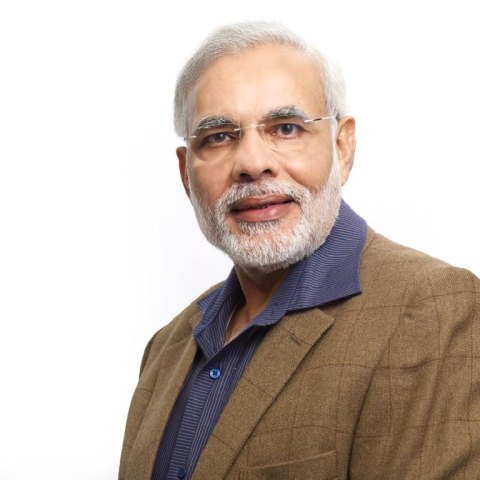
He called on governments, technology companies, telecom operators, and financial institutions to work together to develop mechanisms that curb digital frauds.
He described how such crimes cross borders: an individual in one country might use someone in another to commit a crime in a third, so international cooperation is essential.
Deepfakes have become a major challenge, Modi said, adding that technology can only scale when it earns people's trust.
It is a priority to secure mobile phones and networks, and trust is very important for ordinary citizens communicating or making payments through the phone, he added.
India is ready to share its experience in fighting cyber crime with the world, Modi said.
I urge the GSMA and telecom operators across the world: come, let us create a global mechanism that can stop such fraud before it reaches the people. India has learnt a lot from its experiences in this direction, and India is always ready to share its experiences with the world,
Brics declaration and scam compounds
Modi's call for stronger international cooperation came soon after the Brics summit in New Delhi, where all 11 member countries passed a declaration that voiced deep worry about organized scam networks, including cross-border fraud operations and "scam compounds".
The Brics declaration pushed for better coordination between customs, financial intelligence, law enforcement, tax, and supervisory agencies.
It also pushed for increased information-sharing by telecom providers and technology platforms, and for using data analytics to detect and disrupt money laundering schemes earlier.
Over the past three years, industrial-scale scam compounds have emerged in parts of Cambodia, Myanmar, and Laos, largely operated by Chinese criminal syndicates and partly staffed by trafficked Indians.
These compounds run the "digital arrest" scam, where fraudsters impersonate law enforcement or judicial officials on video calls and extort money by threatening immediate arrest, as well as investment scams that lure victims into fake trading apps and loan-app extortion rackets.
Scale of cyber fraud in India
Losses to cybercrime in India tripled from ₹7,465 crore in 2023 to ₹22,845 crore in 2024 across about 2.2 million incidents, with 85% being financial fraud, as the ministry of home affairs informed Parliament in July last year.
Indians lost ₹3,588.2 crore across more than 5.83 lakh cases of digital payment fraud from FY22 through September FY26.
In 2025, nearly 7.1% of attempted digital consumer transactions in India were suspected fraud, almost double the global rate of 3.8%.
Since its launch in 2023, the Sanchar Saathi portal has gathered 12.8 lakh reports about suspected fraud communications.
This week, the Centre said that the Financial Fraud Risk Indicator (FRI) helped stop suspected cyber-fraud losses exceeding ₹5,000 crore.
Amit Shah, the Union home minister, told officials to upgrade the National Cybercrime Helpline with AI so that reporting cybercrimes becomes easier, and he also raised concerns about bank accounts being frozen during cyber fraud investigations.
The RBI has introduced a compensation scheme where the Centre and bank operators share parts of losses that are not recovered; customers who lose up to ₹50,000 in cybercrime cases can get compensation of up to 85% of the net loss or ₹25,000, whichever is lower.
Telecom as governance tool
Modi remarked that telecom now goes beyond networks, spectrum, towers, and internet speeds, and has turned into a key tool for governance and delivering public services.
He pointed to the government's direct benefit transfer (DBT) system, noting that ₹50 lakh crore had gone straight to beneficiaries through bank accounts linked to the digital ecosystem, while ₹5 lakh crore had been kept from falling into "wrong hands".
Modi mentioned the PM-Kisan Samman Nidhi, stating that over ₹4 lakh crore had been sent to farmers, who get a message on their mobile phones when the money is credited.
Next steps
The next step is whether the GSMA or telecom operators respond to Modi's request, and whether any concrete global mechanism is proposed.
What we know
- Modi called for a global framework to tackle cyber frauds and deepfakes.
- He asked the GSMA and telecom operators to build a global mechanism that stops fraud before it happens.
- India's cybercrime losses tripled from ₹7,465 crore in 2023 to ₹22,845 crore in 2024.
Still unclear
- Whether the GSMA or any telecom operator has responded to Modi's request for a global mechanism.
- What specific form the proposed global mechanism would take, or any timeline for creating it.
- Whether any other government or regulator has backed the call for a global framework.
- The exact date of the Brics summit in New Delhi that S1 refers to as having taken place weeks before Modi's speech.