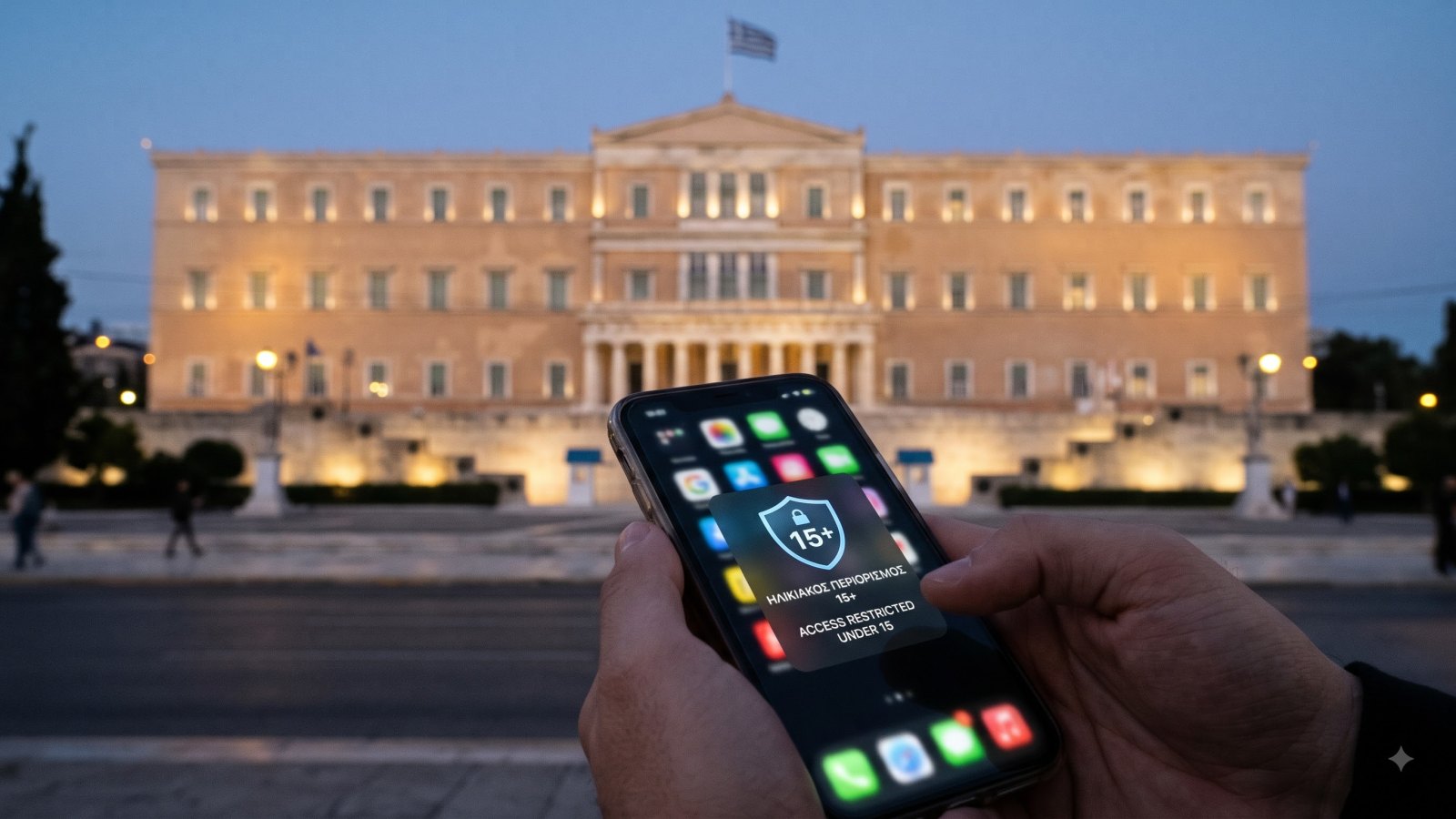
Greece's parliament approved a ban on social-media use by children under 15, starting January 1, 2027.
Greece is among the European Union's earliest movers on restricting children's access to social platforms. The measure will depend on age checks that platforms and parents can use, while the practical operation of the system and its privacy safeguards remain unclear.
- 2024Phones barred in schools
Greece previously restricted mobile-phone use in schools.
- Friday, October 23, 2026Parliament approves ban
Greece's Parliament passed the measure covering children under 15.
- January 1, 2027Ban takes effect
The social-media restriction is scheduled to begin.
The law covers major platforms including TikTok, Instagram, Facebook and X. It requires them to apply age-verification methods that are proportionate to the risk and reliable enough to establish a user's age.
Prime Minister Kyriakos Mitsotakis said platforms have 2-1/2 months to devise a system for checking users' ages while protecting their privacy. The available details do not establish how those checks will work in practice.
How access checks are planned
Parents would be expected to download one of two state-backed applications, Kids Wallet or Gov.gr. The applications would be paired with a child's device and used to block access to covered platforms.
Dimitris Papastergiou, Greece's digital governance and AI minister, said the applications use age tokens to confirm age while limiting the personal information disclosed. It is not yet clear how the apps will operate across different devices or whether the privacy protection will work as intended.
What we know
- The law covers TikTok, Instagram, Facebook and X.
- Parents would use Kids Wallet or Gov.gr to block access.
- Non-compliant platforms face fines under the EU's Digital Services Act.
Still unclear
- How age verification will work beyond the broad requirement for reliable and proportionate methods.
- How the applications will operate across different devices.
- Whether the system will protect privacy as intended.
Platforms that fail to comply with the act face fines under the EU's Digital Services Act. Greece is one of seven European Union countries working with the European Commission to find an age-verification solution.
"It would have been very easy to do absolutely nothing today and wait for the perfect European law. But the challenge is here. Children are sinking into the internet every day, and I believe a responsible government must do what it is obliged to do,"
Papastergiou said the government chose to act rather than wait for a Europe-wide measure. The bill passed with the government's majority, while Greece's minority parties opposed it.
Why Greece says it acted
The Greek government said the ban responds to concerns about the health and safety of minors. It has also pointed to the effects of endless scrolling on children's sleep, concentration and time with friends.
Opinion polls show broad support for the measure among Greece's adult population. The restriction follows the country's 2024 decision to bar mobile phones in schools.
The government's stated concerns do not establish how effective the social-media ban will be. The pack also does not show how the age-check system will affect children's personal data in practice.
How Greece compares with other countries
Greece and other approaches
Greece
Ban for children under 15
- Approved by Parliament
- Starts January 1, 2027
- State-backed apps planned
Other approaches
Different thresholds and outcomes
- Australia passed earlier legislation
- France's similar law was struck down
- EU proposal covers children under 13
The Greek bill is among the first bans of its kind imposed in the European Union. Australia was the first country to pass legislation curbing social-media use by minors, doing so last year, although its age-verification system has proved challenging to implement.
France passed a similar law, but the country's Constitutional Council struck it down in August. The European Commission's recently introduced EU Kids Act proposes an outright ban only for children under 13, a narrower threshold than Greece's measure.
It is not known whether other EU countries will follow Greece. It is also unclear how Australia's implementation difficulties will affect Greece's rollout.
The law is scheduled to take effect on January 1, 2027.