Godzilla Minus Zero earned the franchise's first US R rating by centering Japanese wartime trauma rather than Hollywood spectacle.
Depicting the aftermath of Hiroshima
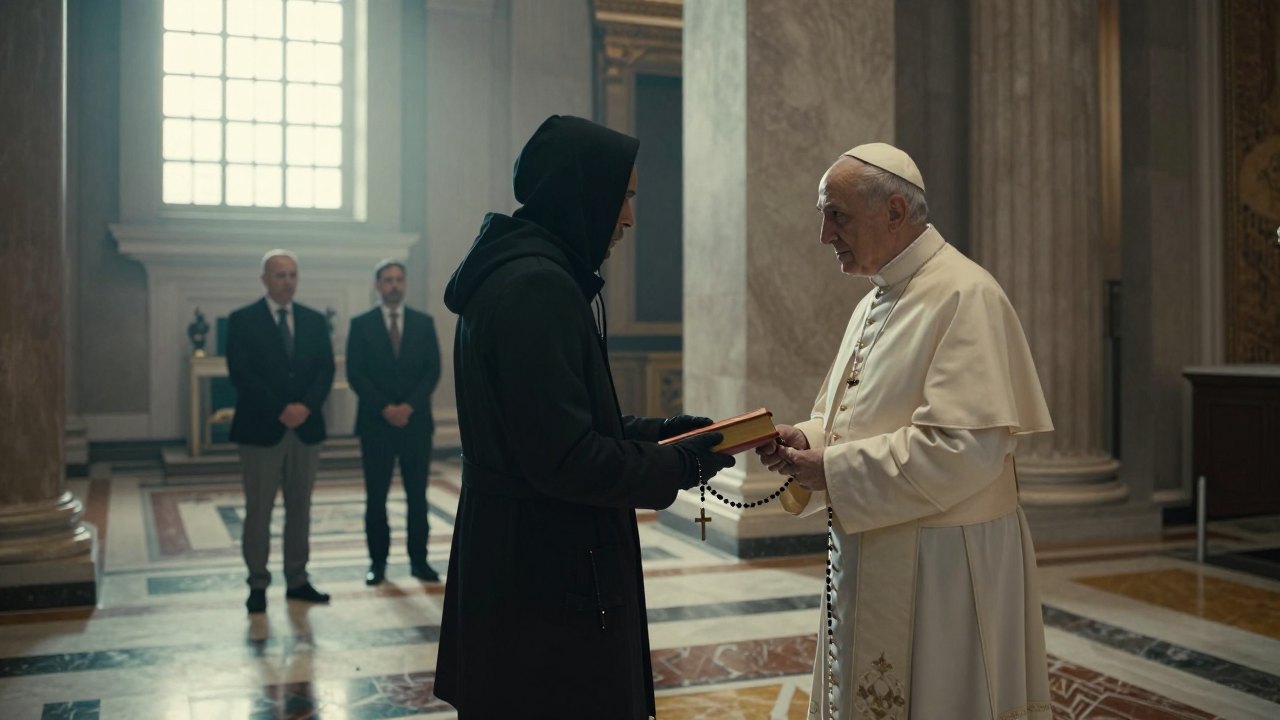
The R rating stems from depictions of real-life war violence, including the immediate aftermath of the US bombing of Hiroshima. Every previous Godzilla film had received a rating of PG-13 or lower.
Kanji Murakami is one of the few survivors of the Hiroshima attack, and a flashback shows him finding the charred remains of his family. The character is played by Min Tanaka.
In a brief fantasy sequence, Murakami intends to draw Godzilla to New York City, where the beast would attack America; Godzilla fires heat rays at the city, melting people's faces before they incinerate.
Slashfilm said the New York sequence depicts a deliberate genocide against Americans, which may help explain why the Motion Picture Association sees it as rougher than earlier Godzilla movies. The MPA sometimes assigns an R rating based on thematic elements, not just content such as harsh language, extreme violence, or sex.
Free Malaysia Today said the human drama may be one reason Godzilla Minus Zero became the franchise's first film to earn an R rating in the US, and called it unsuitable for kids.
Rejecting Hollywood pressure
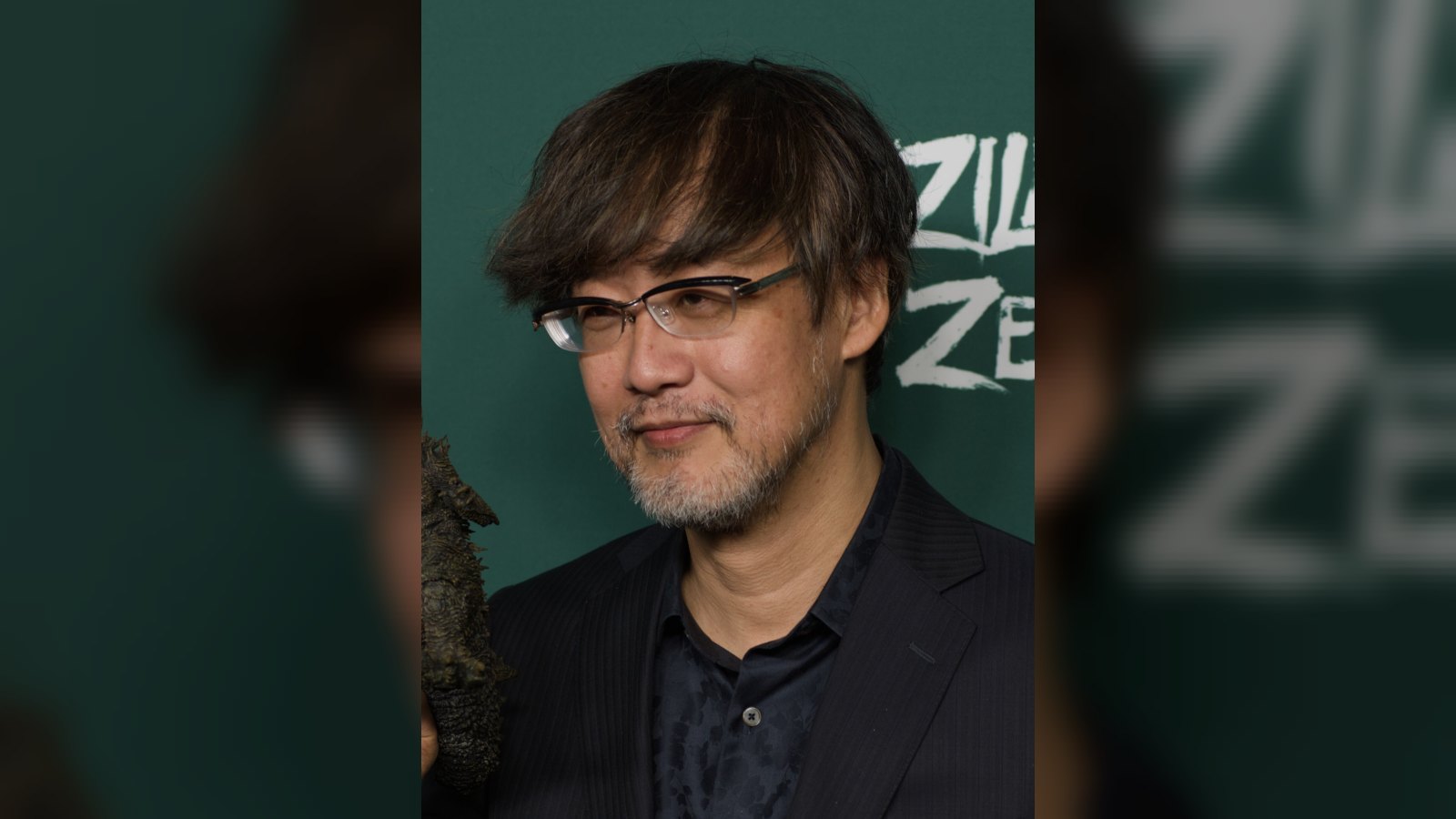
Written and directed by Takashi Yamazaki, Godzilla Minus Zero follows Godzilla Minus One. Set in 1949, two years after the previous movie, the film sees Godzilla return to fight King Ghidorah, the three-headed kaiju that poses a major problem for Godzilla and Japan as a whole.
Without an American perspective, Yamazaki said he approached Minus Zero aiming to make a story that resonated with people at home at this moment.
Yamazaki received praise from James Cameron, Christopher Nolan, Steven Spielberg and J.J. Abrams, The Hollywood Reporter said, and was dubbed the Japanese James Cameron. Abrams admired the previous film and later agreed to produce Yamazaki's upcoming English-language mecha film.
A lot of producers and very big names in Hollywood reached out to me, and there were several projects I wish I could have jumped on in a heartbeat
Before other projects, Yamazaki said he chose to make Godzilla Minus Zero because he had a particular story and theme he wanted to explore.
So I wanted to cherish that origin point, and instead of selling out, for lack of a better phrase, by making a film tailored toward the U.S. or American fans of Minus One , I wanted to tell a story that felt important [at home] right now.
Yamazaki told his team to relax and stop clenching their fists; their goal in making Minus Zero wasn't to outdo Minus One, but to make a great movie.
Trying to outdo earlier work can weaken what makes a film great and turn the project into a production obstacle, Yamazaki said, making that the wrong reason to make a movie.
Building on a record-breaking predecessor
Godzilla Minus One
Released previously
Under US$15 million reported budget
- 35-person VFX team
- Won Oscar for Best Visual Effects
- Highest-grossing Japanese live-action film in the US
Godzilla Minus Zero
Set in 1949
First R-rated Godzilla film
- Significantly larger VFX team
- First Japanese film shot for IMAX
- 75 minutes in expanded aspect ratio
Godzilla Minus One was made on a reported budget of under US$15 million, while another source puts the figure at a reportedly tiny US$10 to US$15 million. It won the Oscar for Best Visual Effects, the first time a Japanese film took home the award, on a lower budget than any other category winner in more than a decade. Yamazaki oversaw a lean 35-person VFX team on that production.
The previous film earned more in the United States than any other Japanese live-action release. But Free Malaysia Today noted it didn't have a standard theatrical release across much of Southeast Asia, Malaysia included.
Godzilla Minus Zero is the first Japanese production filmed for IMAX. The team used IMAX-certified cameras throughout the shoot in Japan, with 75 minutes using the format's expanded aspect ratio.
Returning cast and critical reception
- Hidetaka Yoshioka Returns as Kenji Noda, head of the Large-Scale Disaster Response Bureau.
- Ryunosuke Kamiki Returns as Koichi Shikishima, a pilot celebrated by the public as the man who defeated Godzilla in the first movie.
- Minami Hamabe Returns as Noriko Oishi in a larger role that helps drive the plot.
- Naoki Sato Returns to score the film, re-orchestrating the classic themes by Godzilla composer Akira Ifukube, whose themes have heralded the monster since 1954.
- Jordan Vogt-Roberts The Kong: Skull Island director appears as an actor in Minus Zero, according to The Hollywood Reporter.
Reviewing for The Hollywood Reporter, David Rooney praised the visuals and VFX. He wrote that Yamazaki led a much larger VFX team and that the CGI blends convincingly into the film, making its large-scale monsters feel physically present in their surroundings.
As he demonstrated in Minus One, Yamazaki’s command of big-ass destruction spectacle is breathtaking, this time overseeing a significantly larger VFX team that makes the monsters not only mighty physical presences but also part of an immersive environment in which we experience the full force of their earth-shaking power. This is some of the most impressively seamless integration of major-scale CGI in recent memory.
Pete Hammond, reviewing for Deadline, highlighted the human story, describing a heartbreaking scene in which the parents put their duty to their country ahead of family and have to send Akiko to an orphanage. The separation, he said, was gut wrenching.
Still despite all the histrionics on display, it is the human element that makes this a step above the usual monster mashups. In a heartbreaking Solomon-style moment, circumstances force the parents to give up Akiko to an orphanage as their duty to country (and I won’t give the exact details of that but it is pretty persuasive) trumps duty to family. The separation scene is gut wrenching as Akiko fails to understand why she is being abandoned and gives one wail of a goodbye scene.
IGN's review called Godzilla Minus Zero Good, praising the scenes of giant-monster destruction for their visual impact and satisfying execution. Writing for Gizmodo, German Lussier called it a perfect sequel and praised how immersive the action beats are.
Future plans and uncertainties
- 1949Film setting
Godzilla Minus Zero takes place two years after the events of the first film.
- 18 February 2028Grandgear release
Yamazaki's live-action sci-fi mecha film with Sony and Bad Robot is currently slated for this date.
Whether Takashi Yamazaki will make a third Godzilla film remains unknown. He told The Hollywood Reporter he's about fifty-fifty at this point.
Quite satisfied and happy with the current ending, Yamazaki said, he leaves audiences to decide how they interpret it. He'd be a bit sad if Godzilla Minus Zero is his last Godzilla film, but would love to return to Godzilla later in his career and explore ways to expand the world. The title of a third film is also unknown, given the naming convention has counted down from Minus One to Minus Zero.
Yamazaki's next project is Grandgear. Announced in 2024, it marks his first collaboration on a major Hollywood studio movie with Sony Pictures, as well as his first feature film in English. Written and directed by Yamazaki, the live-action sci-fi mecha movie is produced by Bad Robot and stars Sam Nivola, Nico Parker and Paul Giamatti.
Yamazaki's next film, Grandgear, is currently slated for release on 18 February 2028, leaving his return to Godzilla uncertain.