Air India has formed a cross-functional cost team and tightened approval rules as CEO Tewolde Gebremariam makes cost control a priority.
The measures come as the carrier faces large losses, expensive fuel, airspace disruptions and continuing pressure after a fatal 2025 crash. Management is seeking tighter control of daily spending while also pursuing operational efficiencies and fresh shareholder funding.
Air India has created a dedicated multidisciplinary team to find savings across the airline group. The carrier has not stated the exact date on which the team was established, or given the names and composition of its members.
Gebremariam said the team would examine spending throughout the business and look for efficiencies across functions: "They (cost savings team) will systematically review all expenditure and identify cost-saving opportunities across functions. Please extend your full support and cooperation to the team as they undertake this important effort to help deliver cost efficiencies across the organisation," he said in a message to employees.
The chief executive has described cost consciousness as a central priority. "Cost consciousness must become part of our culture," Gebremariam said.
Approval rules now require three senior sign-offs
Air India has changed its staff-on-duty, or SOD, approval matrix. From October 1, requests must move through the head of department, the chief experience officer and the CEO.
As another step in reinforcing our focus on cost consciousness and disciplined decision-making, we have revised the SOD (staff on duty) approval matrix. Effective October 1, all approvals will now be routed through the HOD, CXO, and CEO, ensuring greater rigour, transparency, and alignment in decision-making across the organisation,
In practical terms, the revised process adds three senior levels to staff-on-duty spending approvals. The airline has not provided details of how many requests the process covers or how long approvals will take.
Gebremariam has presented the change as a lasting shift in behaviour rather than a single savings exercise. He said cost reductions could not come from one department alone and required participation across the company.
Cost savings cannot be driven by a single team or function alone,
Air India is also asking employees to submit ideas through PRABHAV, or The Value Creator Award. The scheme covers smarter ways of working, better use of processes and resources, contract optimisation or renegotiation, bringing some outsourced work in-house, cheaper procurement and reducing waste.
What we know
- Air India has created a multidisciplinary, cross-functional cost savings team.
- SOD approvals have been routed through the HOD, CXO and CEO from October 1.
- PRABHAV will recognise ideas that can be successfully implemented.
Still unclear
- The exact date the cost team was established is not stated.
- The team's members and composition are not given.
- Air India has not shared the PRABHAV submission process.
Submissions will go through a structured review. Ideas judged capable of being implemented will be recognised and rewarded, but Air India has not yet explained how employees should submit proposals.
All submissions will be evaluated through a structured review process, and ideas that can be successfully implemented will be recognised and rewarded under the PRABHAV framework,
The CEO said the airline's employees could influence spending choices even when they could not control external shocks and described the wider goal as building a stronger, leaner and more resilient business.
“Every rupee we save creates an opportunity to reinvest in areas that matter most, whether it is enhancing our operations, improving our products and customer experience, or strengthening the foundations for our future growth. By embracing a culture of accountability, prudent spending, and operational excellence, each of us can play a meaningful role in shaping Air India's long-term success,” Gebremariam said.
Losses and disruption are driving the effort
In 2025-26, Air India recorded a consolidated loss exceeding Rs 22,000 crore, more than twice its loss in the previous financial year. Air India has remained unprofitable since it returned to private ownership in 2022.
A separate report gave a different figure and currency for the fiscal year ended March. It put the loss at US$2.3 billion (S$2.95 billion). The two reported figures are not presented as directly interchangeable because the reports use different currencies and descriptions of the period.
The reported loss figures
Reported figure one
2025-26
More than Rs 22,000 crore
- Consolidated loss
- More than double the previous financial year's loss
Reported figure two
Fiscal year ended March
US$2.3 billion (S$2.95 billion)
- Loss reported in US dollars and Singapore dollars
- Not directly interchangeable with the other figure
The carrier is asking Tata Sons and Singapore Airlines for about $1.5 billion. Whether that funding has been approved or received is not stated.
Gebremariam said Air India was working in an exceptionally difficult operating environment. The pressures he cited include airspace closures, surging jet fuel prices and the effect of the AI 171 crash.
International services have been cut, routes lengthened and flights cancelled as a result of Pakistan's ban on airspace use and conflict-related disruption in the Middle East. Shortages of seats and other components have also delayed cabin upgrades.
The fatal crash in June 2025 killed 260 people. Air India remains under regulatory scrutiny after the crash, but the current status of that scrutiny is not stated.
Integration is another route to lower costs
Gebremariam is pursuing deeper integration between Air India and its budget airline, Air India Express. The plan is intended to curb widening financial losses through operational coordination.
Possible measures include removing duplicate administrative and operational departments and sharing common support teams where that is feasible. The outcome of the plan has not been stated.
- Shared operations Air India and Air India Express may combine administrative and operational departments where duplication exists.
- Common support The airlines may share support teams where that is feasible.
- Fleet costs Air India is seeking to defer deliveries of hundreds of aircraft on order.
- Shareholder funding The carrier is seeking about $1.5 billion from Tata Sons and Singapore Airlines, with the funding status not stated.
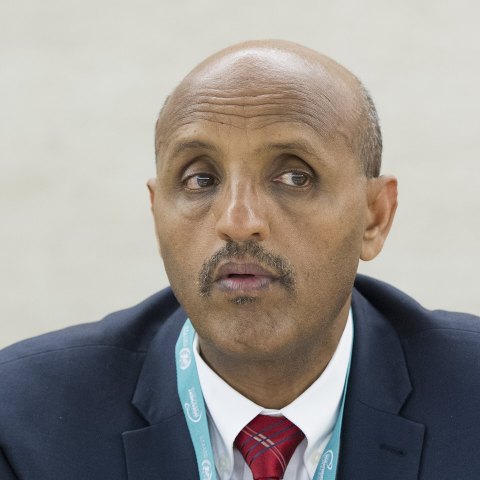
The cost drive follows a leadership change. Gebremariam formally took charge as Air India CEO on October 1 after being appointed on Aug 5 to lead the carrier's revival. He succeeded Campbell Wilson.
Gebremariam spent over 36 years at Ethiopian Airlines, including 11 as its group CEO. He took early retirement in March 2022 due to health issues and was until recently a senior strategic adviser to Delta Air Lines of the US.
Under his leadership, Ethiopian Airlines became a global airline and the largest carrier in Africa, while Addis Ababa became a major aviation hub. Under Wilson, Air India's group airlines were consolidated into two from four and a new brand identity was put in place.
- June 2025Fatal crash
The AI 171 crash killed 260 people. Air India remains under regulatory scrutiny, with its current status not stated.
- October 1New CEO takes charge
Tewolde Gebremariam formally becomes Air India CEO.
- October 1Approval change
Staff-on-duty approvals begin routing through the HOD, CXO and CEO.
- October 25Winter schedule starts
Air India Express begins its expanded 2026-27 winter schedule.
Air India has also asked to defer deliveries of hundreds of aircraft on order to reduce costs. The outcome of that request is not stated. Singapore Airlines holds the remaining 25.1 per cent stake in Air India.
Gebremariam said employees could not remove the external pressures facing the airline, but could influence expenditure through daily decisions. He linked that discipline to the carrier's ability to withstand disruption and improve its operations.
Air India Express has announced the immediate operating backdrop for the wider group. Its 2026-27 winter schedule, beginning October 25, will use a fleet of more than 105 aircraft to operate nearly 585 flights each day on 220 routes from 65 stations.
The details of PRABHAV submissions will be shared separately. Air India Express's expanded winter schedule takes effect on October 25.