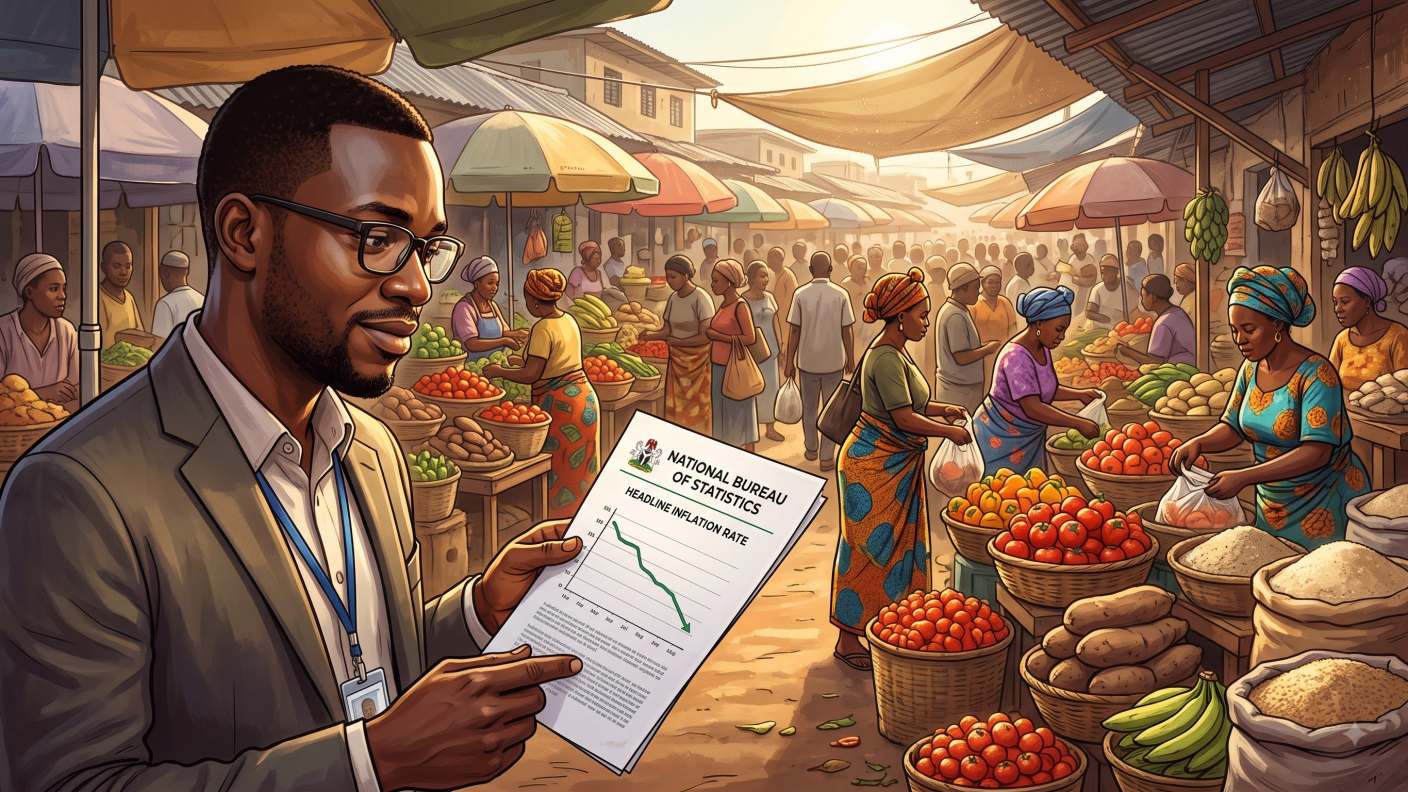
Nigeria's headline inflation fell to 14.63% in September from 15.39% in August, the National Bureau of Statistics said.
The data show slower annual and monthly price growth, with food prices helping to pull down the headline measure. But core inflation increased from August, and the available report does not establish how households or the wider economy were affected.
"In September 2026, the headline inflation rate stood at 14.63%, down from 15.39 per cent in August 2026, and stood at 20.98 per cent in the same month of the preceding year (September 2025)."
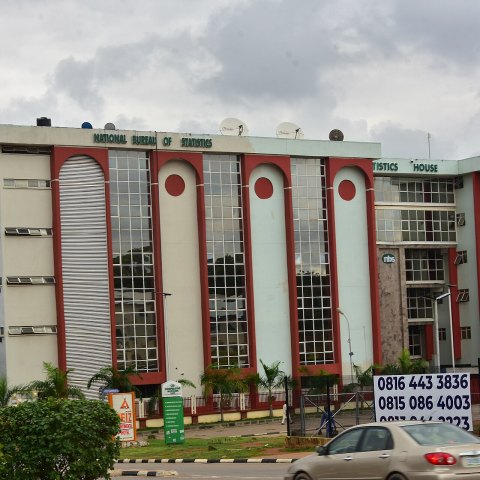
The NBS disclosed the figure in its September 2026 Consumer Price Index report, which it released on Thursday. The September rate was 6.35 percentage points below the level recorded a year earlier.
| Measure | September 2026 | Comparison |
|---|---|---|
| Headline inflation, annual | 14.63% | 15.39% in August; 20.98% in September 2025 |
| Headline inflation, monthly | 0.06% | 0.71% in August |
| Food inflation, annual | 19.59% | 20.16% in September 2025 |
| Food inflation, monthly | -1.55% | 1.02% in August |
| Urban inflation, annual | 15.64% | 15.90% twelve-month average |
| Food inflation, twelve-month average | 15.72% | 28.37% in September 2025 |
Monthly headline inflation also eased. It declined to 0.06% in September from 0.71% in August, a fall of 0.65 percentage points.
"On a month-on-month basis, the headline inflation rate in September 2026 was 0.06 per cent, which was 0.65 percentage points lower than the rate recorded in August 2026 (0.71 per cent)."
The NBS said the result meant that average prices increased more slowly in September than in August. The report did not give a specific explanation for the increase in core inflation.
Food prices pulled down the monthly measure
Food inflation was 19.59% on an annual basis in September, down from 20.16% in September 2025. On a monthly basis, it fell to -1.55%, compared with 1.02% in August.
The NBS said changes in several categories, including grains, rice, eggs, onions, palm oil, vegetables, potatoes, plantain and tomatoes, drove the monthly food-price movement. Food inflation averaged 15.72% over the twelve months ending in September, 12.66 percentage points lower than the 28.37% recorded in September 2025.
The NBS said the fall in food prices helped moderate headline inflation. At the same time, core inflation, which measures underlying price pressures in the report, strengthened compared with August.
The figures also showed differences between locations. Urban annual inflation stood at 15.64% in September, while its corresponding twelve-month average was 15.90%. The rural monthly inflation rate fell by 2.68 percentage points, the NBS said.
The report described mixed movements across urban and rural inflation. Annual inflation moderated in both areas, but urban prices rose faster month on month while rural inflation fell.
The reported trend has conflicting descriptions
Nairametrics said the September result marked a fourth consecutive monthly decline in 2026, while Vanguard put the decline at three in a row since June.
The two accounts also differ in their treatment of core inflation. Nairametrics said core inflation increased compared with August, while Vanguard's account cited 13.29 per cent in August at both points in its core-basket comparison, which does not establish a change.
The differing accounts
Nairametrics
September account
Fourth consecutive decline
- Core inflation increased compared with August
- Monthly food inflation fell to -1.55%
Vanguard
September account
Third consecutive decline
- Core basket reported at 13.29% in August
- Food comparison differs from the NBS figures
The NBS figures supplied in the report show food inflation falling from 1.02% in August to -1.55% in September on a monthly basis. They do not settle whether the headline decline was the third or fourth consecutive monthly fall.
Market context does not establish a cause
Ahead of the September inflation report's release, the naira reached N1,333 per dollar on October 14, 2026, at the Nigerian Foreign Exchange Market. Market participants were awaiting the data, which provided an update on the pace of price increases.
The available information does not establish a causal link between that currency movement and the September inflation decline. It also does not explain the specific reasons for the increase in core inflation.
What we know
- The September 2026 Consumer Price Index report was released on Thursday.
- Headline inflation fell to 14.63% in September 2026.
- Monthly food inflation fell to -1.55% in September 2026.
Still unclear
- Whether September was the third or fourth consecutive month of headline disinflation.
- How the decline affected Nigerian households, businesses and the wider economy.
- The exact date of the next inflation report release.
The full contents of the September 2026 Consumer Price Index report are not provided in the available material. No exact date is supplied for the next inflation report.