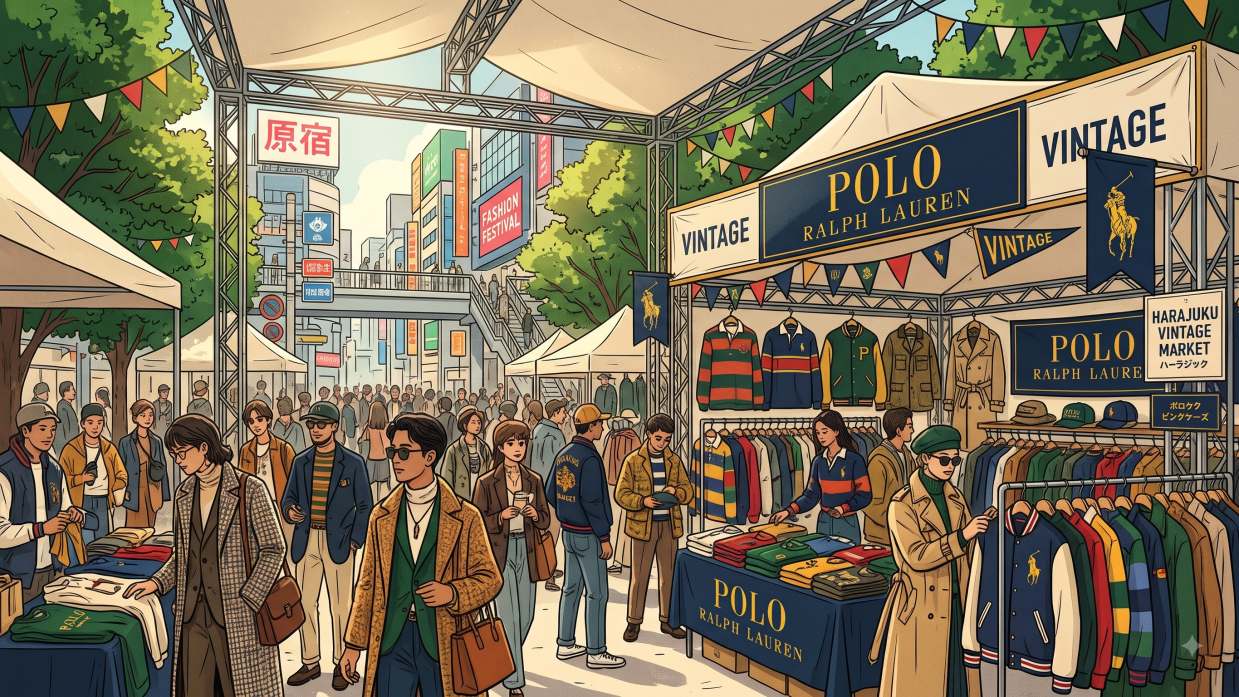
Ralph Lauren brought its first-ever vintage marketplace to Harajuku in October 2026, welcoming 10,000 visitors who flew from Brooklyn to Detroit to swap stories and clothes.
Over three days, PoloFest transformed a large Tokyo venue in Harajuku into a free, ticketed event combining a museum, marketplace and symposium, with live interviews.
The festival also celebrated five decades since Ralph Lauren established its first Tokyo store.
So we went out to this airplane hangar full of Ralph Lauren vintage. It was a giant hangar. We learned that he was trading with people in Japan and all around the world. And we realised that we had stumbled into a subculture that was pretty intense.
The event was 20 years in the making, David Lauren said. He'd learned in the early 2000s that Japanese customers were collecting and reselling Ralph Lauren clothes. The company considered opening its own vintage shop in Tokyo, but other projects took priority.
The marketplace
Seventeen Polo-specialising dealers from around the world combined to offer 5,000 specially selected vintage pieces for sale. Sources differ on the seller count: one reports nearly two dozen vintage sellers.
To comply with local regulations, every vintage garment offered for sale had been freshly dry cleaned and fitted with a new Japanese label. The label identified the item as vintage and named Ralph Lauren's Japanese business.
Among the familiar pieces were navy-blue blazers with gold buttons, oxfords bearing the signature pony and ties. Rarities included Polo cowboy boots and pieces from the discontinued Polo Country and Polo Sportsman lines, among the priciest items.
Curation and craft
Old recordings of Lauren discussing his cinematic philosophy of design and old cuttings charting milestone moments in Polo's nearly 60-year history featured in a tunnel-of-Ralph. A room of brand-curated historical rigs charted the pillar genres of Lauren's practice.
Vintage Polo garments reworked by Japanese artisans were available to view and buy. From Osaka's Brown Tabby Works, Yui Narita added vintage denim and workwear patches to an Aran-knit sweater. In Miyagi Prefecture, Mitsugu Sasaki of Sasaki Yohinten decorated a faded navy windbreaker with indigo patches in the boro tradition and embroidered a fresh red Polo Pony on it. The Sashiko Gals collective, established after the 2011 earthquake and tsunami, made its own version of the Polo Bear from indigo denim and chambray patches.
Who came
Most attendees came from Japan, though visitors also arrived from around the world. American guests had travelled from Atlanta and Brooklyn, while French, Italian and Australian accents could be heard among those waiting to visit Ralph's Coffee and the PoloFest merch store. One couple had made the trip from Detroit specifically for the event.
For much of the first two days, David Lauren roamed the marketplace, spoke with visitors, spent time in the courtyard and posed for photos.
Speakers and stories
At Friday morning's first interview on the venue's second floor, Native American silversmith Neil Zarama discussed his brand, Whirling Log and Arrow. The program also featured Polo collectors, known for their personal style, and supermodel Tyson Beckford, whose work helped shape Ralph Lauren in the 1990s.
On Sunday morning, André 3000, one half of the hip-hop duo Outkast, spoke about his Atlanta childhood and how his older cousin Travis introduced him to Polo, passing down shirts that had once been his own. He also recalled hard prepping, a local movement in which students wore tartan pants and riding boots to school rather than sneakers.
The cool thing was how do I add my story onto what Ralph is doing?
Ralph Lauren is from the Bronx. He wasn't necessarily from the world that he ended up creating.
Jason Jules, author of Black Ivy, spoke with Nordstrom's Jian DeLeon. Jules said prep would not exist without outside influences, and Ralph Lauren gives people permission to wear clothes in a quite, quite wrong way, adding that people decide for themselves what is right.
Richard Colligan, a vintage clothing trader since 1984 who established his Manhattan store Metropolis in 1990, was among the sellers and spoke during the event's series of talks.
Design as heirloom
In fashion, it's rare for clothes to stay with you your whole life, but what my father wanted to do was to create clothes that would be handed down. Things that are a part of your life and tell stories about who you are.
The people who are here are swapping those stories as much as they're swapping the clothes.
Several dealers and collectors described PoloFest as a life-highlight event.