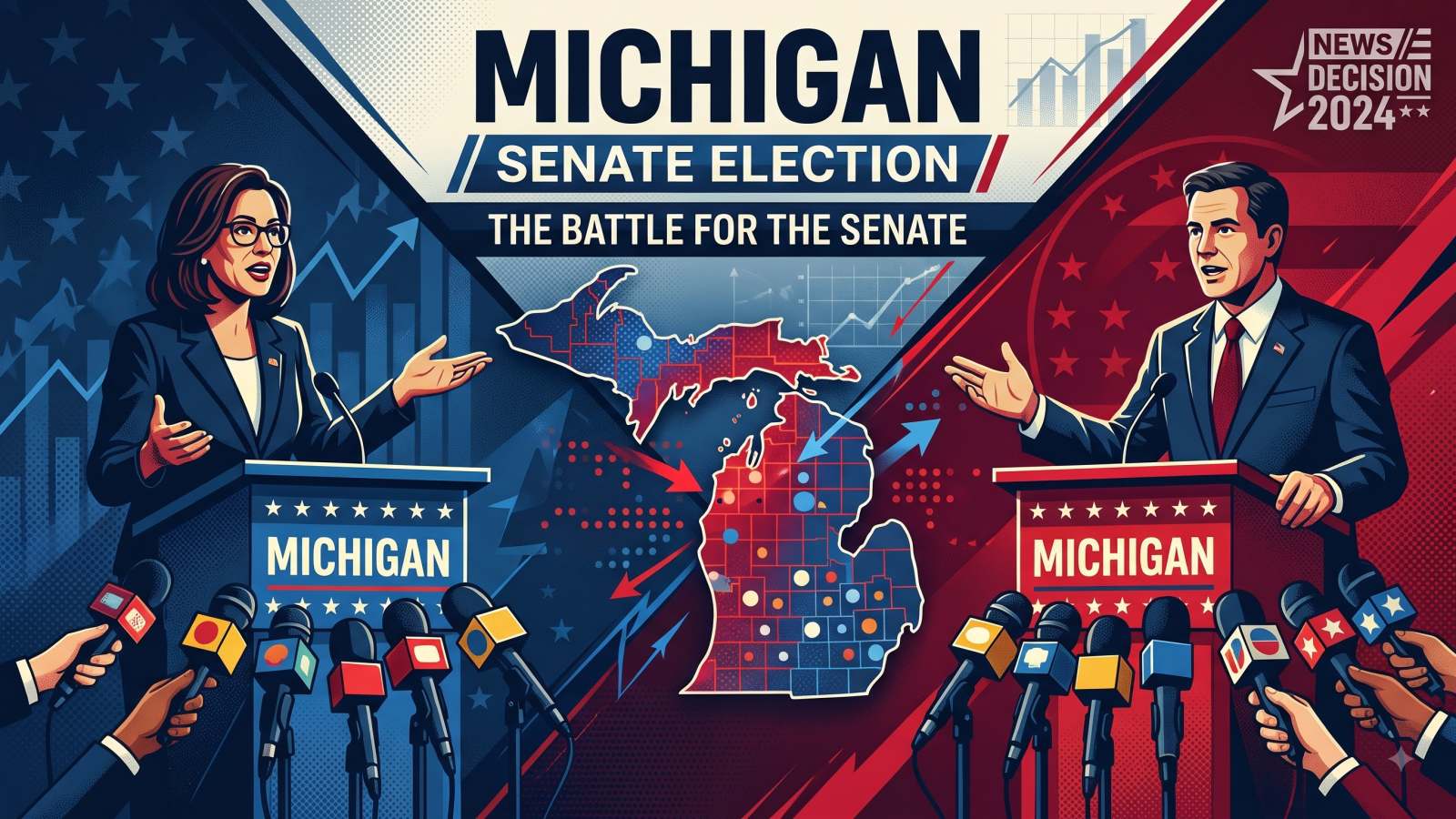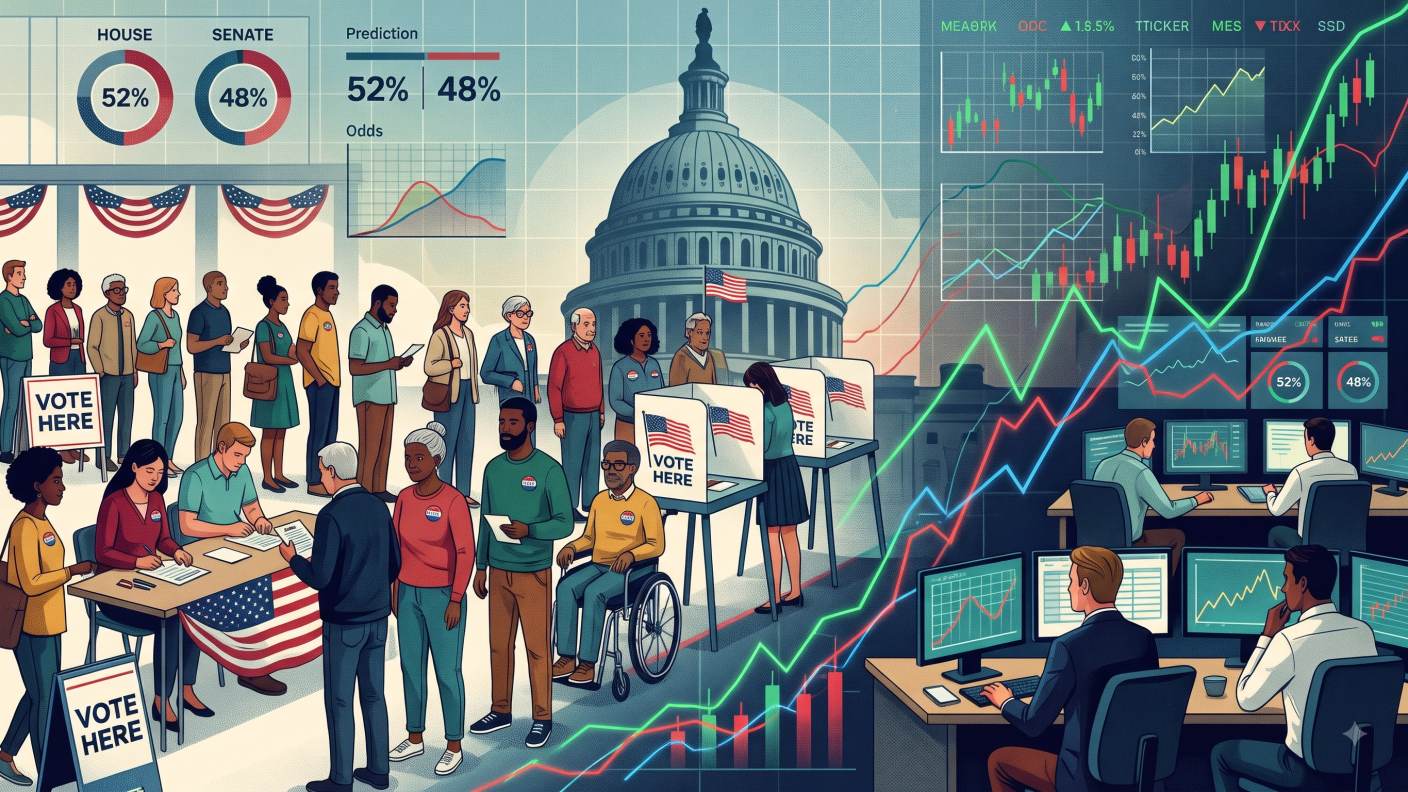
On November 3, Americans vote with control of Congress at stake, as $21bn of prediction-market bets face their biggest accuracy test yet.
The ballot will settle which party holds the House and the Senate, and with them the direction of Donald Trump's presidency.
Trump looks on course to lose both chambers, according to The National.
Allan Lichtman, the American election forecaster, sees a major Democratic win ahead. He gives the party more than a 90% chance of taking the House and a 70% chance of taking the Senate, and says Trump’s party could face a significant setback.
For platforms that take these bets, the vote is their biggest test yet and, in effect, a referendum on the authority they now hold.
Trading on the two largest platforms, Polymarket and Kalshi, hit $21bn in October, a monthly record, according to DefiLlama data.
The same measure stood at just over $4m four years ago, in the October before the midterms. Ahead of the 2024 presidential election, it passed $90m.
The mechanism is simple. Traders buy and sell binary contracts on an event, and each trade shifts the price, making it a continually updated probability estimate.
the most accurate thing we have as mankind right now, until someone else creates some sort of a super crystal ball
Newsrooms have signed up to the format: the AP, CNN, the Wall Street Journal and CNBC have deals to carry live election odds.
The shorthand has reached politicians. In a recent interview about the midterms, former congressman Brad Carson cited one candidate's '99% chance to win on Polymarket' and said nothing about polls.
A run of misses before the vote
Several prominent calls went the wrong way in the months before November.
- Brazil Polymarket put Flávio Bolsonaro at about 80% on election day, where the price had sat for three weeks. It touched 84% on the eve of the vote. Luiz Inácio Lula da Silva won by 51.8% to 48.2%.
- Serbia Polymarket gave Aleksandar Vučić's United Serbia a 70% chance the day before the snap parliamentary election. The opposition Student List took 52.6%, and Vučić conceded after securing 39.2%.
- Wisconsin Polymarket and Kalshi had Francesca Hong at roughly 95% in the August Democratic governor's primary. David Crowley won by less than half a percentage point. Polymarket deleted an X post that had given her 96%.
- Los Angeles On the eve of the June mayoral primary, both platforms had Spencer Pratt, the reality TV star, at about 75% to reach the runoff. He finished third.
- Illinois On the morning of the March Democratic Senate primary, Kalshi priced Raja Krishnamoorthi at 61% after he had spent nearly $30m on the race. Juliana Stratton won.
- New York The day before the 2025 Democratic mayoral primary, Polymarket put Andrew Cuomo at 66%. Zohran Mamdani beat him by 12 points.
What the research finds
Over the final five weeks of the presidential race, Vanderbilt University researchers examined 2,500 political prediction markets, covering more than $2.3bn of transactions.
The study found that the markets 'often behaved in ways inconsistent with rational information aggregation', with accuracy of 67% on Polymarket and 78% on Kalshi.
Profit does not spread evenly. One study found that 1% of Polymarket accounts captured three-quarters of the profits. The top 0.1% took half. Two-thirds of accounts have lost money since 2022.
A study co-written this year by Yale University finance assistant professor Theis Ingerslev Jensen estimates that 3% of Polymarket accounts belong to skilled traders, whose activity pulls prices toward more accurate probabilities.
One of them, a mathematics PhD who trades as @gopfan, has made nearly $2m in two years by using statistical models to forecast elections around the world.
But there is a counterweight to the misses. An analysis of two years of Polymarket transactions found that markets trading near 80% were right about 80% of the time.
Where the odds and the polls part company
Odds and polls, side by side
Nebraska Senate
Ricketts against Osborn
- FiftyPlusOne polling data shows a 2% margin between Pete Ricketts and Dan Osborn
- Kalshi and Polymarket had a Ricketts win at about 70% as of Monday afternoon
Ohio governor
Ramaswamy against Acton
- Polls put Vivek Ramaswamy within a few points of Amy Acton
- Kalshi and Polymarket had an Acton win at 82% as of Monday afternoon
Brazil showed the same gap from the other side. On the night before the runoff, final polls had Flávio Bolsonaro marginally ahead, about 51% to 49%, within the margin of error. Polymarket held him near 80%.
Stocks going into the vote
JP Morgan Asset Management's analysis has the S&P 500 higher 12 months after every midterm election since 1950.
The third year of a presidential term has averaged a 16.1 per cent gain for US stocks, historically the strongest of the four.
The past is no guarantee, but the third year of a presidential term is, on average, the best one for the US stock market.
The S&P 500's Shiller price-to-earnings ratio reached 40.88 at October's close, near a record. Only during the dot-com boom was the figure higher.
Alphabet shares fell 13 per cent on October 29, wiping $500 billion off the company's value. Heavy spending on AI infrastructure left it with negative quarterly free cash flow of $9.1 billion.
The wider economy has held up. Third-quarter GDP grew at an annualised 3.4 per cent.
Despite the volatility, Tony Hallside, chief executive of STP Partners, puts the S&P 500 and the tech-focused Nasdaq up around 12 per cent this year.
Getting the election out of the way helps sentiment, but it does not create earnings growth
A divided Congress would make major new legislation harder to pass. That could limit the prospect of sweeping changes to areas such as tax and regulation
Aliasgar Tambawala, co-chief investment officer at Klay Group, said a split legislature could stir more disruption over the debt ceiling and on government funding.
Higher Treasury yields give investors a competitive income alternative at a time when US equity valuations remain demanding
Neither chamber has been decided, and whether the markets get this one right won't be settled until the count is done. It's also unclear whether the post-midterm rally pattern will repeat. The next dated marker is the Federal Reserve, which raised rates in September and may do so again in December.