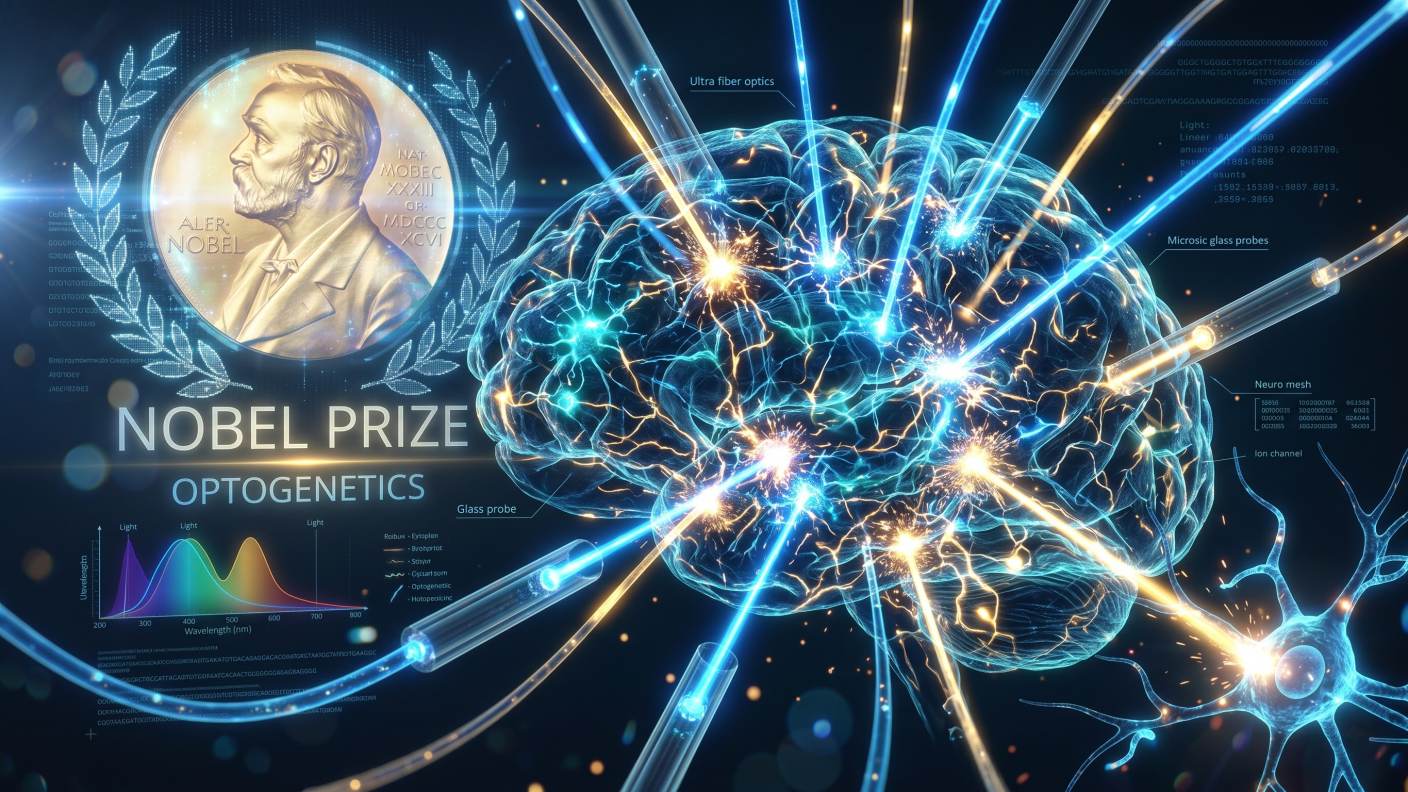
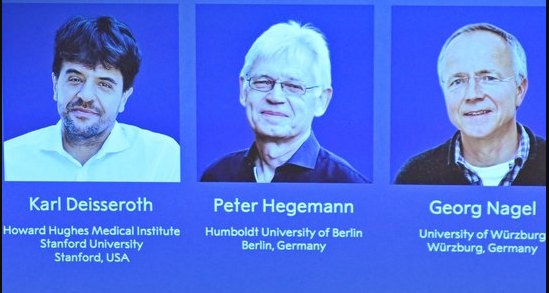
Karl Deisseroth, Peter Hegemann and Georg Nagel won the 2026 medicine Nobel for discoveries behind optogenetics.
The medicine prize was announced Monday in Stockholm. It recognised discoveries concerning light-gated ion channels and optogenetics.
Deisseroth is a 54-year-old American based at Stanford University in California. Hegemann is a 71-year-old German based at Humboldt University in Berlin, while Nagel is a 73-year-old German based at the University of Würzburg.
Optogenetics has fundamentally altered our understanding of the brain.
How optogenetics controls nerve cells
Optogenetics uses a special protein borrowed from algae to control cell electrical activity with light. The method allows scientists to illuminate brain pathways and target individual cells.
- Early 1990sAlgae research
Hegemann investigated how the alga Chlamydomonas reacts to light in half a millisecond.
- Early 2000sChannelrhodopsin
Hegemann and Nagel discovered channelrhodopsin, the algal protein with unique properties.
- 2003Electrical impulses
They published that the protein could be introduced into human and hamster cells to generate electrical impulses using light.
- 2005Nerve-cell demonstration
Deisseroth demonstrated the technique in rat nerve cells.
- 2006A new name
The method was named optogenetics.
Using light, researchers are now able to switch individual neural circuits on or off in the brain. They can bring memories to life, create feelings, drive behaviours and study the types of neurons that are involved in various psychiatric and neurological disorders.
Possible medical applications
Clinical trials are testing whether inserting a light-sensitive protein into the retina can restore sight for people blinded by retinitis pigmentosa.
For readers in Belgium, the potential relevance lies in experimental approaches to blindness and neurological and psychiatric disorders. The pack provides no Belgium-specific researcher, institution, patient or clinical-trial connection.
The Nobel prizes are presented to the laureates on 10 December, the anniversary of Nobel's death.