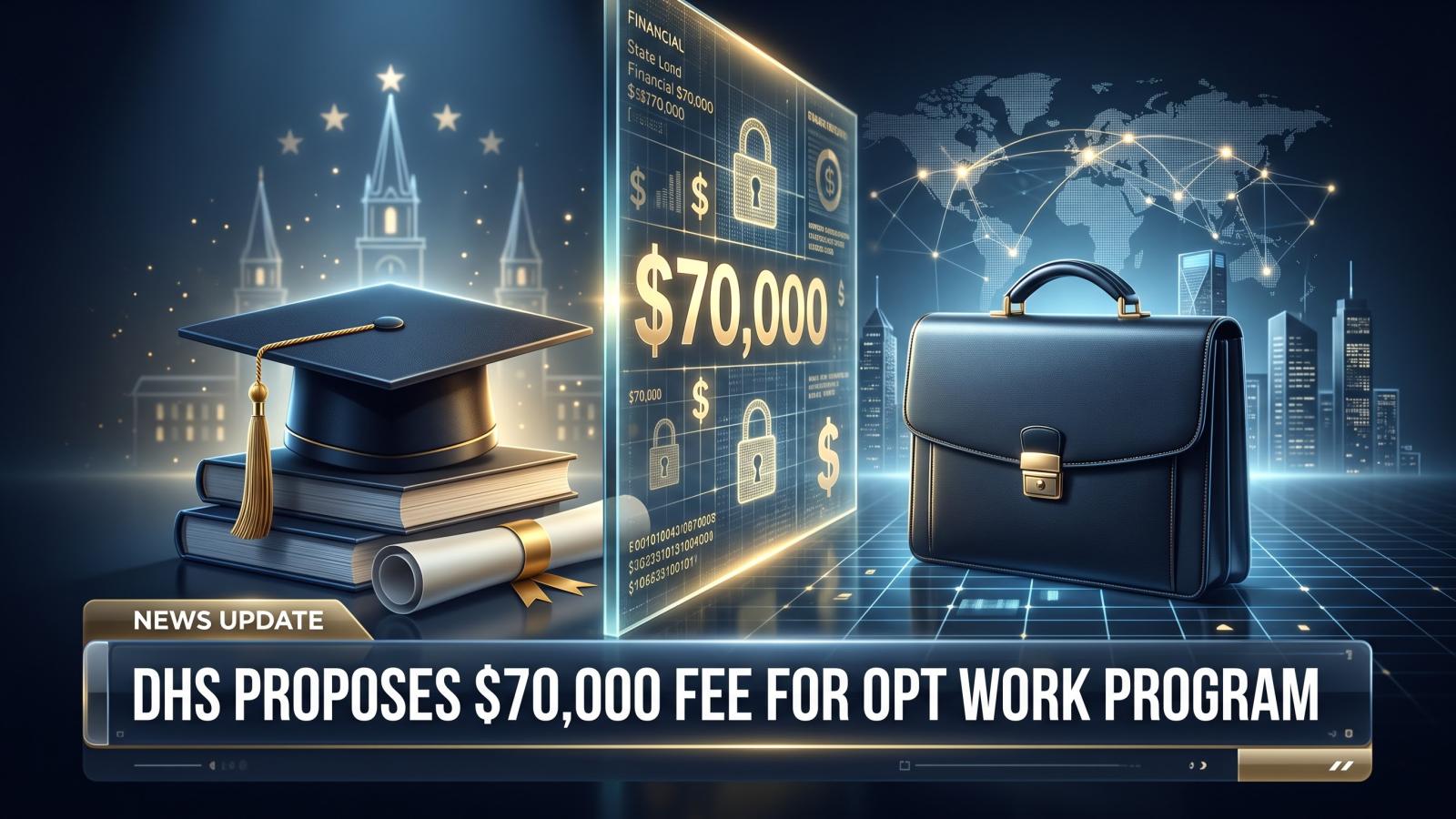
The Department of Homeland Security proposed a $70,000 fee for international students seeking work through the OPT program.
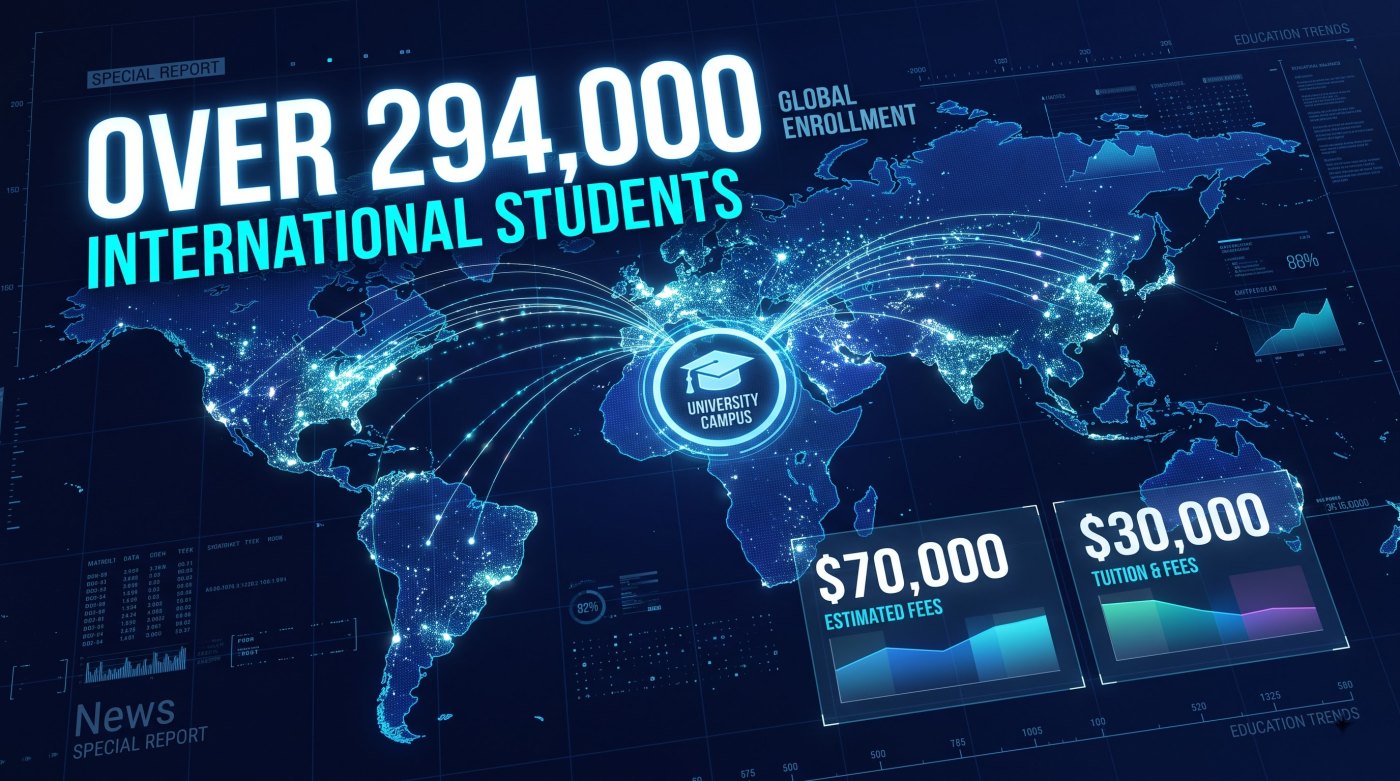
Schools would be required to pay the fee for each new student's initial application and a $30,000 fee for each renewal. The proposed fees would sharply increase the roughly $500 that students currently pay to participate.
Accounts of the proposal differ on whether schools, students or certified institutions would make the payment.
OPT connects study with employment
OPT lets international students work in jobs related to their majors during or after their studies. Students are generally eligible for one year of work after graduation, while some science, technology, engineering and mathematics graduates can receive an additional two years.
Current cost and proposed fee
Current participation cost
For OPT
roughly $500
- Students currently pay to participate
Proposed cost
For new applications and renewals
$70,000
- $30,000 renewal fee
- Jobs related to a student's major
The programme began officially in 1992. In 2024/2025, more than 294,250 international students took part, representing about one-quarter of the international student population in the country. STEM graduates received nearly 27,500 OPT authorisations in 2015, compared with more than 95,000 in 2024.
The DHS spokesperson said: "Optional Practical Training was never meant to be a back door into the American workforce, a subsidy for cheap labour, or a prize for those who game the system". American workers should not compete against a programme turned into a pipeline for cheap foreign labour.
NAFSA CEO Fanta Aw said: "Driving away the talents, perspectives, and aspirations of international students will only hurt American innovation, economic growth, workforce development, and global leadership".


The proposal follows wider immigration restrictions
Earlier in 2026, Immigration and Customs Enforcement flagged more than 10,000 OPT cases as potentially fraudulent.
This summer, the administration completed a rule intended to stop international students remaining in the United States beyond four years unless they received federal approval. In September, a federal court stopped the rule from taking effect.
Last year, Trump's executive order placed a $100,000 fee on H-1B visas, used by foreign workers in high-skill fields such as engineering and biotech.
Federal courts have blocked the fee for now, although DHS has put it forward again in a proposed rule.
A lawsuit was filed Monday after new guidance said Curricular Practical Training should be authorised only when work experience is required for a degree.
New international student entry fell by 17 percent last fall, the sharpest decrease since the COVID-19 pandemic. Sarah Spreitzer of the American Council on Education said: "We know that OPT is one of the reasons that international students choose to study in the United States because they're able to have that post-graduation work experience".
A NAFSA survey found that 54% of current graduate students and postdocs would not have come to the United States if OPT did not exist. The survey did not ask about the impact of programme fees.
DHS estimates that the policy could produce $12.4 billion in annual fee revenue. It also estimates $4 billion a year in opportunity costs from lost work experience, lower employer productivity and reduced international student enrolment.
Doug Rand, director of the Talent Mobility Fund, said: "This proposed rule isn't going to fare well in the courts, just as the US$100,000 H-1B fee and other restrictionist policies have been struck down".
- 1992OPT created The programme was formally created.
- Earlier in 2026Fraud cases identified Immigration and Customs Enforcement identified more than 10,000 potential fraud cases associated with OPT.
- SeptemberFour-year rule blocked A federal court prevented the administration's four-year rule from taking effect.
- MondayTraining guidance challenged New Curricular Practical Training guidance led to a lawsuit.
DHS has said the public has 60 days to comment and will accept comments through November 9, while other accounts say the agency will allow 30 days before deciding whether to issue a final rule.
If the requirements are finalised, DHS said implementation would not begin for an additional 60 days. The delay would give schools, students and employers time to prepare.