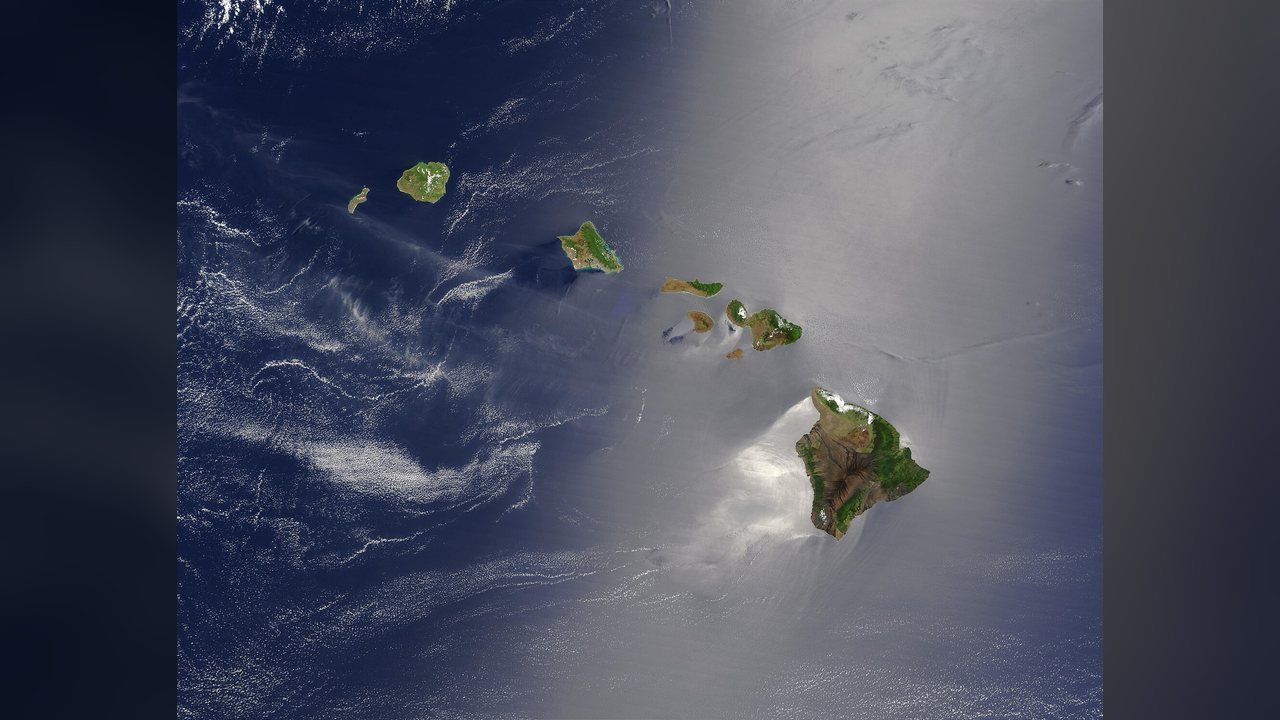
Hurricane Nolo brought heavy rain, high winds and the threat of flash flooding to Hawaii this weekend, forcing road closures and the activation of the National Guard. Although the storm began moving away from the islands on Sunday, the region remains under alert as authorities manage the impact of the extreme weather.
The Governor of Hawaii issued an emergency proclamation to coordinate the response, which included deploying more than 120 National Guard members to the Big Island alone. Donald Trump approved a federal emergency declaration, allowing the Federal Emergency Management Agency (FEMA) to provide funding and coordinate disaster relief efforts, according to reports by The Guardian.
By Sunday, the center of the hurricane was located roughly 365 miles south-south-west of Honolulu. Despite the distance, the storm's power was evident, with maximum sustained winds recorded at 115 mph.
Transport disruption and local impact
Heavy rains on Saturday led to the partial closure of a major highway connecting Kailua-Kona and Hilo on the Big Island. Local officials at Hawaii County civil defense issued warnings for high winds and dangerous surf conditions that remained in effect through Sunday evening.
Michael Brennan, director of the National Hurricane Center, advised people to avoid travel in areas at risk of flooding and high winds. "Don’t venture out if you don’t have to into the dangerous flooding environment, but also high winds. We can have trees and power lines down," Brennan said, as reported by The Guardian.
While some residents in Hilo were seen visiting Carlsmith Beach Park despite closure signs, many businesses were boarded up. Resident Andrea Gill, who stayed home with family, noted that while the islands are accustomed to rain, the wind presents a different challenge. "We’re used to lots of rain. We’re not used to wind. So it’s always a blessing when we don’t get the wind from the hurricane," she said.
Recovery efforts and power restoration
The arrival of Nolo complicates an ongoing recovery process in Hawaii. Many residents on the Big Island are still dealing with the aftermath of Hurricane Lala, which recently destroyed approximately 100 homes by sweeping them off their foundations.
Hawaiian Electric crews had recently been on Kauai helping to restore power after Hurricane Lowell earlier in September. Those workers have now returned to Oahu, Maui and the Big Island to deal with outages caused by Nolo.
Forecast and moving path
Meteorologists expect Nolo to remain on a path that keeps its center well south and south-west of the main Hawaiian Islands. However, the storm is not yet finished with the region.
According to the US National Hurricane Center, the hurricane is projected to strengthen and shift toward the north-west by Sunday night. This path will likely bring the storm near the Papahānaumokuākea marine national monument early this week.