Matt Henry's first-over triple strike left India 0-3 and set up a 244-run rout that keeps the series alive.
Matt Henry claimed 6-27, including three wickets in the first over, as New Zealand beat India by 244 runs on Friday 13 November 2026 in the fourth ODI at Mount Maunganui. India were bowled out for 89 in 26.4 overs while chasing 334.
The win keeps the five-match series alive at 2-1 with one game left, and the manner of India's collapse makes it their second-heaviest ODI defeat ever.
A first over that decided the match
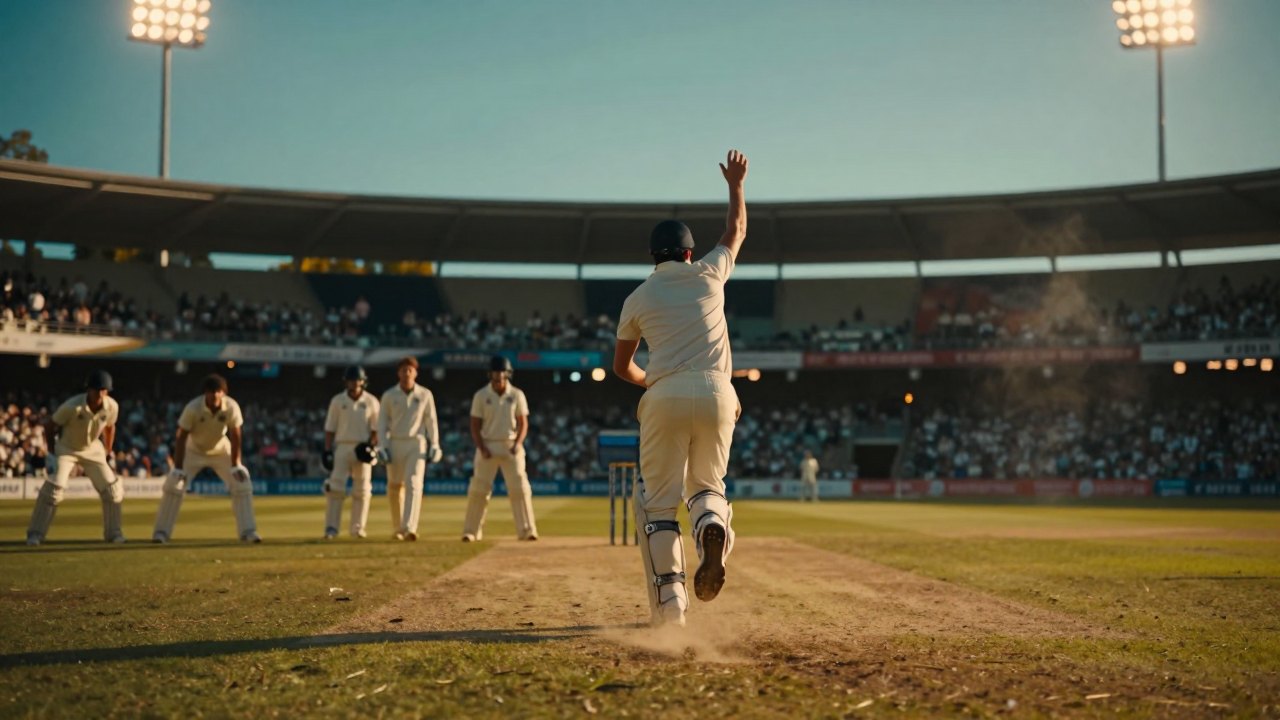
Henry took three wickets in the opening over, dismissing Rohit Sharma, Virat Kohli and Shreyas Iyer for ducks to leave India 0-3. It was a triple-wicket-maiden, and Henry’s best ODI figures.
Rohit Sharma edged to slip off his first delivery. Henry bowled Kohli with the fifth ball of the over, then trapped Iyer lbw with the sixth [D1] [D4].
With the way the wind was going, I wasn't too worried about the swing. From ball one it was just about trying to bring the stumps in play, really.
Henry said the plan with the new ball was to bring the stumps into play and put the batters under pressure in a small window.
We knew that there was a small window there with the new ball that you could put the batters under pressure, so it's just trying to be as simple as possible.
Young's century builds the platform
Asked to bat, New Zealand were all out for 333 in the last over. Will Young scored 125 from 108 balls, including 14 fours and four sixes, for his fifth ODI century and a career-best score.
Young survived two chances off Auqib Nabi while on five in the second over: Rohit dropped him at slip, then wicketkeeper Ishan Kishan put him down.
Tim Seifert scored 58 and shared an 85-run opening partnership with Young. Finn Allen made 41 from 30 deliveries, and he and Young put on 90 runs in 65 balls.
India's lower order limits the damage
Ishan Kishan top-scored for India with 27. A 44-run stand with Axar Patel, who made 21, plus 21 from Naman Dhir, kept India from a record-breaking margin of defeat.
Matthew Fisher took 3-31 for New Zealand. Axar Patel took 2-39 from 10 overs, Auqib Nabi 2-59 and Gurnoor Brar 2-69 for India.
Where this defeat ranks
Worst ODI totals
India's 89 all out
6th lowest
- Bowled out in 26.4 overs
- Chasing 334
Heaviest ODI defeats
244-run loss
2nd heaviest
- After 245-run loss to Sri Lanka
- Sharjah, October 2000
India’s second-heaviest ODI defeat came after a 245-run loss to Sri Lanka in Sharjah in October 2000. The total of 89 was India’s sixth-lowest in ODI history.
- 2nd overYoung dropped twice
Rohit at slip and Kishan behind the stumps put down chances off Auqib Nabi.
- 1st overIndia 0-3
Henry removes Rohit, Kohli and Iyer all without scoring.
- Mid-inningsYoung and Allen add 90
A 90-run stand in 65 balls pushes New Zealand towards 333.
- ChaseLower-order resistance
Kishan and Axar add 44 to keep India clear of a record defeat.
Series state and absent leaders
India lead the five-match series 2-1, leaving New Zealand unable to win it but still able to draw by taking Sunday’s match at the same venue. The third ODI in Hamilton was abandoned because of rain.
New Zealand lost the first two ODIs in Auckland and Wellington before the third match in Hamilton was washed out. They’d also lost the preceding T20I series 3-2.
Captain Shubman Gill and batter KL Rahul missed the match after being ruled out for the rest of the ODI series as they prepared for the two-Test series against New Zealand. Shreyas Iyer captained India.
When it moves sharply like that in the first over, when people are facing first balls, it's pretty tough.
What we know
- New Zealand beat India by 244 runs at Mount Maunganui.
- Matt Henry took 6-27 with a first-over triple-wicket-maiden.
- India lead the series 2-1 and New Zealand can draw it on Sunday.
Still unclear
- Whether New Zealand will win Sunday's final ODI to draw the series.
- The full reasons for Shubman Gill and KL Rahul's absence beyond Test preparation.
The final ODI is at the same Mount Maunganui venue on Sunday, where New Zealand can square the series at 2-2 before the Tests begin in Wellington on 19 November.