Heavy rain tied to El Niño sent a flash flood through Santa Cruz island in Ecuador's Galápagos overnight, killing one person and affecting more than 2,000 people in the archipelago's most populated settlement, Mayor Fanny Uribe said.
The water gathered high above the port, in the island’s cloud forest. Santa Cruz has an arid coastal belt of mangroves around Puerto Ayora and a wet highland of dense trees, meeting in a gorge that drains the hills. Rain fell on that high ground for about ten hours before the gorge became a huge waterfall.
Reports give the timing two ways: overnight from Friday to Saturday, and in the early hours of 1 November. Both describe lightning over the port, bright flashes without audible thunder, and rain that started in the highlands in the afternoon and kept building.
- Friday afternoonRain begins
Heavy rain starts over the highlands of Santa Cruz.
- Friday nightLightning
Flashes without thunder over the port as the downpour strengthens.
- Early SaturdayThe gorge overflows
Water rushes down the ravine towards the inhabited coast.
- Saturday morningCleanup
Residents begin digging out and authorities start clearing debris.
Three metres of water in the dark
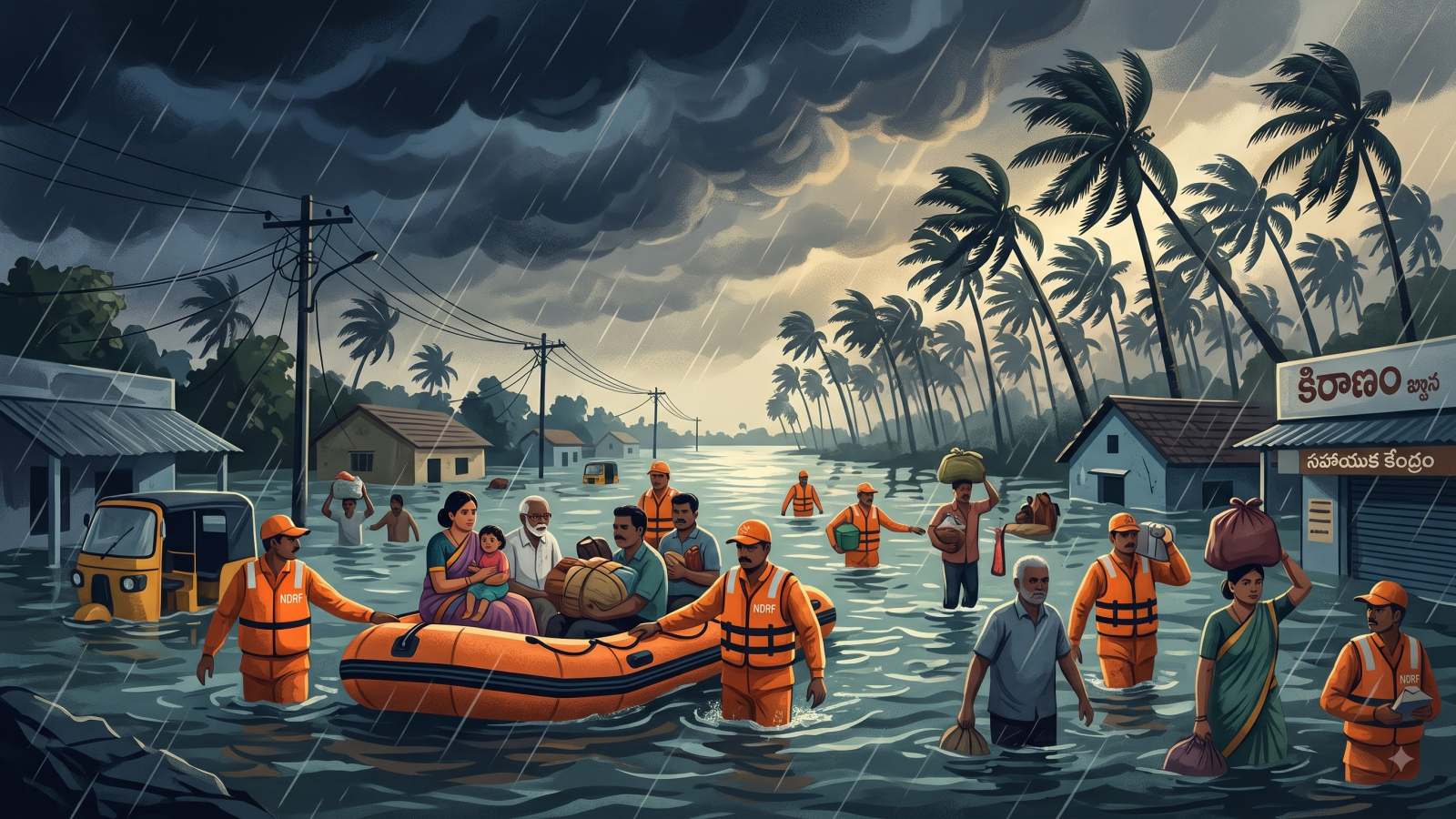
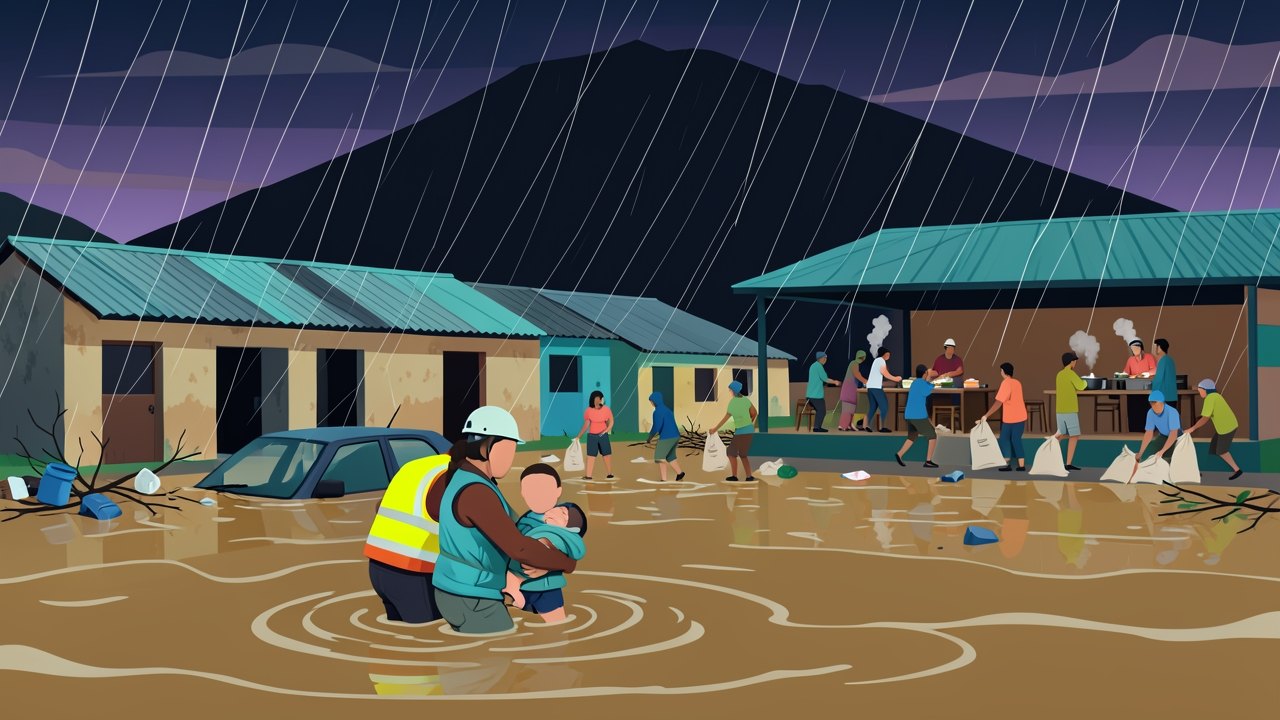
In La Cascada and La Unión, fire chief Freddy López said the water reached three metres. Some areas of Puerto Ayora, the island's main town, were also flooded to that depth.
Nothing warned people. Fire crews, Red Cross volunteers and young residents walked from door to door to wake families, while some residents had to swim out of their houses.
Around one in the morning I had to leave my house after hearing knocks on my door. A young man carried my granddaughter, another carried my dog, and I was able to get out. All my things stayed under the water,
Some families tied children, older adults and pets with ropes so the water would not sweep them away.
Rescuers worked from kayaks and Zodiac inflatables, bringing most of those they pulled out to safety, López said.
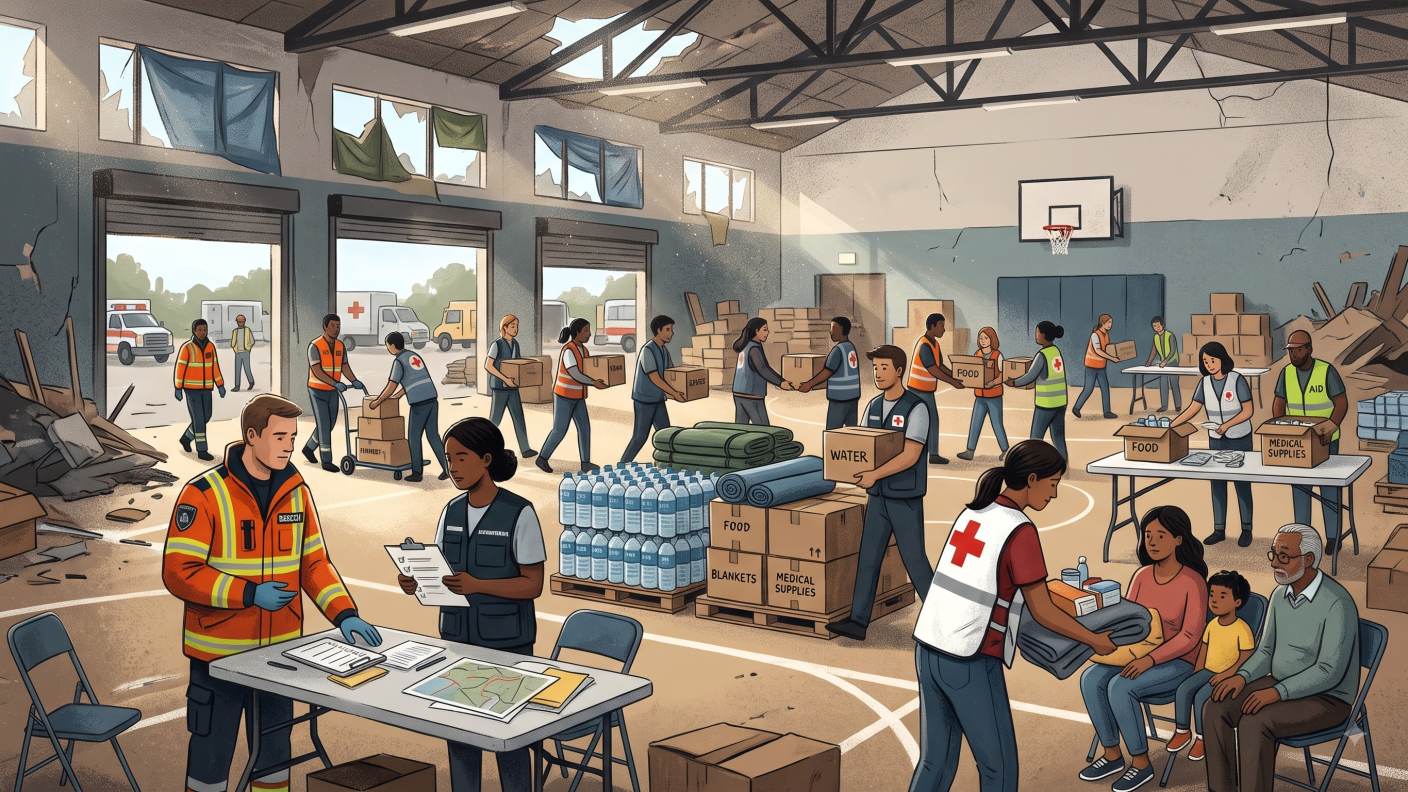
Most of those driven from their homes took shelter in the Puerto Ayora Coliseum, a sports complex that opened its doors to them.
A port lay underwater in daylight. For a few hours, sunshine returned, and the tourist quarter began to regain its pace.
The official count of those affected stands at more than 2,000. The Un Cambio por la Vida Foundation said it had identified at least 500 more people who aren't on that register because they're staying with relatives.
Kitchens, WhatsApp groups and money transfers
Families who lost their homes may receive housing vouchers Uribe was negotiating with the government, she said. She was also preparing 1,000 food kits for distribution and considering relocating La Cascada, but no destination for a move has been decided.
Residents have set up community kitchens and their own aid networks, and the La Torreja Fishing Foundation is serving three meals a day to about 1,200 people.
Although we were not affected because we are on the second floor, we mobilized because our neighbors need help,
A WhatsApp group carries much of the organising. Neighbours use it to schedule house cleanings, call meetings and gather work parties to drag large items out of flooded homes.
Young leaders have put their bank accounts on social media for the emergency, and dozens of people on the mainland have joined with donations.
Getting goods to the island is slow. Physical donations are difficult because of the distance and the biosecurity rules that guard the Galápagos ecosystem, so transfers of money to relatives or young leaders have become the fast route, paying within hours for protein, groceries, hygiene products and everyday medicines.
An island that feeds itself
Santa Cruz's farms supply its residents. The Santa Rosa Farmers Association said residents consume 90% of the island's crops themselves.
A few months ago we knew this would happen and the streams were not cleared. My farm has been affected, the crops were carried away by the water and we are asking for assistance both with machinery to clear the gullies and for construction of greenhouses that would allow us to secure food production for island residents,
Farmers in the highlands, whose produce largely feeds the island, fear for their crops as more rain approaches.
The Environment Ministry said no giant tortoises or wild birds had been reported dead as a result of the rains.
A red alert was already in force
Ecuador's National Risk Management Secretariat declared a red alert for El Niño across the country on 29 September, the top level in the system, acting on technical evidence that the phenomenon was under way and that ocean and atmospheric conditions could intensify over the coming months.
Authorities announced repairs to the road that connects the airport to the rest of the island, along with the removal of debris.
Most of those affected have gone home to clean and recover their belongings. In La Cascada, the streets are barely three metres wide, leaving very little space for drainage.
Grimelda Fuente, who lives in the neighbourhood, said she had come back despite the fright and the loss of some belongings, but would leave again if a new alert were declared.
The worst of El Niño's impact is expected to arrive in December.