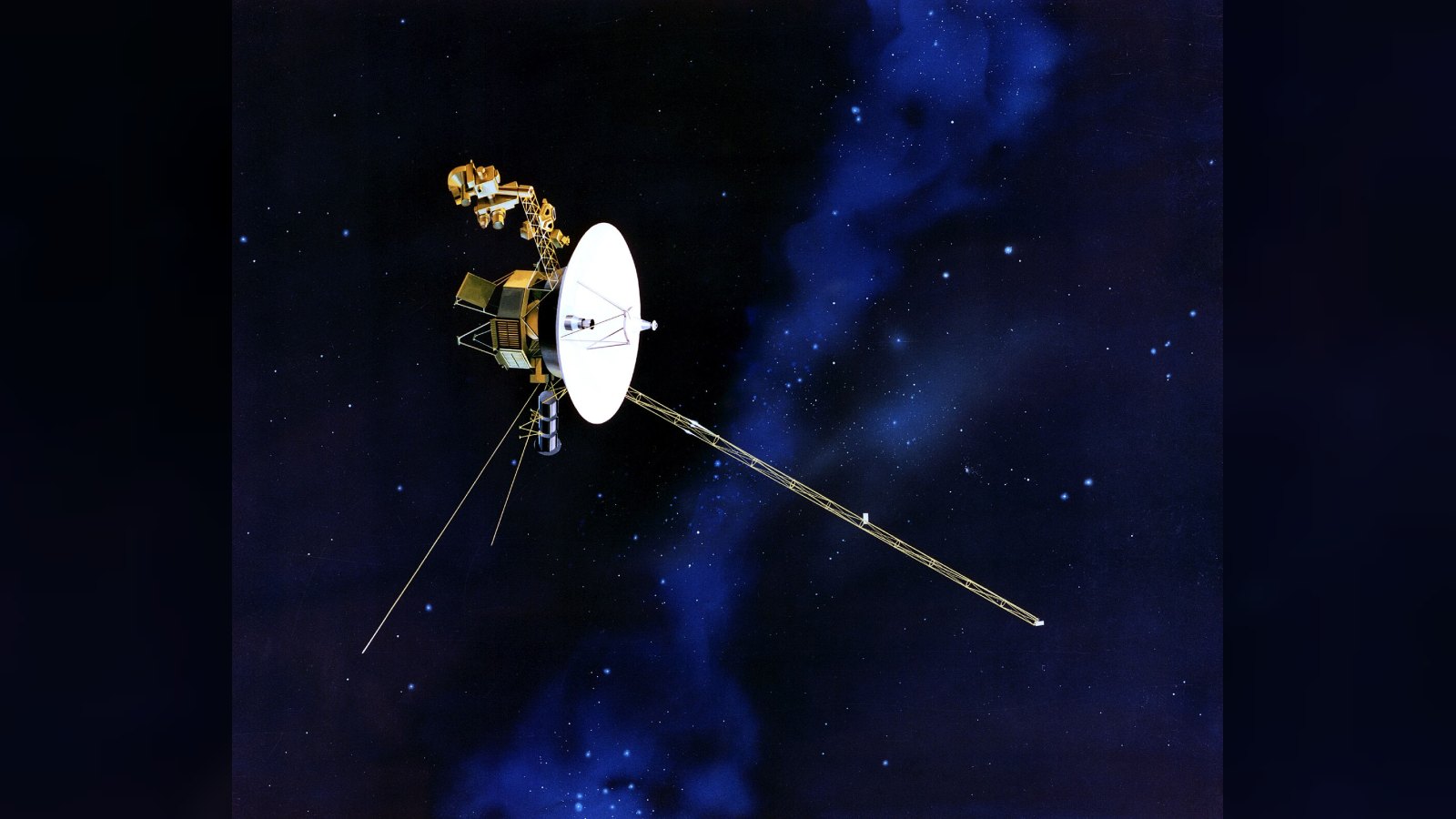
On 18 November 2026, Voyager 1 is expected to reach one light-day from Earth, a distance of 16.09 billion miles, NASA says. Weeks earlier, the spacecraft fell silent for 48 hours, a loss engineers are still investigating.
One light-day is the distance light travels in 24 hours, about 16 billion miles or 26 billion kilometres.
During two scheduled contacts, on October 18 and 19, 24 hours apart, NASA's Deep Space Network could not detect Voyager 1. The signal returned on October 20, before engineers had sent troubleshooting commands, ending the interruption.
After the spacecraft’s computers detected a problem with the active group, which had stopped working, a fault-protection response automatically activated the backup thrusters. Engineers are still investigating what caused the outage.
We're relieved to be back in contact with Voyager 1 and are eager to understand what happened.
This is the first time we've seen the spacecraft do something like this, but we are also at a point in the mission where we have to expect the unexpected
Power and instruments
Engineers completed the Big Bang in early September, replacing three Voyager 1 devices with three lower-power alternatives. The months-long project followed the same change on Voyager 2 by about six weeks. The six devices help distribute heat through the spacecraft in space’s cold. To conserve electricity without disrupting heat distribution, engineers needed to make all three replacements together.
The operation means Voyager 1's remaining science instruments can stay active longer than expected. Otherwise, the team would have had to switch off another instrument as early as summer 2027.
Voyager's original science payload comprised 10 dedicated instruments. After the spacecraft completed their planetary encounters, the team switched off some instruments, while others kept studying the heliosphere's outer reaches. As power dwindled in recent years, the team had to shut down two science instruments. Both probes get electricity from radioisotope thermoelectric generators, which turn heat from decaying plutonium into power. Each spacecraft loses about 4 watts of power a year.
Communication delay
Travelling at 38,000 mph towards the milestone, Voyager 1 will be so far away that a signal takes 24 hours to travel from Earth to Voyager 1, with another 24 hours for a response to return. The full exchange takes 48 hours.
If you want to say 'hello' to Voyager, you send your message and then you go home and you wait two days before you finally get a response
The milestone itself
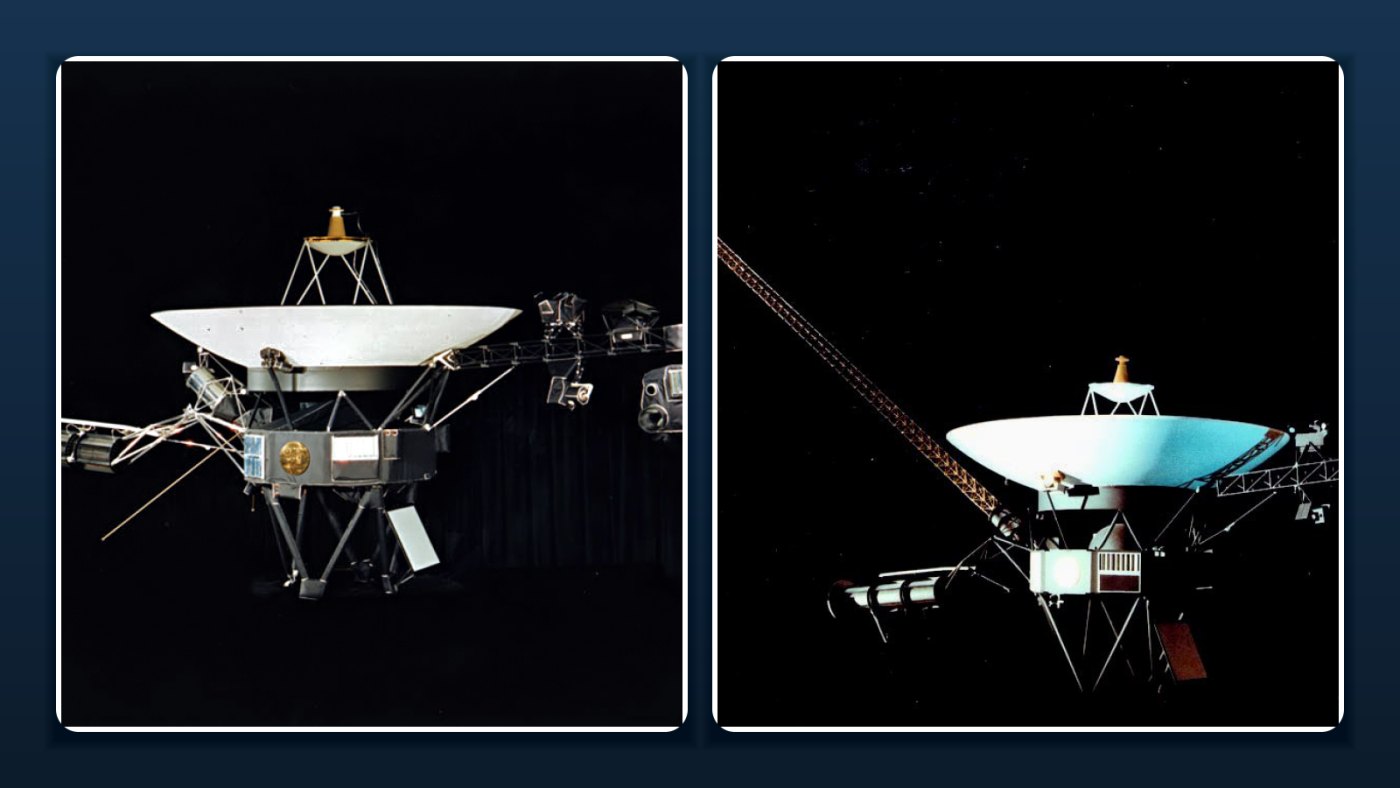
After leaving the Sun’s particle-and-magnetic-field bubble known as the heliosphere, Voyager 1 and Voyager 2 have made the only direct studies of interstellar space by spacecraft. Nothing about the spacecraft or their surroundings will change when they pass the one-light-day threshold.
The Voyager mission launched in 1977 on a five-year design to observe Jupiter and Saturn. Reaching one light-day from Earth will take Voyager 1 49 years, two months and 13 days.
To mark the moment Voyager 1 becomes the first human-made object to reach one light-day from Earth, NASA has posted a countdown clock.
Where sources differ
Speed, distance and arrival time
Source 1
- Arrival time: 5:16:07 a.m. EST on 18 November 2026
- Distance at arrival: approximately 16 billion miles or 26 billion kilometres
- Speed relative to the Sun: 37,844.49 mph
Sources 2 and 3
- Arrival date: 18 November 2026 (no time given)
- Distance at arrival: 16.09 billion miles (25.89 billion kilometres)
- Speed: 38,000 mph (61,155 kph)
Sources differ on Voyager 1's distance from Earth when its radio signal disappeared in October. Source 2 said it was about 16 billion miles (25.75 billion kilometres) away, while Source 3 said the distance at the time of the interruption was approximately 16 billion miles (24 billion kilometres).
| Measure | Value |
|---|---|
| Distance on 18 November 2026 | 16.09 billion miles (25.89 billion kilometres) |
| Distance at October signal loss | approximately 16 billion miles |
| Outbound speed | 38,000 mph (61,155 kph) |
| One-way signal time | 24 hours |
| Round-trip communication delay | 48 hours |
- 1977Launch Voyager mission launches on a five-year design to observe Jupiter and Saturn.
- 2024Memory error Voyager 1 suffers a critical memory error, which engineers fix after weeks of diagnosis.
- Early September 2024Big Bang Engineers complete the months-long operation to replace three devices with lower-power alternatives.
- 18–19 October 2024Signal loss Deep Space Network misses two scheduled contacts; signal returns 20 October.
- 18 November 2026One light-day Voyager 1 expected to reach one light-day from Earth at 16.09 billion miles.