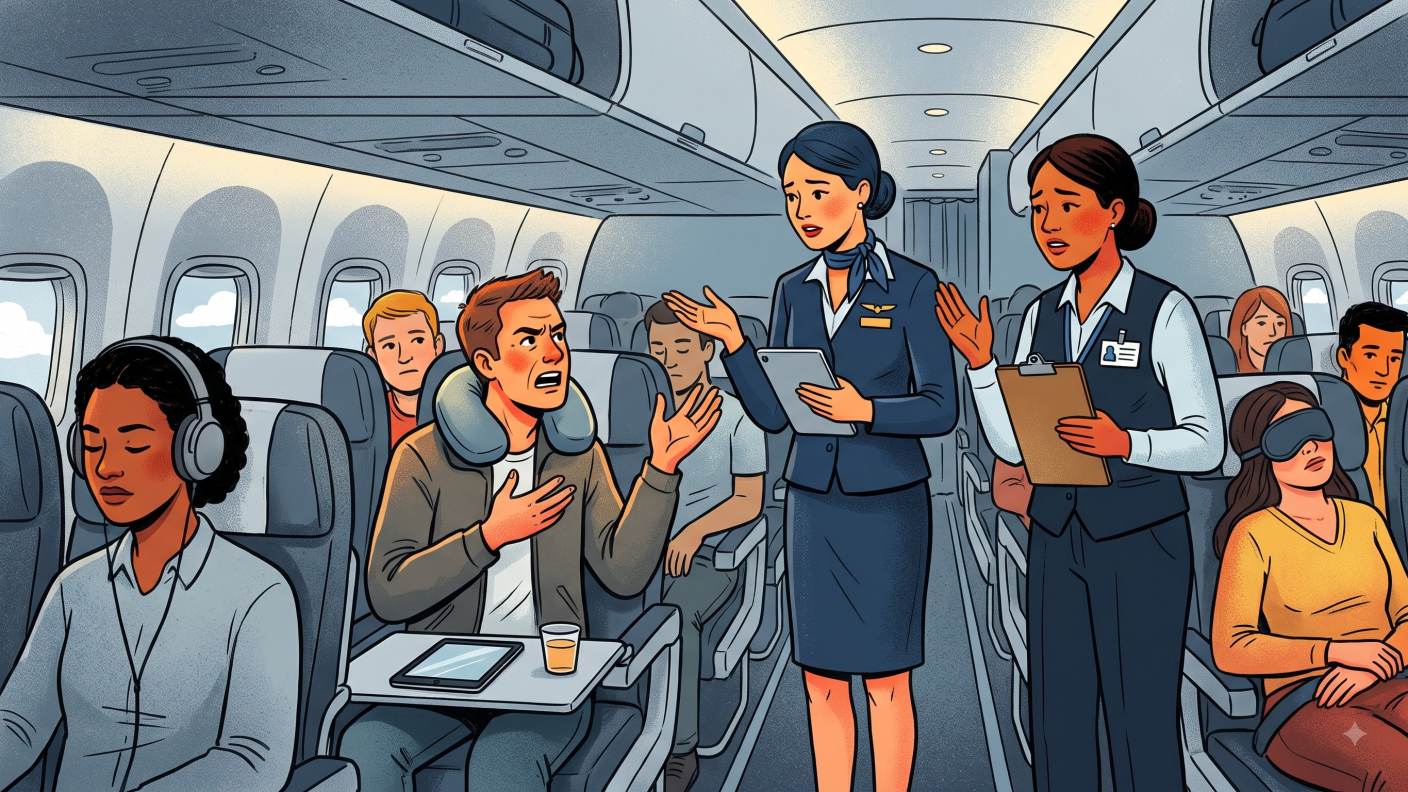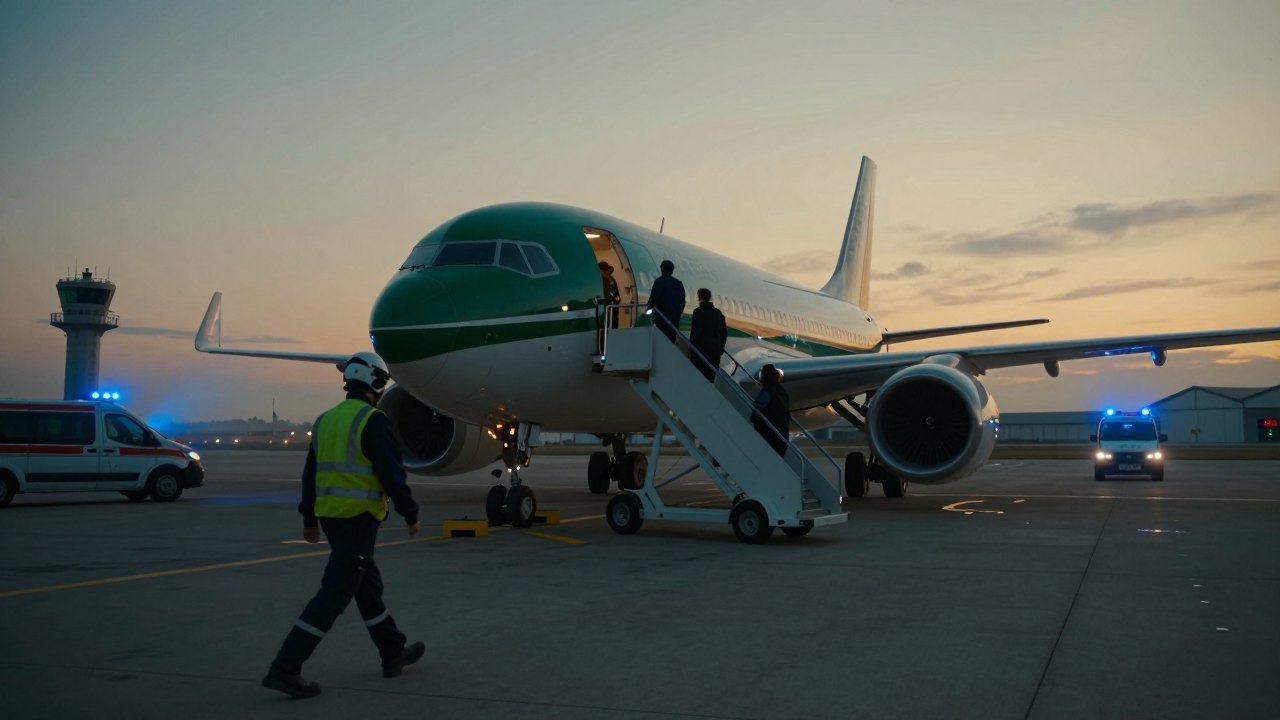
An Aer Lingus jet bound for Rome was diverted to a French airbase as bomb threats forced at least eleven European flights to land Thursday.
The office of French Prime Minister Sébastien Lecornu said an Aer Lingus plane travelling from Dublin to Rome had to divert to Evreux airbase, 100 km west of Paris, where it landed safely; all 157 people aboard were taken to safety.
After a bomb threat, a Wizz Air plane travelling from Milan to Warsaw diverted to Vienna, while a Ryanair flight from London to Sofia was rerouted to Plovdiv, Bulgaria. Two Finnair aircraft leaving Helsinki received hoax bomb threats and underwent police checks after landing; Italian fighter jets escorted the Rome-bound plane.
On Thursday morning, a bomb threat affected a LOT flight from Warsaw to Brussels. The crew searched the aircraft under established procedures and found no suspicious items; after landing at Brussels Airport, the plane underwent a further inspection by security services.
Four flights bound for Prague Airport were threatened, but Czech police assessed the severity of the threats as low. No explosives were found, and all aircraft underwent pyrotechnic inspections after landing. "Nevertheless, we are not underestimating the threat, which is why all necessary security measures have been activated with minimal impact on passengers and airport operations," Czech police said.
Three aircraft landed at airports in Bulgaria after bomb threats. Two were travelling from Copenhagen and Madrid to Sofia, while a third came from London and landed in Plovdiv; Bulgaria's Transport Ministry told Reuters that inspections found no issues and operations at both Sofia and Plovdiv had returned to normal. The Bulgarian military said its jets escorted three aircraft to Sofia.
Two more planes targeted by bomb threats landed safely at Milan's Malpensa: one operated by Aegean Airlines, arriving from Thessaloniki, and the other by Ryanair, from Porto.
Tallies vary sharply
The number of flights affected on Thursday is unconfirmed. Some sources counted around 10, others at least eleven, and some more than 14. No official tally has been published.
The alerts came three days into a series of similar incidents across Europe. On Monday and Tuesday, authorities in Spain, Poland, Italy and Bulgaria searched seven passenger aircraft after bomb threats, but found no explosives; the alerts temporarily closed Warsaw Chopin Airport. On Tuesday, bomb threats affected at least seven flights and a cruise ship, disrupting airports across Europe, but searches found no devices.
I don't think we've seen this before
Ben Smith said the threats were happening in a coordinated way. He told staff, "We're quite confident that we have in place what we need to ensure that it has minimal or no impact on our operations,".
Unfortunately, air traffic is sometimes subject to threats, as we have seen this week, when also other airlines in Europe have faced hoax bomb threats
No confirmed link or blamed party
Authorities in several countries are working together to determine whether the threats received on Tuesday and Thursday are connected. European officials have linked such threats to what they describe as hybrid attacks and sabotage by Russia and Iran, though no country has blamed either for these incidents. Moscow and Tehran deny running any such campaign.
Hackers whose identities remain unknown disabled supermarket fridges in several European countries this week.
The repeated threats could disrupt operations and test how airlines, airports and national authorities respond, said Eliran Almog, CEO of aviation cybersecurity firm Cyviation. He added, "These aviation threats are also occurring in the same period as cyberattacks on supermarket refrigeration systems across Europe," and, "Different essential services are experiencing disruption that carries economic costs and can undermine public confidence."
The arithmetic of disruption
Marco Chan, a former Cathay Pacific pilot who lectures on aviation at Kingston University, told BBC Verify that some experts see the hoax bomb threats as possibly one strand of a cheap and deniable campaign to disrupt air travel, and that communications from the Aer Lingus flight from Dublin to Rome gave a "clear account" of its diversion.
"Hoax waves can also come from copycats or a handful of individuals," Chan said, but "three days of incidents is too small a sample to separate co-ordination from contagion." The arithmetic is stark: the "cost to the sender is almost nothing" beside the substantial consequences for airlines, airports and air forces. Diversion, escort and isolation at a military site show the "high cost of false alarms to avoid a single missed attack."
Today there is hardly any thinkable way to get explosives aboard a commercial flight
The risk of a bomb being smuggled successfully onto an airplane is low. Richter said the last real bombing of a flight was on 31 October 2015, when a flight from Egypt to Russia was brought down after security loopholes and personnel shortcomings, which were rectified immediately.
UK transport secretary Heidi Alexander called the threats "malicious hoax threats." An email threat came from a group called Fighters of the Male State, which said it was targeting a feminist regime, Rome airport authorities said.
What we know
- At least eleven European passenger planes were forced to land on 5 November following a series of suspected bomb threats.
- The Aer Lingus flight from Dublin to Rome landed safely at Evreux airbase, 100 km west of Paris, with 157 people on board.
- No explosives have been found on any aircraft.
Still unclear
- The total number of flights affected on Thursday; sources' counts range from around 10 to more than 14.
- Which country or group is responsible for the threats.
- Whether the threats across Monday, Tuesday and Thursday are co-ordinated or separate incidents.