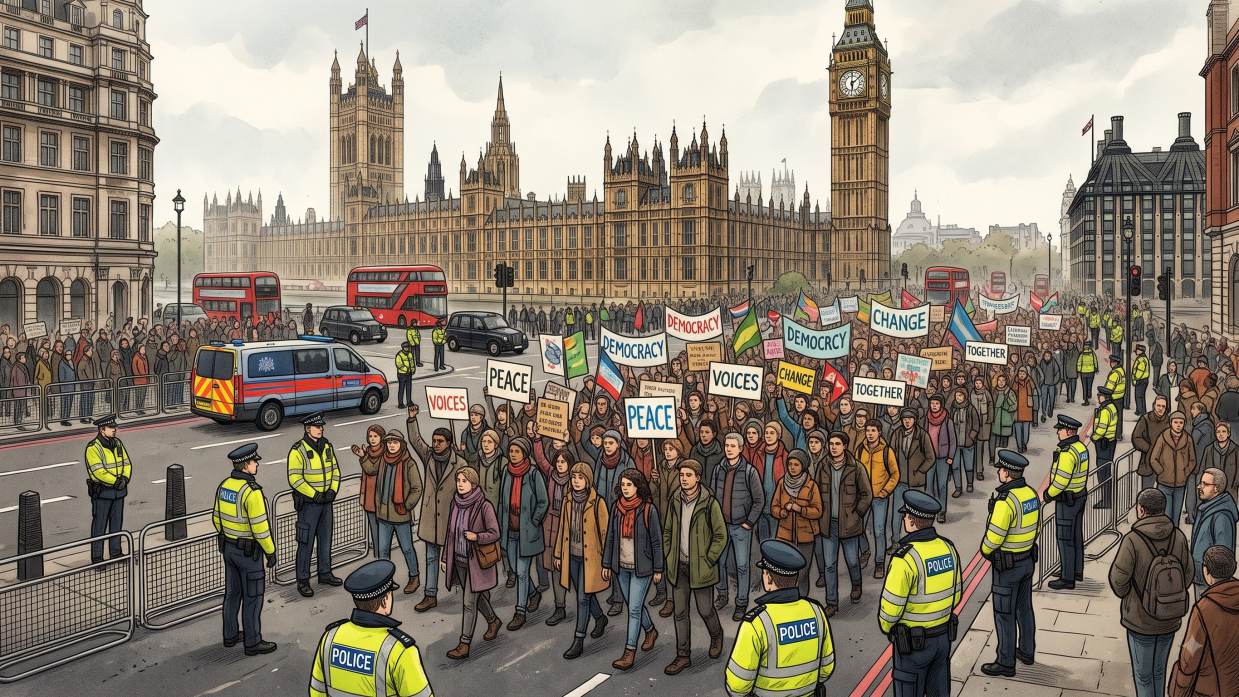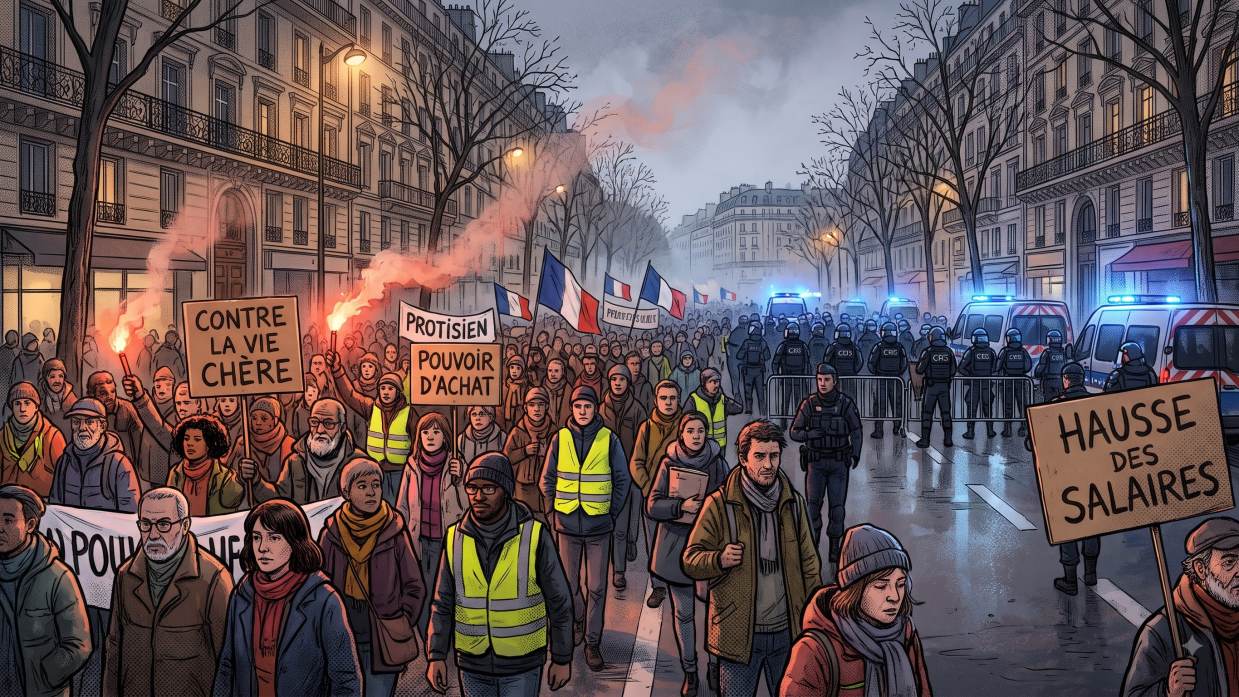
For a third Saturday of nationwide protests, France deployed 70,000 police as the interior ministry reported falling turnout and isolated clashes.
The protests were largely peaceful in the afternoon, despite clashes in several cities. France's interior ministry counted 320,000 people at demonstrations across the country on Saturday.
The crowd estimates differed sharply. Student unions put nationwide attendance at half a million, including 200,000 in Paris. The interior ministry counted 70,000 in the capital.
Competing turnout estimates
French interior ministry
Nationwide estimate
320,000
- Paris: 70,000
Student unions
Nationwide estimate
500,000
- Paris: 200,000
The ministry’s figures show turnout falling across three Saturdays: 550,000 on October 17, 410,000 the following week and 320,000 on October 31.
- Late SeptemberProtests gain momentum
The movement grew as Macron's government opened talks on its 2027 budget.
- October 17Riots and looting
Unrest caught security forces off guard and damaged shops, public buildings and businesses across the country.
- October 31Third Saturday of protests
The interior ministry counted 320,000 people nationwide, down from 410,000 the week before.
When a march on the outskirts of Paris reached its final destination, clashes followed. At the end of the Paris march, riot police charged at small groups, while police used tear gas in Lyon and Toulouse.
Some demonstrators threw stones and a Molotov cocktail at police. Unauthorised protests in Marseille also ended in tension.
In the early afternoon, the nationwide situation was “generally calm”, French authorities said. The interior ministry described people who tried to leave marches in Bordeaux, Toulouse, Lyon and Marseille to cause damage and loot as “radical elements”, but security forces stopped them.
At the Halloween demonstrations, wearing face coverings could lead to fines of €150, authorities warned. Interior Minister Laurent Nuñez said officials were also concerned that Halloween masks could conceal the identities of people intending to cause trouble.
Nuñez said police may bar face coverings when they threaten public order. He’d also prevent a repeat of the violence on October 17.
France's highest administrative court supported the prohibition on a march between Nation and Bastille squares in Paris, after unions contested the decision. Officials authorised a different route along roads on the capital’s eastern edge, away from central shopping districts.
Students, trade unions and a smaller contingent of yellow vest protesters joined the demonstrations. Their shared complaints include rising prices and living expenses, fuel costs, inflation and President Emmanuel Macron’s government.
As the government opened talks on its 2027 budget in late September, the protests gathered momentum. Students and schools raised concerns about deteriorating facilities, packed classrooms and a university admissions system many considered unfair. Trade unions and the yellow vest movement later joined the calls for action on living costs.
Government promises to reform education and ease fuel costs haven’t calmed the discontent.
That's why we're here, to keep shouting our demands louder and louder and hopefully get a response from the government, although that seems very unlikely.
The government also faces pressure over public finances as the demonstrations continue. On Friday, Fitch unexpectedly revised the outlook on French debt to negative. Public debt is nearing 120 per cent of economic output, and borrowing costs are rising, limiting the government’s room for manoeuvre.
Retailer losses stand at more than €1 billion ($1.1 billion), according to the Chamber of Commerce. Some estimates are twice as high when uninsured damage and lost revenue are counted. Shops attacked during earlier unrest included luxury brands Hermes, Louis Vuitton and Burberry.
Surveys put far-right leader Marine Le Pen ahead ahead of April's presidential election, giving her a political boost from the unrest. Potential centrist successors to Macron remain split.
Germany and Italy also saw youth-led protests inspired by the French marches. Sparked by the Gen Z regelt initiative, demonstrations in more than 30 German cities remained largely peaceful. In Cologne, police called off a scheduled march after participants used smoke bombs and wore face coverings.
In Italy, police searched 60 locations in 23 cities for people suspected of encouraging violence at mass demonstrations on Friday, news agency ANSA reported.
Arrests during the October 31 demonstrations were significantly lower than at previous protests.