Finnish President Alexander Stubb and Norwegian Prime Minister Jonas Gahr Støre held a 90-minute call with Vladimir Putin on Tuesday about ending the war in Ukraine.
The conversation took place on 27 October 2026 from Helsinki, where Støre was attending a Nordic Council meeting. The two leaders had initially been given only 20 minutes, Støre said, but the call continued for an hour and a half.
Stubb and Støre then spoke with Ukrainian President Volodymyr Zelenskyy. They told Putin that practical steps were needed to reduce tensions around Ukraine's energy system and infrastructure, and they discussed the planned three-way negotiations in Abu Dhabi in November.
There must be peace, de-escalation is needed, and Russia must stop dragging out the war
The call came as the United States, Ukraine and European allies struggled to keep a common position on negotiations. It also came before the planned trilateral talks in Abu Dhabi and while Russian attacks continued, leaving a clear gap between diplomatic efforts and conditions on the ground.
- 20 October 2026Oslo meeting
Stubb, Støre, Zelenskyy and US special envoy Steve Witkoff met in Oslo.
- 21 October 2026US-mediated process
Witkoff met Putin in St Petersburg, after which the Kremlin said it was ready to resume talks with Kyiv that had stalled in February.
- 27 October 2026Putin call
Stubb and Støre spoke with Putin from Helsinki for 90 minutes.
- Early NovemberAbu Dhabi talks
Ukraine, Russia and the United States planned to resume three-way negotiations in Abu Dhabi.
The Helsinki call followed an Oslo meeting on 20 October between Stubb, Støre, Zelenskyy and Witkoff. Witkoff met Putin in St Petersburg the next day. The Kremlin then said it was ready to restart US-mediated discussions with Kyiv, which had stopped in February.
Ukraine, Russia and the United States agreed to resume negotiations that Russia had halted for months. The next round was planned for Abu Dhabi in early November, although no specific day had been announced.
The contact was unusual in European terms. No European leaders had contacted Putin since French President Emmanuel Macron spoke with him in July 2025, until Stubb and Støre did so.
Støre said the discussion dealt with the central issues in the conflict and remained professional, covering attacks on energy infrastructure and developments in the Black Sea while acknowledging that major differences between the two sides remained.
He said the conversation had been substantive and focused on the issues at hand. The Kremlin gave a different emphasis, saying Putin had told the Nordic leaders that a just and lasting peace was possible only if Russia's interests were fully considered.
The Kremlin said Putin had described as confrontational the policies of the European Union and Nato that were extending the war, and that he and the two Nordic leaders had agreed to maintain direct telephone contact, but the full content of his response to their requests for de-escalation was not available.
I believe that talking, having the right messages, is not wrong.
Støre defended the decision to make contact directly. He said Finland and Norway were not presenting a position for Europe as a whole.
Denmark's Prime Minister Mette Frederiksen said she had not been consulted with the other allies and criticised the initiative.
I'm very sceptical about this Norwegian and Finnish initiative. It hasn't been coordinated with any of the rest of us
Støre said he rejected that account, that partners and allies had received advance information and had been given a detailed report after the call, and that he and Stubb had spoken only for Finland and Norway, rather than for Europe.
The disagreement reflected a wider dispute among European governments over how to deal with Moscow while supporting Ukraine. Estonia's foreign minister said every contact with Russia needed to show European unity and continued determination to support Ukraine.
Germany's Merz said no settlement could be reached without Ukraine's involvement, while Sweden's Kristersson said any agreement had to be on Ukraine's terms. Those positions placed Ukraine's role at the centre of the argument over the US-mediated process.
The outcome of this war will have a direct impact on our and the broader European security. Ending the war requires direct discussions
Stubb described the exchange with Putin as frank and substantive, while Støre said the war had created enormous human and material costs, with suffering and destruction that would affect generations.
The diplomatic initiative also produced differing accounts of the mood around Abu Dhabi. Polish Prime Minister Donald Tusk said Stubb had described Europe's position on the upcoming UAE talks as moderately optimistic and, in another account, had used the phrase very restrained optimism when discussing the prospects for constructive talks.
Different descriptions of optimism
Account of Abu Dhabi outlook
Description attributed to Tusk
Moderately optimistic
- Europe's position on the upcoming UAE talks
- Reported in one account
Alternative account
Description attributed to Tusk
Very restrained optimism
- Prospects for constructive peace talks
- Reported in another account
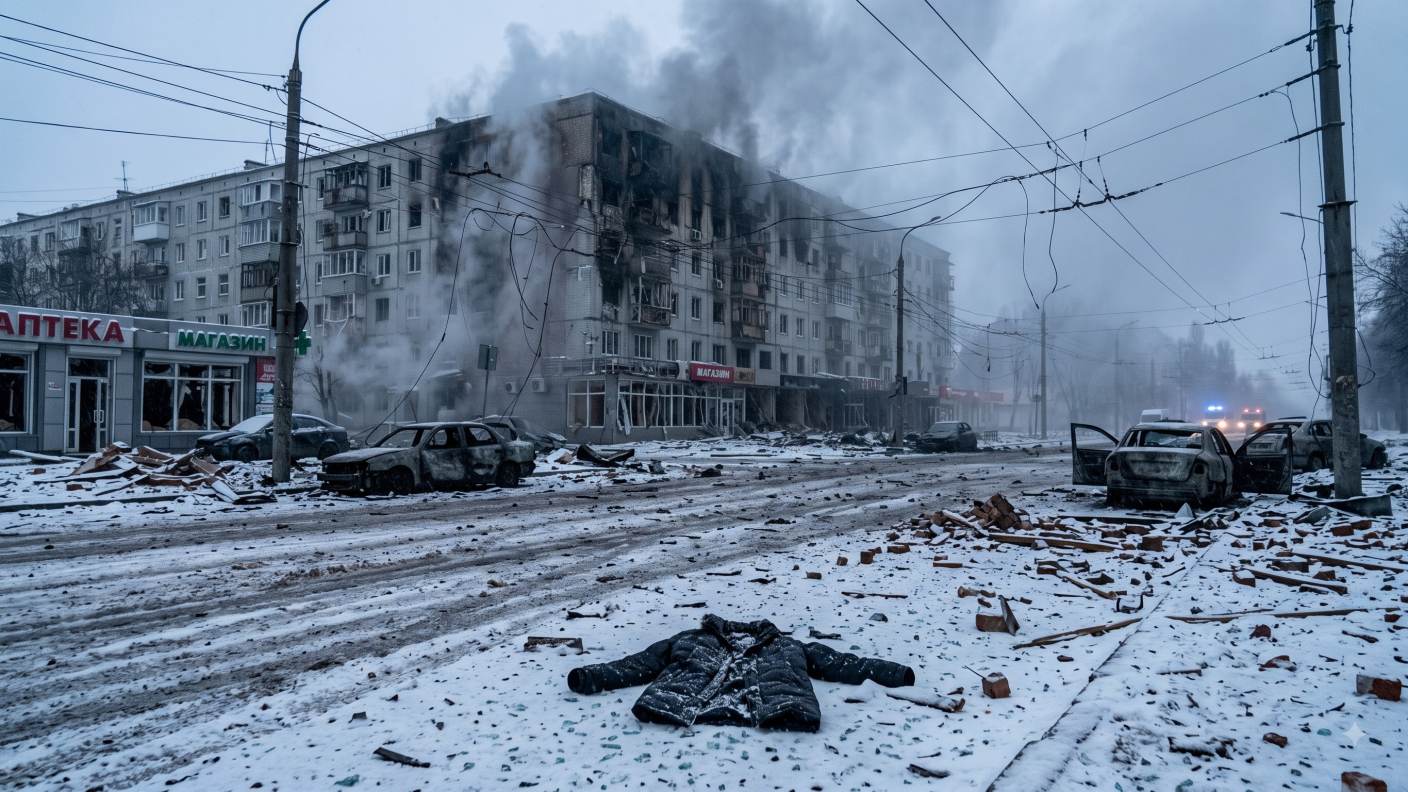
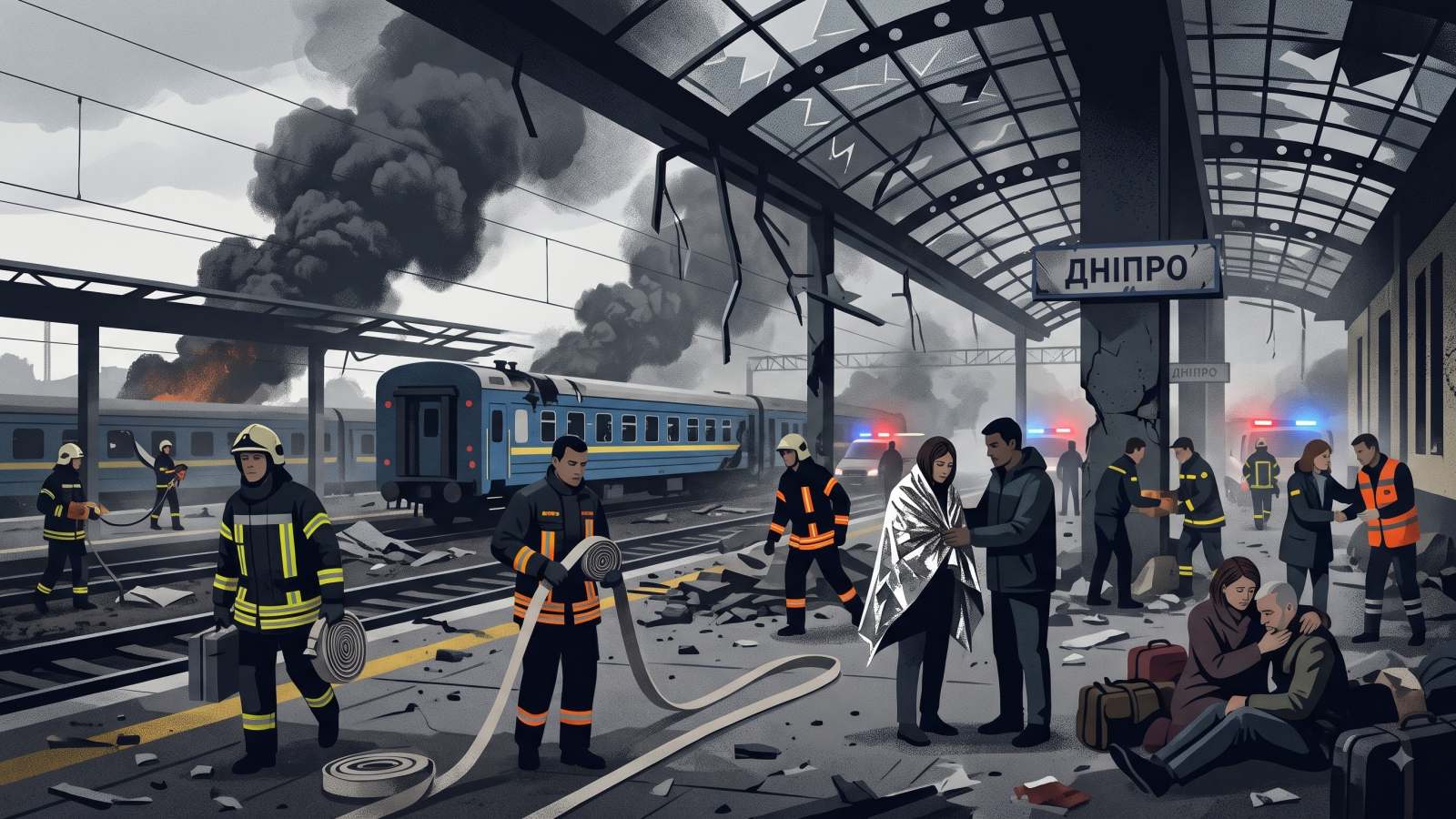
The uncertainty around diplomacy was matched by events in Ukraine. Russia attacked Kyiv overnight, striking the South Bridge in an assault that officials said involved 16 ballistic missiles and more than 280 drones.
One person was killed and 14 were injured in the attacks on the city, Kyiv mayor Vitali Klitschko said. A separate account did not give a Kyiv casualty figure but reported deaths and injuries in Kharkiv and Pavlohrad. The full toll across Kyiv, Kharkiv, Pavlohrad, Zaporizhzhia and Bryansk remained unclear.
Russia's Defence Ministry said its forces had targeted transport infrastructure in Kyiv, a logistics hub in the Kharkiv region, and industrial sites and cargo vessels that it said supported military purposes.
This is a serious escalation in Russia’s campaign targeting our logistics
The competing descriptions of the strikes showed the limits of the diplomatic contact. The Nordic leaders had asked for de-escalation around energy and infrastructure, while attacks involving missiles and drones continued overnight.
A separate local ceasefire offered a narrower test of whether diplomacy could reduce violence. A US-mediated truce in the Russian-occupied town of Oleshky took effect on Tuesday to allow aid to enter.
Ukraine's negotiator Davyd Arakhamia said the arrangement was due to last until 1 November and described it as the biggest de-escalation since 2022. US President Donald Trump credited First Lady Melania Trump with securing the localised ceasefire in the southern Kherson region.
It was not known whether the Oleshky arrangement would be extended beyond 1 November. It was also not known whether other European leaders would follow Stubb and Støre by speaking directly with Putin.
The planned Abu Dhabi meeting carried its own uncertainties. The parties had agreed to resume three-way negotiations, but no specific date in early November had been set. The response Putin gave to the Nordic leaders' requests was also not fully known beyond the Kremlin's account.
What we know
- The Abu Dhabi talks were planned for early November.
- The Oleshky ceasefire was due to last until 1 November.
Still unclear
- Whether the Abu Dhabi talks will take place on a specific date.
- Whether the Oleshky ceasefire will continue after 1 November.
- Whether other European leaders will contact Putin directly.
The immediate diplomatic tests were therefore the Oleshky ceasefire's stated end on 1 November and the planned trilateral talks in Abu Dhabi in early November.