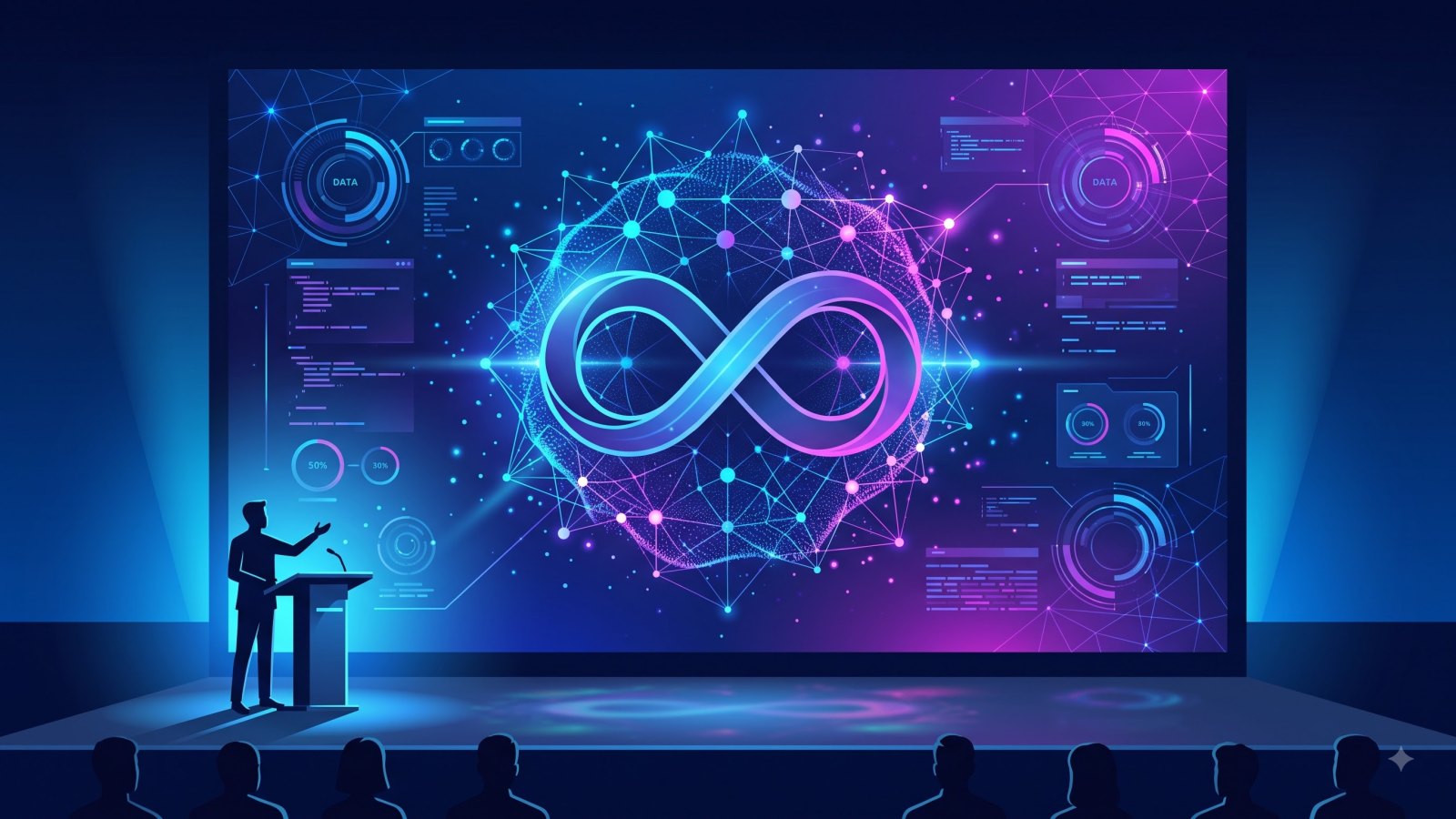
Meta unveiled Muse Wonder and Muse Wonder Full on October 12, calling them its most capable AI models yet.
Meta says the models performed well on personal and professional tasks that require agents. The launch places Meta's personal-agent strategy alongside competing frontier models in coding, legal work, finance, health and general intelligence benchmarks.
Meta started rebuilding its AI efforts from the ground up 14 months ago. Muse Spark was the first result. The new models are the first frontier release since Meta's AI efforts were restructured in August of last year by Scale AI founder Alexandr Wang.
The models were trained at Meta's Prometheus data centre, a gigawatt-scale facility in central Ohio that came online earlier this year.
- 14 months agoAI overhaul begins
Meta starts a ground-up redesign of its AI efforts.
- August of last yearLeadership restructuring
Alexandr Wang restructures Meta's AI efforts.
- Earlier this yearPrometheus comes online
Meta's central Ohio data centre becomes operational.
- 12 OctoberMuse models unveiled
Meta launches Muse Wonder and Muse Wonder Full.
- DecemberWearable target
Meta plans to ship Muse Charm in time for the holidays.
Muse Wonder takes text, images, video and audio as inputs but produces text only. It supports a context length of 1 million tokens.
Its main features are Active Memory and Active Focus. Active Memory carries important information about a user between conversations and retrieves details relevant to a task. Active Focus keeps working towards a difficult goal by trying different approaches, handling obstacles and checking in before important actions.
| Feature | Muse Wonder | Muse Wonder Full |
|---|---|---|
| Inputs | Text, image, video and audio | Not stated in the pack |
| Output | Text only | Not stated in the pack |
| Context length | 1 million tokens | Not stated in the pack |
| Availability | Meta Model API and Muse Code | Muse Code subscribers only |
| Enterprise API price | $4 per million input tokens and $20 per million output tokens | Not served through the API |
"These are true frontier models. We really think they are competitive with the best models out there, and particularly state of the art on personal and professional agentic work,"
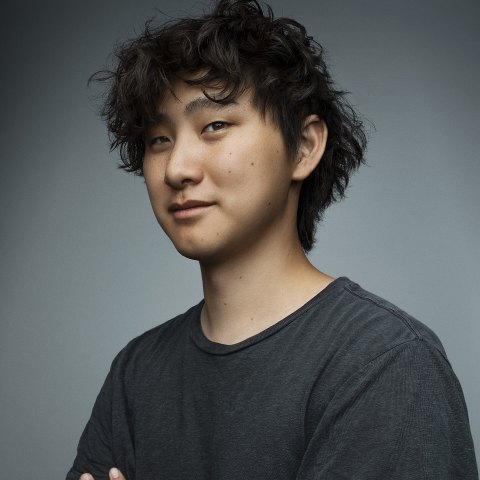
Wang said the systems were frontier models, a claim made by Meta. The launch will be tested more broadly when researchers and developers use the models outside Meta's own evaluations.
"We put a tremendous amount of effort into making sure your model can remember what's important to you over days, weeks, months, and beyond,"
The intended memory span is central to Meta's personal-agent pitch. The company says the models should retain useful information across days, weeks, months and beyond, rather than treating each conversation as an isolated task.
Muse Wonder is available through the Meta Model API and Muse Code. Only Muse Code subscribers can use Muse Wonder Full, and Meta will not offer it through the API.
For enterprise developers, the API charges $4 for each million input tokens and $20 for each million output tokens. Meta said Wonder Full cannot be accessed through the API, so those rates do not apply to it.
Meta plans for Muse Wonder to power the Muse agent, with subscribers receiving it first. The company also plans to use the model to develop specialised systems that it can bring to everyone using Muse.
Muse personal agents now run inside WhatsApp, on the web, on smartphones and on Mac computing devices. Users can link calendars, email clients and work applications as third-party services.
The distribution question may matter as much as the model scores. Meta owns Instagram and WhatsApp and has a network through which it could place Muse in products that people already use, making the assistant more embedded in their digital lives.
Meta has shown scripted demonstrations in which Muse Wonder-powered agents organise complex personal plans and work across web applications. The examples included house hunting and moving across the country, alongside professional tasks such as financial analysis, legal document preparation and insurance workflow automation.
Meta also says Active Memory and Active Focus help Muse Wonder with frontier coding. Its description covers software work that requires tracking a project, changing several parts of a codebase and repeating cycles of testing and revision.
The reported benchmark results are mixed. Wonder Full leads some comparisons, but competitors remain ahead on several tests and the different accounts use differently named intelligence and legal benchmarks.
| Benchmark | Muse result | Comparison |
|---|---|---|
| Intelligence Index | Wonder Full scored 56; Wonder scored 52 | Wonder Full tied Claude Sonnet 5.5 and exceeded GPT-6 Astra, Gemini 4 Argon and Claude Fable 5.1. Wonder was one point behind GPT-6 Astra. |
| SWE-Marathon | Wonder Full scored 57.5 | Opus 5.5 scored 46.3 and GPT-6 Astra scored 42.5. |
| Terminal-Bench 4.0 | Wonder Full was behind | Both Opus 5.5 and GPT-6 Astra outperformed Wonder Full. |
| Personal Superintelligence Index | Wonder Full scored 59.1; Wonder scored 54.3 | GPT-6 Astra scored 54.5 and Claude Opus 5.5 scored 55.2. |
| Harvey LAB-AA legal services agent | Wonder Full scored 13.1; Wonder scored 10 | GPT-6 Astra scored 8.6. |
| Vals Finance Age | Wonder Full scored 59.1; Wonder scored 56.6 | Claude Fable 5.1 scored 58.9 and Claude Opus 5.5 scored 58.6. |
| Healthbench Pro | Wonder Full scored 62.3 | Claude Opus 5.5 led with 65.6 and GPT-6 Astra scored 65.3. |
| Artificial Analysis Intelligence Index | Wonder Full scored 56; Wonder scored 52 | Claude Opus 5.5 led with 58. Claude Fable 5.1 scored 53, while GPT-6 Astra and Gemini 4 Argon each scored 53. |
Reports gave different benchmark accounts: one said the Intelligence Index score for Wonder Full was 56, tied with Claude Sonnet 5.5, while another listed the Artificial Analysis Intelligence Index with Claude Opus 5.5 leading at 58 and Wonder Full next at 56.
The legal figures come from differently described tests. One report said Wonder Full's 13.1 score substantially exceeded the compared models. The result is also identified as the Harvey LAB-AA legal services agent benchmark, with Wonder Full at 13.1 and GPT-6 Astra at 8.6.
In its model card, Meta said Wonder and Wonder Full achieved benchmark scores comparable with Fable 5.1 and GPT-6 Astra, and that Muse Wonder's MemoryBench result was higher than those for Fable, Opus or Astra.
Those results have not yet been established by broad outside testing. It remains unclear whether Meta's claims will hold up in independent research and real-world use by developers.
Privacy and data use could also shape the reception. Meta's current position depends partly on how its model claims perform outside its own testing, while its record on privacy and data use remains a possible hurdle.
Earlier this year, backlash and an internal security lapse stopped Meta from collecting employees' computer movements for use in training its AI systems.
The models' long-horizon aims carry another unresolved issue. AI researchers have cited the persistence of advanced systems while they run extended tasks as a contributing factor in misalignment or unwanted behaviour among AI agents.
Meta frames the release as "a major leap toward personal superintelligence" and calls Muse Wonder its "most aligned model to date". It said a full report with additional safety evaluations would be available soon, but the timing and contents of that report remain unknown.
The pack also contains conflicting accounts of the unveiling date. It records the launch as Monday, October 12, while another account says Tuesday, and the available material is dated 13 and 12 October. The discrepancy has not been resolved here.
Meta showed its Muse Charm wearable at its Connect keynote last month. The device is envisioned as a lanyard that lets users speak to a Muse-powered agent without a phone.
Mark Zuckerberg said only a few Muse Charm units had been built so far. The number of units and the question of whether users will adopt a dedicated AI wearable remain unknown.
Meta plans to roll Muse Wonder into its Muse agent and ship the Muse Charm wearable in time for the holidays in December.