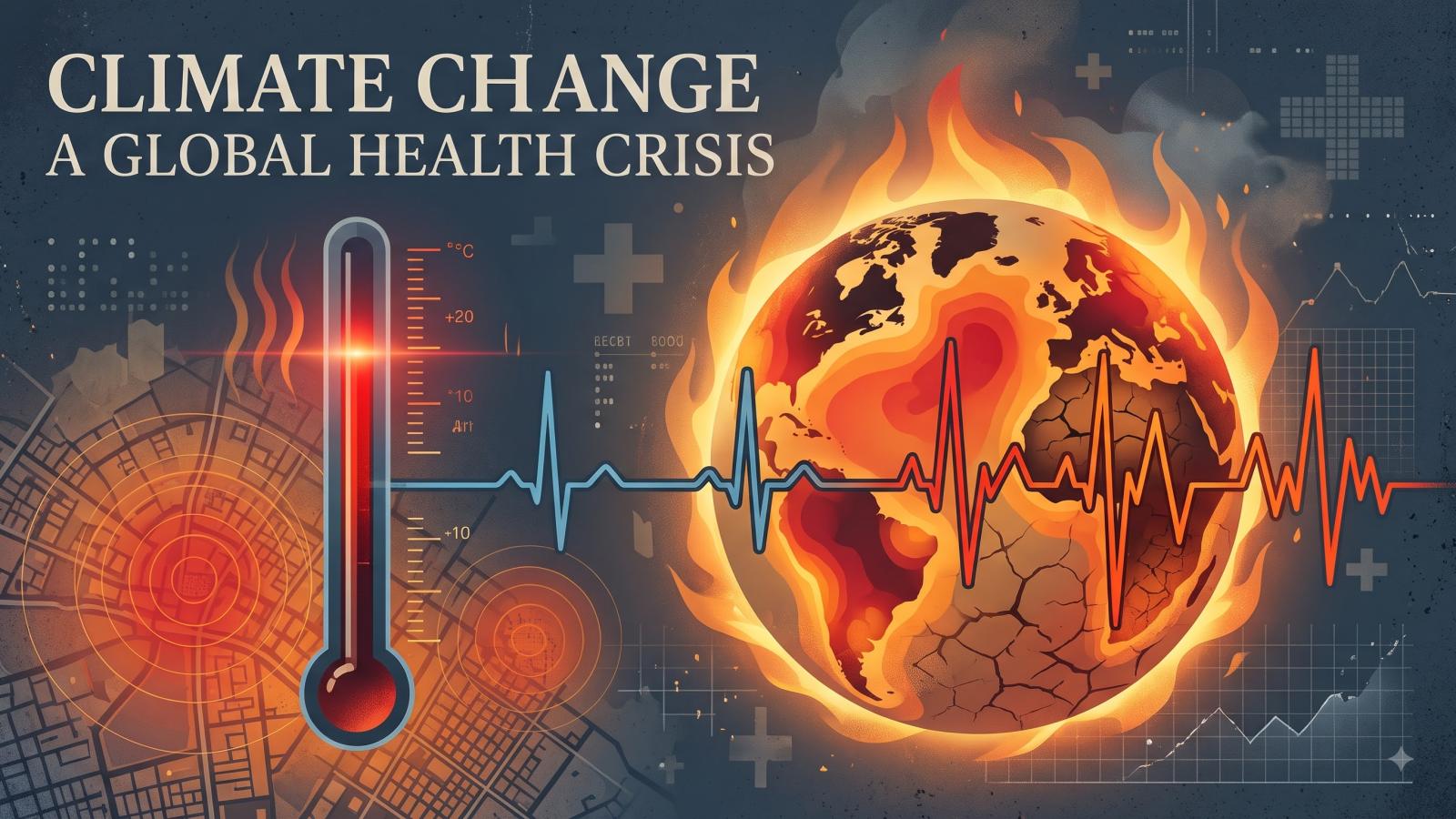
The Lancet Countdown said on Wednesday that climate change should be declared a global health emergency, and pointed to 710,000 heat-related deaths in 2023, a record.
The report lands two weeks before COP31 in Antalya, Turkey, and argues that a decade after the Paris Agreement the health harms are outpacing the response.
The Lancet published its 10th annual Countdown report on Wednesday, 28 October 2026. It was published ahead of the COP31 climate summit in November 2026.
Human-caused climate change was linked to more than 70% of the 710,000 heat-related deaths recorded in 2023, a record toll.
This isn't a gradual worsening; it's a step change that must be recognized as the global health emergency it is.
The 10th edition of the report brought together 146 researchers from 30 countries, according to The Hindu. Le Monde says the wider Lancet Countdown has more than 300 researchers.
Marina Romanello, executive director of the Lancet Countdown, said heat caused "three million heat-related deaths globally in an eight-year span since the Paris Agreement" of 2015, and climate change directly contributed to 68% of those deaths.
Heat-related deaths rose nearly 36% in the global annual average after the Paris Agreement was introduced. Climate change contributed to 68 percent of an estimated 540,800 heat-linked deaths annually from 2016 to 2023 (369,900), compared with 55 percent of such deaths per year in 2006-2015.
That's roughly equivalent to the entire population of Wales being wiped out in the space of eight years due to heat,
Adopted in December 2015, the Paris Agreement set a goal of keeping global warming far below 2C, while also pursuing efforts to cap it at 1.5C relative to pre-industrial levels.
Climate change contributed to 71.5 percent of the 710,000 heat-related deaths around the world in 2023; absent climate change, the figure would have been around 200,000.
To determine the share of deaths attributable to human-caused warming, researchers compiled heat-related deaths recorded by states and subtracted those that would have occurred without climate change, according to Professor Ollie Jay of the University of Sydney.
Jay said climate change had intensified periods of extreme heat and made them more frequent. Last year, extreme drought affected over half of the planet's land for at least one month. In 2025, nearly 52% of the world's land experienced extreme drought for a month or longer, the second-highest level on record.
A new analysis of satellite data found that groundwater storage shifted significantly between drying and wetting conditions across 80% of the world's land since 2003. Over that period, persistent drying affected 43% of the world's land, while 37% saw increasingly wet conditions.
For each of the past three years, warming has reduced worker productivity and cost the global economy more than one trillion dollars annually. Interruptions to people's ability to work from heat amounted to around US$1.07 trillion in lost global economic productivity in 2025.
Farmworkers bore the brunt as heat erased 573 billion potential working hours in 2025.
| Region | Estimated GDP loss from heat (The Hindu) |
|---|---|
| Southeast Asia | 3.9% |
| Africa | 3.2% |
| Americas | 1.5% |
| Europe | 0.2% |
Estimated GDP losses were 3.9 percent in Southeast Asia and 3.2 percent in Africa, the regions hit hardest, versus 0.2 percent in Europe and 1.5 percent in the Americas. The greatest losses were in vulnerable economies, where GDP fell by as much as 5% in Africa and South-East Asia, against 0.5% in more developed economies.
Since 2016, 56 countries among the WHO's 194 member states have updated health and early-warning systems to prepare for extreme events.
Fossil fuels supply 80 percent of global energy and cause air pollution that kills 2.73 million people per year. In 2025, clean-energy investment totaled $2.1 trillion, twice the amount invested in fossil fuels.
Since 2016, air pollution from fossil fuels has declined in 77 countries, helping avert roughly 323,000 deaths in "at least" those countries.
Funding for climate-related medical research increased sevenfold to reach $316 million in 2024, with 84% of these funds going to researchers in wealthy countries.
By 2040, the world's 100 biggest oil and gas companies are projected to produce 150% more than levels compatible with limiting warming to 1.5C, up from 138% from last year.
In 2024, nearly 128 million more people faced food insecurity amid heat waves and droughts than the 1981-2010 average. Extreme drought expanded at a rate more than 700% faster than in the preceding decade, affecting areas where food and water supplies are threatened and disease risks rise.
The report calls on the World Health Organization and United Nations to recognize climate change as a global health emergency, align government action around human health in climate decisions, and boost grant-based support for climate and health initiatives. Experts propose that the United Nations and its member states establish a new WHO instrument through which countries can share information, coordinate responses, track threats and distribute funds.
A decade on, we have proof that health-centered climate action works: cleaner air, more resilient healthcare and warning systems are protecting health and saving lives globally. But the pace and scale of emissions reduction remains entirely out of step with the pace and scale of the harm.
This cannot continue,
Except that iceberg is not melting, it's growing every year.
Romanello said researchers faced difficulties this year when some data sources disappeared, especially in the United States, including information on fossil fuel subsidies that US authorities have not made public. Geopolitical instability around the world had, for the past two years, diverted attention from global warming and its health effects, while inaction made matters worse.
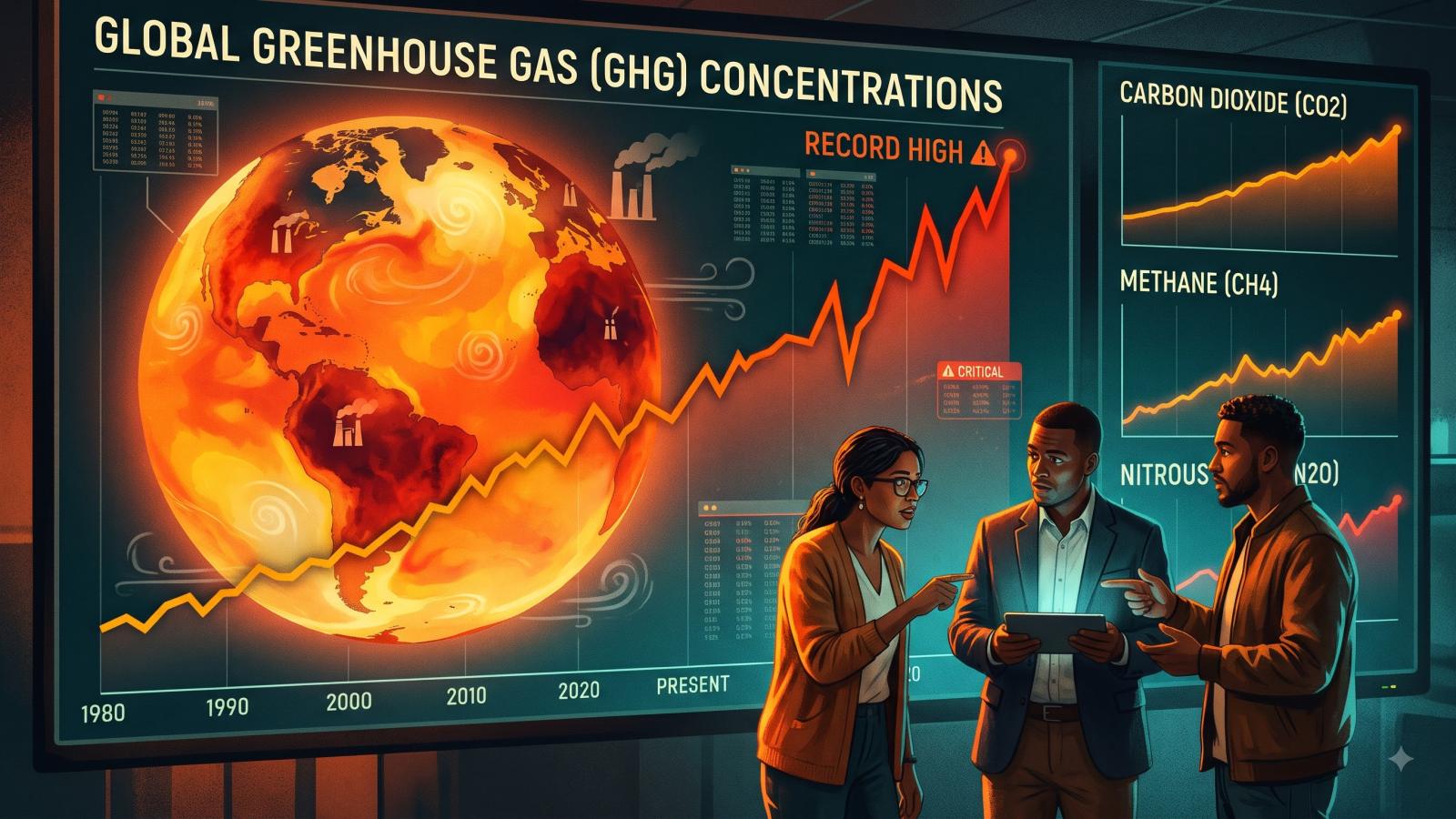
The world is on course to exceed the crucial limit of 1.5C above pre-industrial warming, the UN recently warned. Energy-related emissions hit a record high in 2024.
Alan Dangour, director of climate and health at Wellcome Trust, which funded the Lancet report, said the world must change course and put people's health and well-being at the heart of the response to climate change. Evidence after a decade shows that climate measures focused on health are effective, while emissions cuts lag far behind the scale and speed of the damage, said Anthony Costello, global health expert and The Lancet Countdown co-chair.
The next scheduled event is COP31, the United Nations Climate Change Conference, in Antalya, Turkey, on November 9.