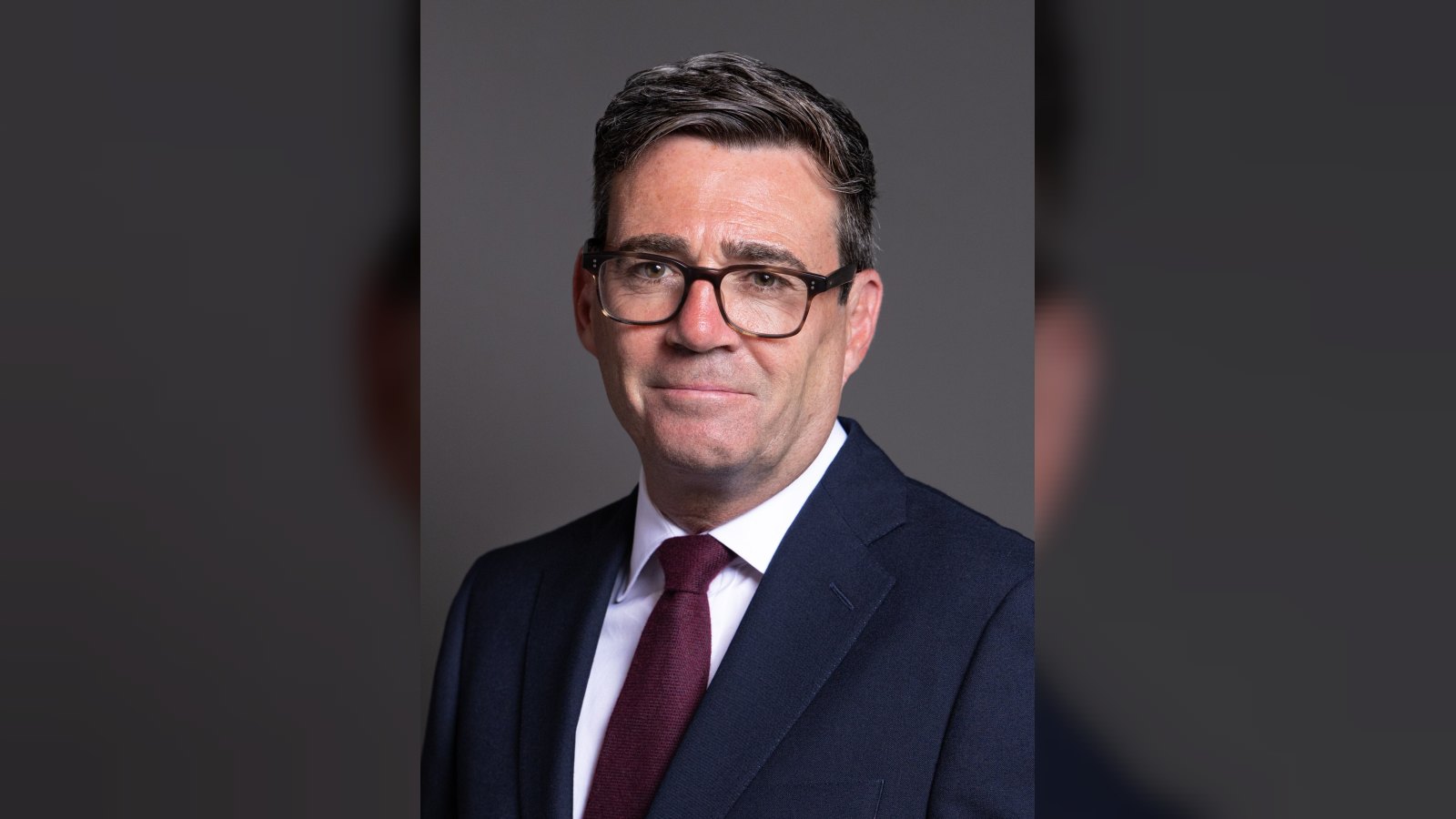
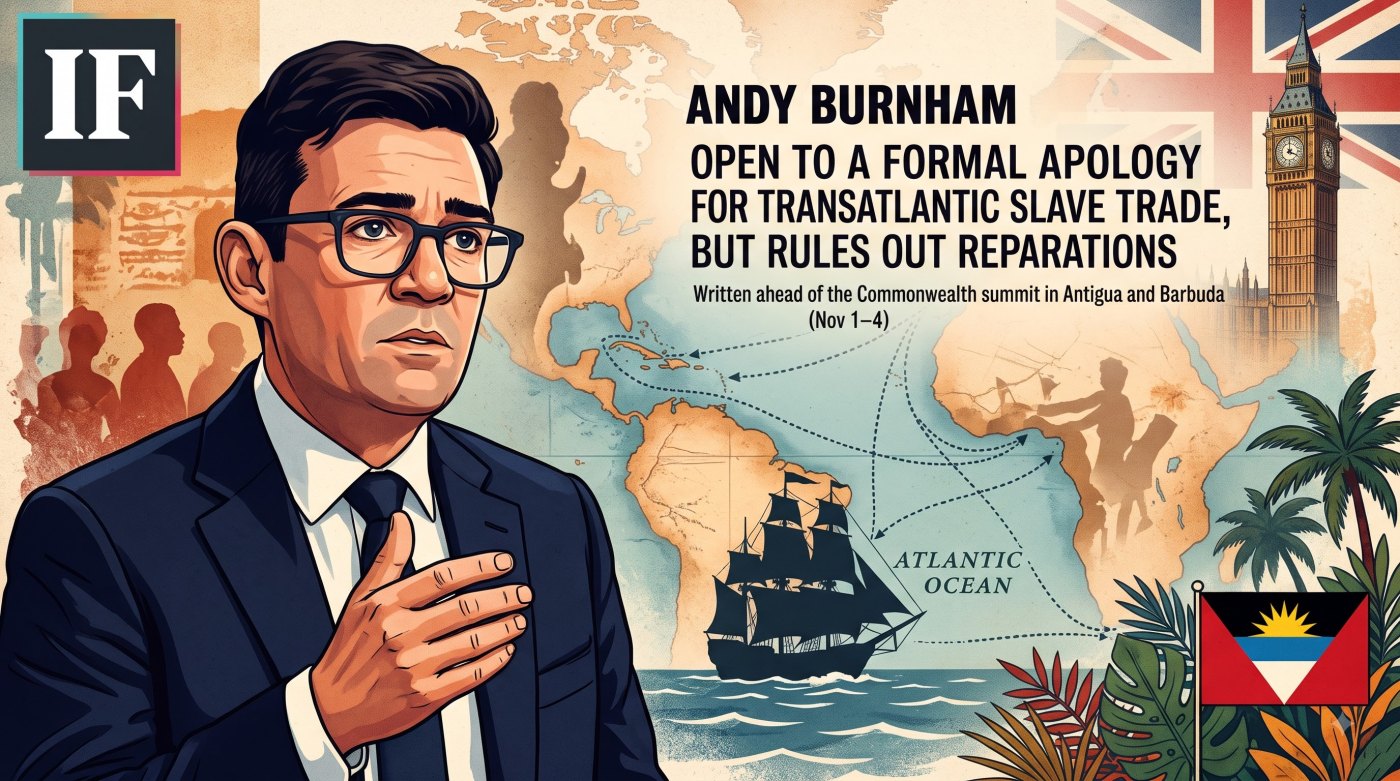
Andy Burnham says he is open to a formal state apology for slavery but rules out reparations, on the eve of a Commonwealth summit.
In an opinion piece published in the Guardian before the summit, the prime minister said he would consider an apology by the British state. But not paying money. Financial reparations, he wrote, would be the wrong solution.
Listening to calls for a formal apology on behalf of the British state will form an important part of this process and I am open to them.
I want to express my sorrow and regret for the pain and suffering of so many millions and to recognise the way it still shapes our world today,
The distinction is the one that matters in Antigua. Caribbean governments have asked Britain to pay for its role in the slave trade, and Burnham turned that down. On the question of payment he was brief.
I do not believe that is the right answer.
His reasoning rests on time, not money. People living in Britain now, he argued, aren't personally responsible for crimes committed long ago.
I do not think that British people today can be held liable for historical wrongs, however heinous, that happened in a different age under different laws and in which they played no personal part,
Burnham said his government wants a structured dialogue with people affected by the slave trade. He also outlined a new drive on debt to help more vulnerable countries repay over a longer period, at better rates.
Having these difficult conversations to safeguard the Commonwealth for the future is the right thing to do. It is also the patriotic thing to do,
Burnham is in Antigua and Barbuda from November 1 to 4 for the Commonwealth Heads of Government Meeting, held every two years.
Charles acknowledges past suffering
At the same time, King Charles III is touring the Caribbean, where Britain's central role in slavery and the treatment of people in its former colonies has hung over the visit. On Tuesday, during the first leg of the tour in the Bahamas, the monarch spoke about the past.
only right that we should acknowledge the great suffering and injustices of the past
For centuries, Britain profited from colonialism and the slave trade. Parliament passed a law abolishing slavery in 1833. The country has never issued a formal apology for slavery or agreed to pay reparations.
The Transatlantic Slave Trade Database provides those figures and tracks the trade from the 15th to the 19th century. In a manifesto announced in June, Barbados Prime Minister Mia Mottley laid out the moral, ethical and legal grounds for reparations from former colonial powers.
The Caribbean's answer
Caribbean leaders have often translated reparations into other things: debt relief, development finance, education, healthcare and climate resilience. In places, that framing overlaps with Burnham's debt proposals. But the region hasn't dropped the underlying claim.
Gaston Browne, the prime minister of Antigua and Barbuda, welcomed Burnham's tone and his proposals for practical assistance. The regional position, he said, has not moved.
The Caribbean's longstanding position on reparatory justice remains unchanged.
Burnham faces a test at the summit. A fight over slavery reparations marred the last one, in 2024, during the visit of his predecessor, Keir Starmer. He'll try to avoid a repeat. He has already conceded that an apology is on the table, while insisting that cash isn't.
- 1833Abolition
Parliament passes a law abolishing slavery.
- JuneReparations manifesto
Barbados PM Mia Mottley announces a Caribbean manifesto setting out the moral, ethical and legal case for reparations.
- 2024Last summit
A fight over reparations marred Keir Starmer's visit to the Commonwealth summit.
- TuesdayBahamas
King Charles III acknowledges the great suffering of the past on the first leg of his Caribbean tour.
- November 1Summit opens
The Commonwealth Heads of Government Meeting begins in Antigua and Barbuda.
- November 4Summit closes
The meeting ends; King Charles III is due to address it.
What is offered against what is asked
Britain
Andy Burnham
- Open to a formal state apology
- Structured dialogue with affected countries
- Debt relief: longer repayment, better rates
- No financial reparations
Caribbean governments
Reparatory justice position
- Reparations for former colonial powers
- Moral, ethical and legal case
- Often framed as debt relief, development finance, education, healthcare and climate resilience
- Position unchanged, Gaston Browne said
What we know
- The Commonwealth summit runs from November 1 to 4 in Antigua and Barbuda.
- Britain has never formally apologised for slavery or agreed to pay reparations.
- King Charles III is due to address the summit.
Still unclear
- Whether Britain will issue a formal apology.
- What King Charles III will say in his address.
- Whether any compromise on debt relief will satisfy leaders demanding reparations.
Charles is due to address the summit, which runs in Antigua and Barbuda through Wednesday.