SpaceX caught the Starship upper stage with mechanical arms Saturday, though the booster splashed down offshore.
Upper stage recovery
The 15th Starship test flight lifted off from Starbase, Texas, at 5:47 p.m. ET on Friday, 13 November 2026. The upper stage was caught on Saturday.
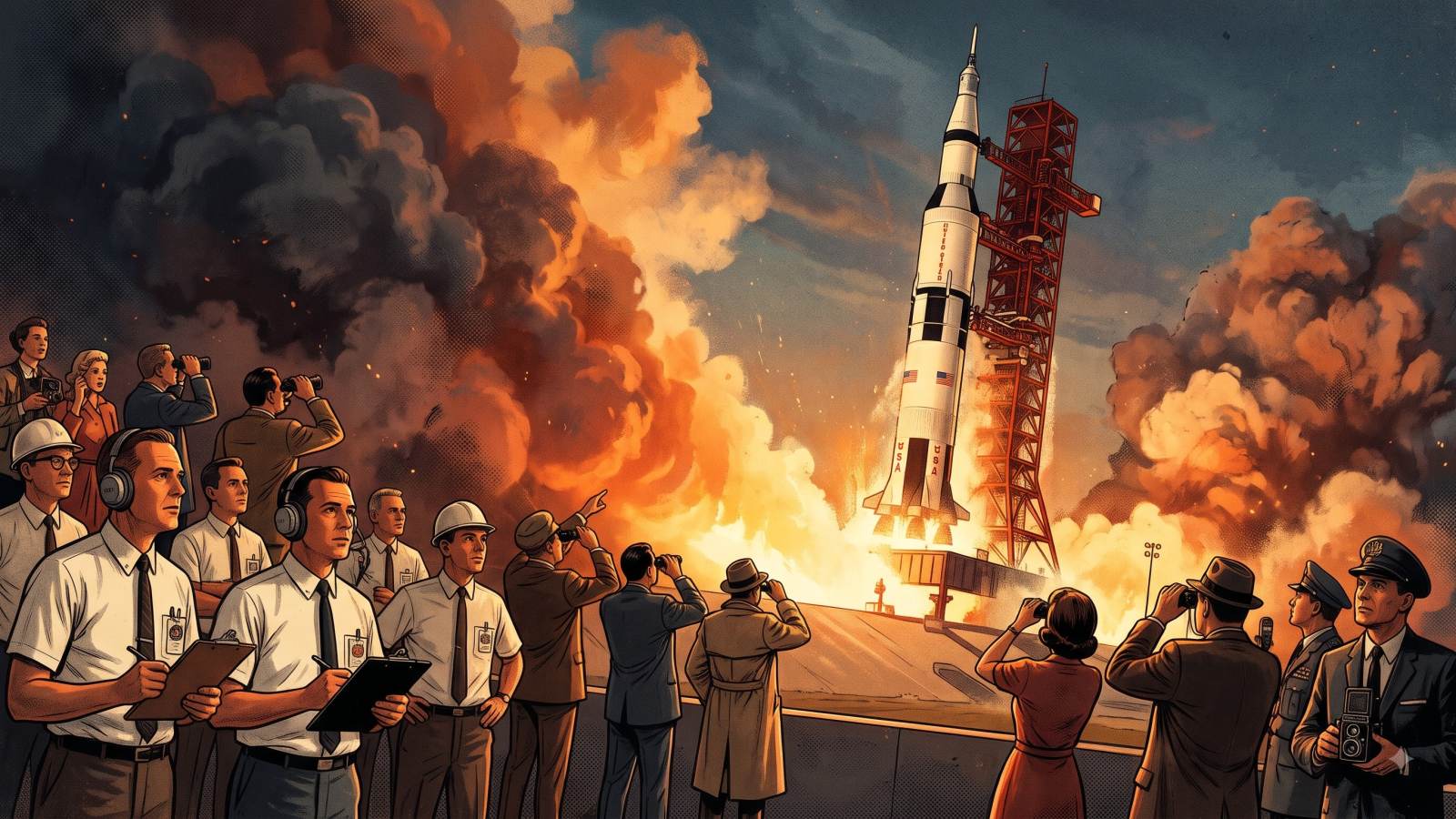
Ship 42 relit its engines for descent and executed a landing flip with three Raptor engines before the chopstick arms secured it above Launch Pad 2, where it remained suspended several hundred feet above the ground. The 171-foot-tall ship was visibly charred from re-entry heat.
During the mission, the vehicle spent more than 22 hours in space, completed 14 orbits of Earth and deployed 26 Starlink satellites.
SpaceX said it made contact with every deployed satellite, and all had begun raising their orbits to join the constellation.
Ship 42 re-entered the atmosphere at roughly 17,000 miles per hour, with its heat shield withstanding temperatures exceeding 2,000 degrees Fahrenheit.
Recovering the upper stage is harder than catching the booster. It flies higher and faster to reach orbit, then must shed that speed on re-entry.
That was the Holy Grail of spaceflight, plummeting through fire to be snatched out of the air by steel. We caught a Starship and now, everything changes,
This was the first attempt at catching both stages on the same flight, after SpaceX had carried out three successful booster catches. The company congratulated its engineers in a social media post.
Mechazilla catches Starship! Congratulations to the entire SpaceX team on this incredible achievement!
SpaceX CEO Elon Musk wrote on X that he had hugged Ship 42 on its return.
I hugged ship 42 upon its return,
Booster splashdown
After an automated abort triggered by its guidance, navigation and control systems, the Super Heavy booster splashed down in the Gulf of Mexico.
SpaceX said the booster's guidance, navigation and control system detected an issue during coast, triggering an automated abort that sent it towards an offshore landing. The boostback burn cut off early because fuel mass was low, and the cause is under investigation.
Upper stage
Ship 42
- Caught by mechanical arms
- Secured above Launch Pad 2
- First orbital upper stage catch
Booster
Super Heavy Booster 22
- Splashed down in Gulf of Mexico
- Automated abort during coast
- Boostback burn ended early
Senior engineer Lars Blackmore said the return trajectory avoided populated areas, crossing sparsely populated desert and making a giant swoosh maneuver near Texas' Rio Grande Valley.
The launch took place during a nationwide ground stop issued by the FAA, though rockets use different tracking and navigation equipment than aircraft. This was the fourth flight of the V3 version of Starship and the second of those to reach orbit.
Reactions from NASA and industry
NASA Administrator Jared Isaacman called the catch almost magic. He said the company is making more believers by the day.
almost magic.
President and COO Gwynne Shotwell said Starship is alien-level technology and that the company plans to fly the second stage again by early next year and increase launch frequency as rapid reusability advances.
CSIS aerospace specialist Clayton Swope called it a huge technical achievement that proves the fully reusable spaceship idea can work, but asked how quickly SpaceX can do it again.
Let’s see how quickly they can do it again
Georgetown analyst Kathleen Curlee said SpaceX needs multiple repeated successes to prove the capability for sensitive payloads and missions.
What SpaceX needs is multiple repeated successes to prove the capability… to handle sensitive payloads and missions,
Investment and lunar deadlines
More than $15 billion has gone into Starship's development. NASA's 2021 award of a contract worth more than $4 billion includes a $3.2 billion commitment for a lunar landing system.
NASA is targeting 2028 for crewed lunar missions using Starship and a separate lander under development by Jeff Bezos' Blue Origin. A SpaceX spokesperson said the company plans to have Starship vehicles reliably reusable before the 2028 Artemis IV mission, NASA's current target for the flight.
A key remaining requirement for Starship is demonstrating transfer of fuel between tanker spacecraft in orbit, which is needed before journeys to the Moon and Mars. Next year, SpaceX plans a test flight using a Starship article that will practise docking with a NASA spacecraft for a moon landing.
Musk has outlined a vision of launching Starship as frequently as once an hour to move large quantities of equipment and infrastructure into orbit. SpaceX plans a $100 billion spaceport in Louisiana's Vermilion Parish, with construction expected to begin by the end of next year and the first launch targeted as soon as 2029.
SpaceX said the root cause of the booster anomaly is under investigation after the boostback burn ended early due to low fuel mass.