US envoys Steve Witkoff and Jared Kushner are preparing what could be the war's largest prisoner exchange, the White House said on 13 November.
The announcement came at the end of four days of shuttle diplomacy through Abu Dhabi, Moscow and Dublin, after Anna Kelly, the White House deputy press secretary, said the two men had begun preparing an exchange that would be the largest since Russia's full-scale invasion of Ukraine began.
On X, Kushner wrote that Washington was working toward the biggest exchange of the war, one that could bring thousands of people back to their families.
We are also working toward what would be the largest prisoner exchange of the war, potentially reuniting thousands of people with their families.
The framework for the swap was laid in Abu Dhabi, where trilateral talks between Ukraine, Russia and the United States took place. It was the first round of its kind in nine months.
That round produced no breakthrough on territorial questions.
Four days, three capitals
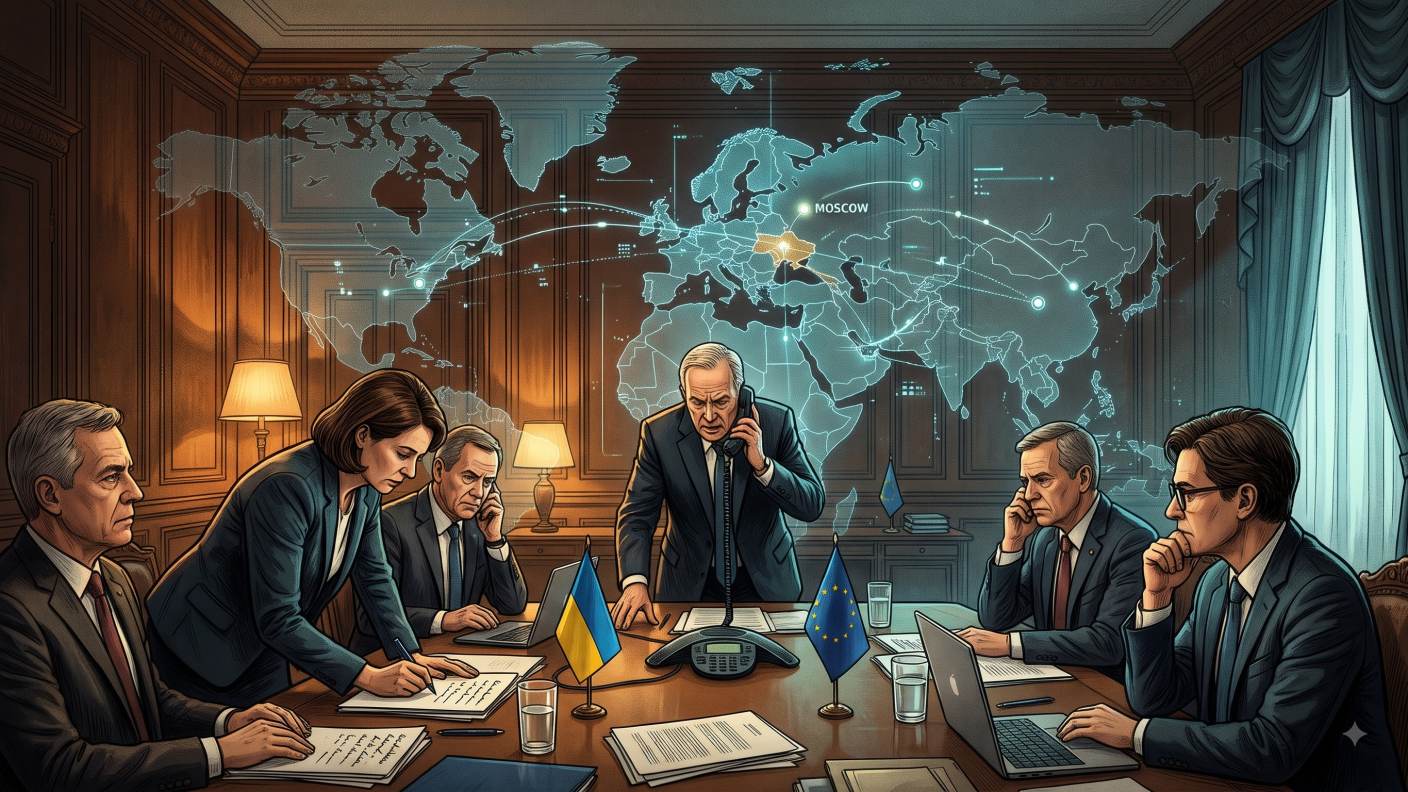
On 12 November, Witkoff and Kushner flew to Moscow and briefed Vladimir Putin for about 2.5 hours on the Abu Dhabi talks, then travelled to Ireland, where they met Volodymyr Zelensky late the same day.
- 10-11 NovAbu Dhabi
Trilateral talks between Ukraine, Russia and the US produce a framework for a major prisoner exchange.
- 12 NovMoscow
Witkoff and Kushner brief Putin for about 2.5 hours.
- 12 NovDublin
The envoys meet Zelensky late in the day, then consult European national security advisers.
- 13 NovWashington
The White House announces that preparation for the exchange has begun.
Zelensky, speaking to reporters after the Dublin meeting, called the coming exchange a "real result" of the talks and said it gave Kyiv hope the war would end.
Both sides expect the swap to be the largest of the war. The Kremlin says its terms are still being agreed.
No date or number has been announced.
The day ended with consultations with national security advisers from Ukraine, Germany, Italy, the EU, France, Ireland and Poland, Kushner said. Both delegations agreed to widen the next round to European partners.
Witkoff confirmed after the Kremlin meeting that multilateral peace discussions involving European representatives were scheduled and might happen within the coming week.
No deal could be concluded "without the Europeans being at the table", Kushner said, and Putin "is willing to give it a try". Significant differences remain, though Washington's encouraged by the progress made.
A lasting end to the fighting, Kushner said, would require credible security guarantees, deconfliction mechanisms and reciprocal de-escalation commitments. Nothing will be finalised until a comprehensive agreement is reached, apart from humanitarian measures.
Energy strikes stay unresolved
In Dublin, Zelensky told European leaders that Ukraine's delegation called for calm in the Black Sea and an end to attacks on energy infrastructure in Abu Dhabi, while Russia's negotiators lacked authorization to consider stopping the strikes.
But what our delegation heard in response was that the Russian boss is angry and wants to keep striking
Zelensky said that since November began, Russia had carried out more than 310 strikes against Ukraine's energy facilities.
What Moscow wants
Putin repeated during the Moscow talks that Russia opposes any deployment of foreign troops in Ukraine and called them legitimate targets. He also suggested a humanitarian operation in Kostiantynivka, the front-line city, and said Russia needed five days to clear mines from its approaches.
Dmytro Lytvyn, a presidential adviser, rejected the claim of Russian control over Kostiantynivka and accused Moscow of using an earlier humanitarian operation in Oleshky to rotate troops and move military equipment.
It is clear what they want in Kostiantynivka
During the Oleshky truce, Ukrainian marines said, Russia brought fresh troops, armour and fuel within nine kilometres of Kherson.
Yuri Ushakov, Putin's aide, said Europeans faced a choice between pursuing peace and allowing the war to continue, and described foreign troops in postwar Ukraine as a path to endless conflict. Russia's demands for a new European security order included stopping NATO enlargement and restoring the alliance's forces to their 1997 positions.
The presence of European troops in Ukraine would escalate the conflict into a far broader fight, Dmitry Peskov, the Kremlin spokesman, said.
The swaps this one must beat
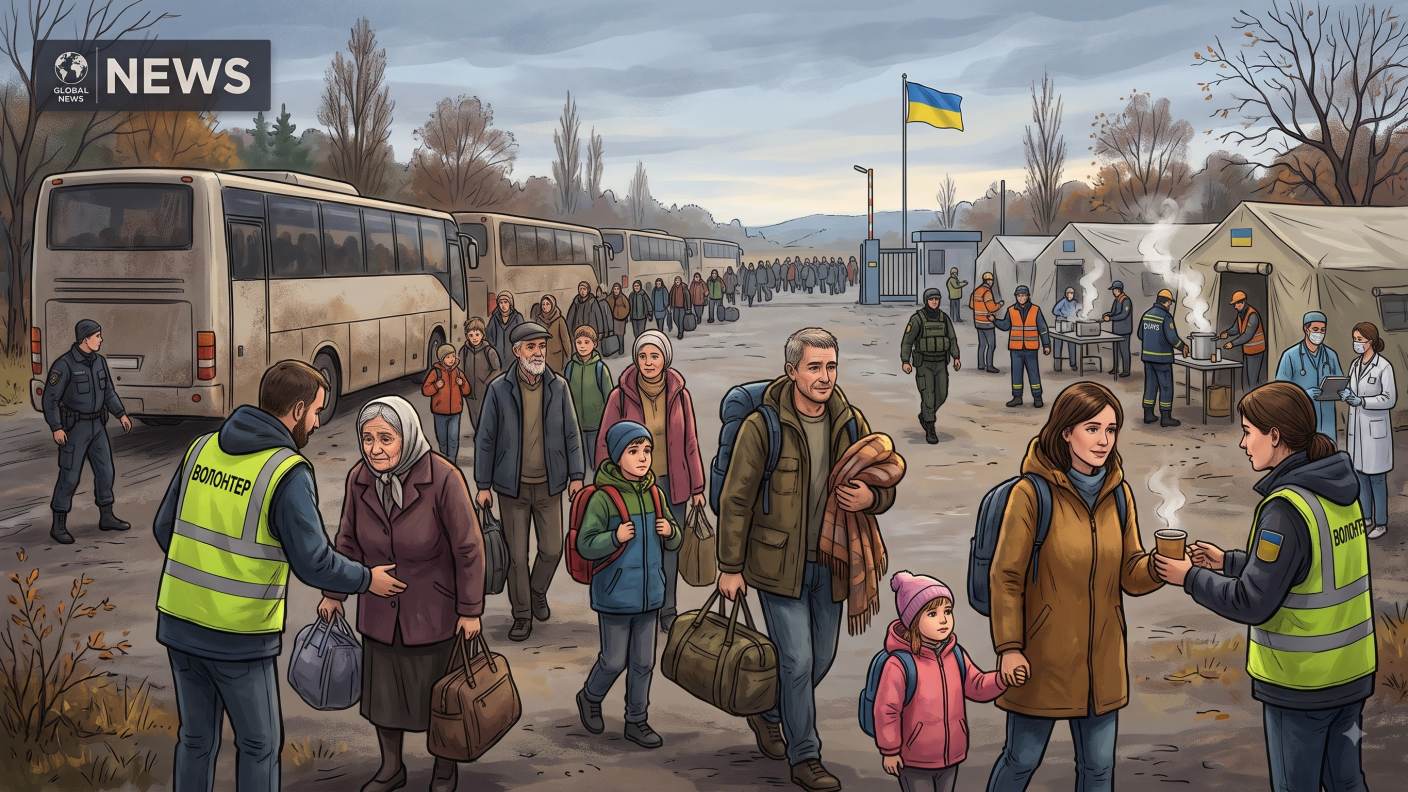
The most recent exchange took place on 23 October, when Ukraine brought home 270 people, including five people who survived Russia's July 2022 attack on the Olenivka prison and nine civilians.
| Exchange | Scale | Date |
|---|---|---|
| 270 people returned to Ukraine | Included nine civilians and five survivors of the Olenivka prison attack | 23 October |
| 1,000-for-1,000 swap | Equal numbers on each side | May 2025 |
| All-for-all categories agreed at Istanbul | The seriously wounded and soldiers aged 18 to 25 | June 2025 |
The 2015 Minsk agreement stipulated that all hostages and people unlawfully detained should be freed.
The harder question is territory. Kyiv refuses to surrender the rest of Donbas, its eastern region, while Russia controls a fifth of Ukraine.
Kushner said the negotiating tracks, schedule and further details should be announced shortly.
What we know
- Both sides expect the exchange to be the largest of the war.
- Witkoff and Kushner briefed Putin in Moscow on 12 November.
- A new multilateral round including European representatives has been scheduled.
Still unclear
- The date of the exchange.
- The number of prisoners to be released.
- The terms, which the Kremlin says are still being agreed.
- The date and place of the next round of talks.
- Whether Russia will halt strikes on Ukraine's energy infrastructure.